Where Can You Buy a Widespread Faucet in Canada That Actually Fits Your Sink (and Won’t Cost a Fortune)?
Shopping for a widespread faucet in Canada feels simple until you’re staring at a checkout page wondering whether the thing will even bolt onto your sink — or whether it meets Canadian code, ships without a brutal cross-border duty, and shows up in the finish you actually ordered. This guide answers the questions Canadian buyers actually ask: what “widespread” really means, how to measure so you don’t return three faucets, where to buy, what certifications matter north of the border, and how much you should realistically spend in 2026. No fluff, just the stuff that saves you a return trip to the store.
What exactly is a widespread faucet, and how is it different from what I have now?
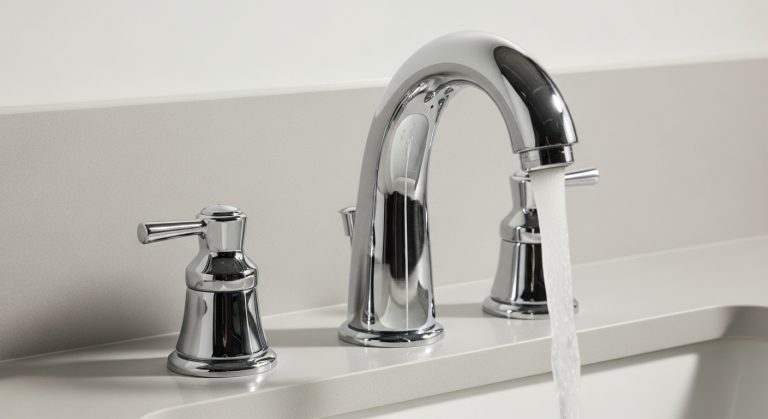
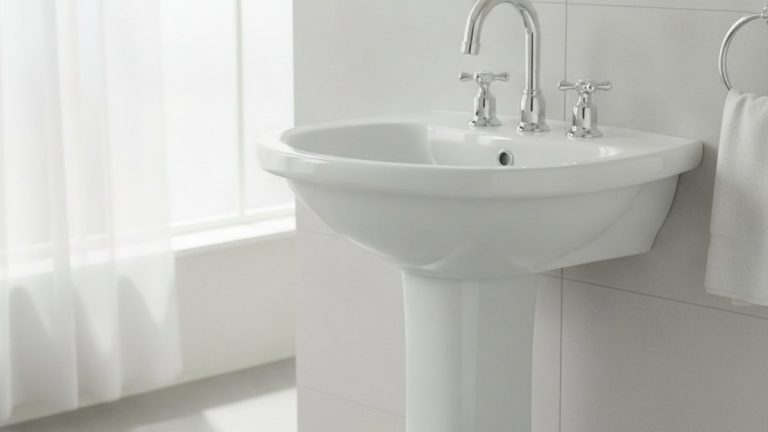
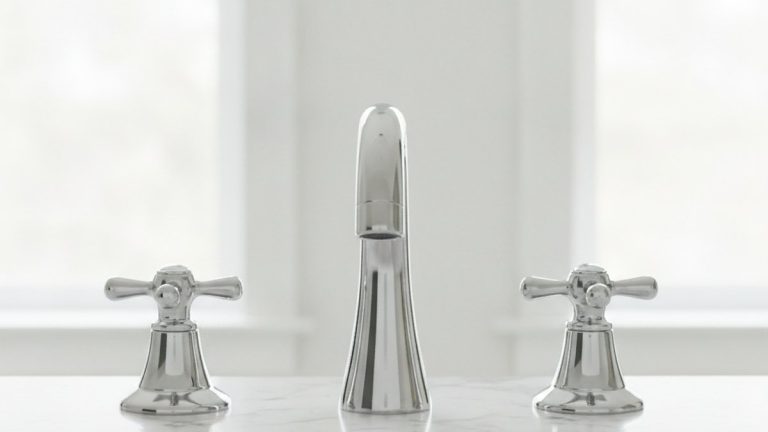
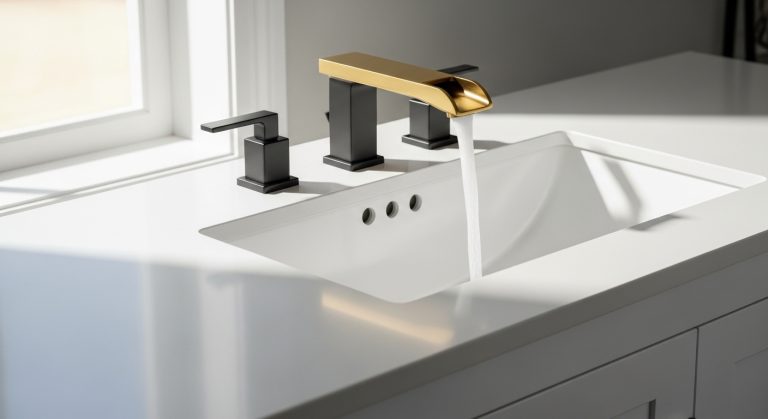
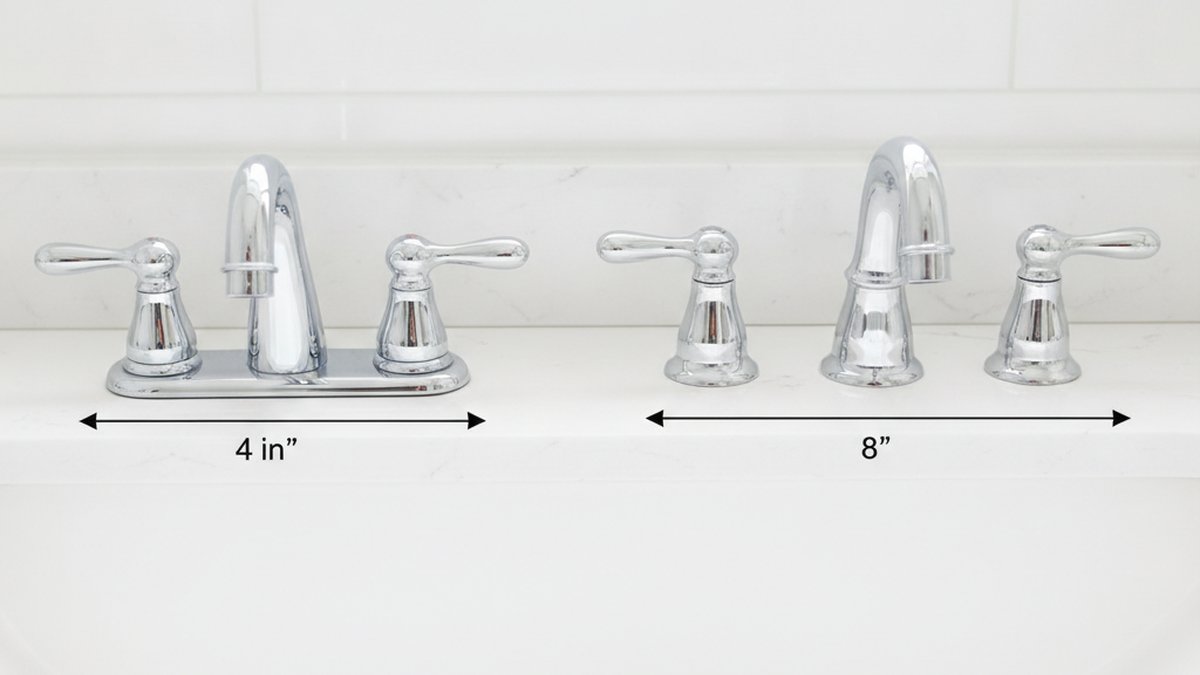
A widespread faucet is a three-piece bathroom faucet: one spout plus two independent handles, each mounted in its own hole, connected under the sink by hidden hoses. That’s the whole idea — the pieces aren’t joined by a base plate, so you can spread them apart. “Widespread” refers to the distance between the two handle holes, and in North America that’s almost always 8 inches (203 mm) center-to-center, though true widespread models are adjustable anywhere from about 6 to 16 inches.
Compare that to the faucet most Canadian builders install by default: a centerset. A centerset crams the spout and both handles onto a single 4-inch base, so the holes sit only 4 inches apart. It’s cheaper and fine for a small powder room, but it looks compact and builder-grade next to a widespread. If you’re not sure which camp your current faucet falls into, our breakdown of centerset vs. widespread faucets and what the difference means walks through it with photos and measurements.
The short version: a widespread faucet gives you a more custom, higher-end look, more counter coverage for larger sinks, and easier cleaning between the pieces. The trade-off is that it needs three holes and correct spacing — which is exactly where Canadian shoppers get tripped up.
How do I know my sink will actually fit a widespread faucet before I order one?
Measure the center-to-center distance between your two outermost mounting holes. If it’s 8 inches (203 mm), a standard widespread faucet fits. If it’s 4 inches, you have a centerset/mini-spread configuration and a true widespread won’t drop in without drilling.
Here’s the exact process, because this single step prevents the vast majority of returns:
- Count your holes. A widespread needs three: left handle, spout, right handle. If your sink or countertop has only one hole, you need a single-hole faucet instead — not this.
- Measure center-to-center. Put a tape measure on the middle of the far-left hole and read to the middle of the far-right hole. You’re looking for that 8-inch figure. Don’t measure edge-to-edge — it’ll throw you off by half an inch and that half-inch matters.
- Check the deck thickness. Most widespread valves are built for a countertop or sink deck up to about 1.5 inches (38 mm) thick. Thick stone counters can need longer mounting hardware.
- Confirm clearance behind the sink. The spout needs to sit far enough forward that water lands in the bowl, not on the rim.
If your numbers are off — say the holes are drilled at 6 inches, or you’re renovating and haven’t drilled yet — read our full guide to the right widespread faucet spacing for your bathroom sink before you buy or drill anything. And if you already know you’ve got a standard 8-inch sink and just want to see options, our roundup of where to find a widespread faucet for sale that actually fits an 8-inch sink is the practical shortlist.
Where’s the best place to buy a widespread faucet in Canada?
For most Canadians the best value in 2026 is buying online from a specialist like Aniflux Home, because you get a wider finish selection and solid-brass construction without the big-box markup — but each channel has a real trade-off. Here’s the honest comparison.
| Where to buy | Typical price (CAD) | Selection & finishes | Watch out for |
|---|---|---|---|
| Aniflux Home (anifluxhome.com) | $110–$400 | Wide — brushed nickel, matte black, brushed gold, chrome | Ships from within Canada/US; confirm delivery window |
| Home Depot Canada / Rona | $120–$500 | Moderate; in-store stock is limited to a few finishes | Popular finishes sell out; returns are easy |
| Wayfair.ca | $90–$450 | Very broad, many third-party brands | Quality varies by seller; read the certification listing |
| Amazon.ca | $70–$350 | Huge, but cluttered with no-name imports | Some listings ship from abroad — check for CSA/cUPC |
| Local plumbing supply house | $180–$600 | Premium brands, expert advice | Higher prices; often trade-focused |
Two Canada-specific tips that save real money. First, buy from a seller that ships domestically. A faucet listed on a U.S. site might look cheaper until customs, duties, and currency conversion stack on 25–35%. A price shown in CAD from a Canadian warehouse is usually the true price. Second, factor in returns — a widespread has three connection points, so if the fit is wrong you want a retailer with painless Canadian returns rather than a “ship it back overseas at your cost” policy.
What certifications should a widespread faucet have to be legal and safe in Canada?
In Canada, look for cUPC or CSA certification, plus low-lead compliance — these confirm the faucet meets Canadian plumbing code and the national limit on lead content in drinking-water fixtures. A faucet without one of these marks may not pass an inspection and shouldn’t be trusted for potable water.
Here’s what each mark actually tells you:
- cUPC (the little “c” before UPC) — certified to the Uniform Plumbing Code for Canada by IAPMO. This is the one plumbing inspectors look for; the “c” specifically means it’s accepted for Canadian installation.
- CSA — the Canadian Standards Association mark, another nationally recognized certification for plumbing fixtures.
- Low-lead / “lead-free” compliance — fixtures for drinking water must have a weighted-average lead content of no more than 0.25% on wetted surfaces. Reputable brands state this on the box.
- NSF/ANSI 61 & 372 — the underlying material-safety and low-lead standards that back up the above.
Aniflux Home faucets are built and tested to these standards, and every unit is pressure- and cycle-tested before it ships — the valve cartridges are typically cycled hundreds of thousands of times to simulate years of daily use. If a listing anywhere can’t tell you which certification a faucet carries, treat that as a red flag and move on.
How much should I spend on a widespread faucet in Canada in 2026?
Budget CAD $90–$450 for a good one. Under about $90 you’re usually looking at zinc-alloy bodies and plastic internals that pit and drip within a couple of years; above $450 you’re paying for designer brand names, not necessarily better function. The sweet spot for a durable, ceramic-disc, solid-brass widespread faucet in Canada sits around $130–$250.
What your money is actually buying at each tier:
| Price band (CAD) | What you typically get | Best for |
|---|---|---|
| $70–$110 | Zinc or thin brass body, may use rubber seals, limited finishes | Rental units, short-term flips |
| $130–$250 | Solid brass, ceramic-disc cartridges, PVD finishes, cUPC-certified | Most homeowners — the value zone |
| $300–$450 | Premium brass, designer styling, lifetime warranty, wider finish range | Primary bath renovations, resale appeal |
| $450+ | Luxury/architectural brands, boutique finishes | High-end custom builds |
The single spec worth paying up for is a ceramic-disc cartridge. That’s the part that opens and closes when you turn the handle, and ceramic discs are what separate a faucet that stays drip-free for a decade from one that starts weeping at the spout after eighteen months. If you’re keeping the budget tight, our guide to the widespread bathroom faucet under $100 you should actually buy shows what’s realistic at the low end without buying junk.
Which finish holds up best in Canadian bathrooms and hard-water areas?
For most Canadian homes, brushed nickel is the safest, most forgiving finish — it hides water spots and fingerprints far better than polished chrome, which is a real advantage in hard-water regions like the Prairies and much of Ontario. Matte black looks stunning but shows dried mineral spots more readily, so it needs more frequent wiping.
Finish isn’t just looks — it’s maintenance. Large parts of Canada have genuinely hard water, and hard water leaves chalky calcium deposits on spouts and aerators. A PVD (physical vapor deposition) brushed-nickel or brushed-gold finish resists both corrosion and spotting. If you’re torn on nickel, our honest take on whether brushed nickel faucets are worth it covers the durability side in detail. And whatever finish you land on, learning how to clean hard water stains from a faucet the right way (white vinegar, never abrasive pads) will keep it looking new for years.
- Brushed nickel — best all-rounder; hides spots and fingerprints, matches most fixtures.
- Chrome — cheapest and easy to clean, but shows every water droplet.
- Matte black — bold and modern; needs regular wiping in hard-water areas.
- Brushed gold / champagne bronze — warm, on-trend; PVD versions are surprisingly durable.
Can I install a widespread faucet myself, or do I need a plumber?
Yes, most people can install a widespread faucet themselves in about 60–90 minutes with basic tools — the three-piece design is actually forgiving because the handles connect to the spout with flexible hoses. You’ll need an adjustable wrench, a basin wrench, plumber’s tape, and a bucket. Call a plumber only if your shutoff valves are seized or you’re re-drilling holes in stone.
The general sequence: shut off the water at the supply valves, disconnect and remove the old faucet, drop the new spout and two handle assemblies into their holes, secure each from below with the mounting nuts, connect the handles to the spout with the included T-fittings or hoses, then attach the supply lines. Wrap every threaded connection with plumber’s tape, turn the water back on slowly, and check every joint for drips before you call it done.
One Canadian-winter note: if the bathroom is on an exterior wall in a cold climate, don’t over-tighten fittings on a freezing morning — brass and the supply lines flex a little with temperature, and gorilla-tightening cold fittings can crack a nut. Snug plus a quarter-turn is plenty. If anything does weep at the base after install, it’s almost always a compression or O-ring issue rather than a faulty faucet.
A quick word on quality and who’s behind this guide
About Aniflux Home: Aniflux Home is a Canadian-serving retailer of bathroom and kitchen faucets, shower systems, and fixtures. Every faucet we sell is built from solid brass with ceramic-disc cartridges, certified to cUPC/CSA standards, and cycle-tested before shipping. Our widespread bathroom faucets are backed by a warranty on both the finish and the working cartridge, because a faucet you buy once should last.
Author note: This guide was written by the Aniflux Home fixtures team — the same people who handle sizing questions, warranty claims, and returns every day. The measurement advice here comes directly from the two mistakes we see most often on Canadian orders: buying a widespread for a 4-inch centerset sink, and ordering from a cross-border listing without checking certification. Everything above is aimed at helping you avoid both.
FAQ
Is an 8-inch widespread the standard size in Canada?
Yes. In Canada, as in the rest of North America, “8-inch widespread” is the standard, meaning 8 inches (203 mm) center-to-center between the two handle holes. True widespread faucets are also adjustable, so many fit sinks with spacing anywhere from about 6 to 16 inches. Always measure your own holes before ordering.
Will a widespread faucet fit a sink with only one or two holes?
No. A widespread faucet requires three separate holes — one for the spout and one for each handle. If your sink has a single hole, you need a single-hole faucet; if it has 4-inch spacing, you need a centerset. You’d have to drill additional holes to convert, which isn’t practical on most vitreous china or stone sinks.
Do I have to pay import duty ordering a widespread faucet to Canada?
Not if you buy from a seller that ships from within Canada, like Aniflux Home. Duties, brokerage fees, and currency conversion only stack up when you order from a foreign warehouse. That’s why a price quoted in CAD from a domestic retailer is usually cheaper in practice than a lower-looking U.S. sticker price.
What’s the difference between a widespread faucet and a widespread faucet set?
They’re essentially the same thing — “set” just emphasizes that it comes as a coordinated three-piece unit with matching spout and handles. Some brands use “set” to bundle in a matching drain or accessories. Our explainer on what a widespread faucet set is and whether it’s right for your sink breaks down exactly what’s usually in the box.
How long should a good widespread faucet last?
A solid-brass widespread faucet with a ceramic-disc cartridge should last 10–15 years or more with basic care. The finish typically outlasts the cartridge, and a worn cartridge is an inexpensive, replaceable part — not a reason to buy a whole new faucet. Cheap zinc-body faucets, by contrast, often start dripping within two to three years.
What certification should I look for on a faucet in Canada?
Look for cUPC or CSA certification plus low-lead (NSF/ANSI 61 and 372) compliance. These confirm the faucet meets Canadian plumbing code and the drinking-water lead limit of 0.25% weighted average on wetted surfaces. If a listing can’t name its certification, don’t buy it for a potable-water application.