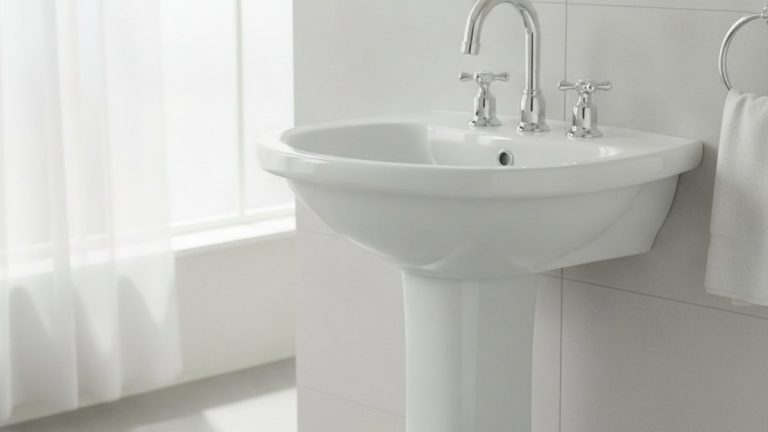
Is a Widespread Bathroom Faucet in Nickel the Right Choice for Your Sink in 2026?
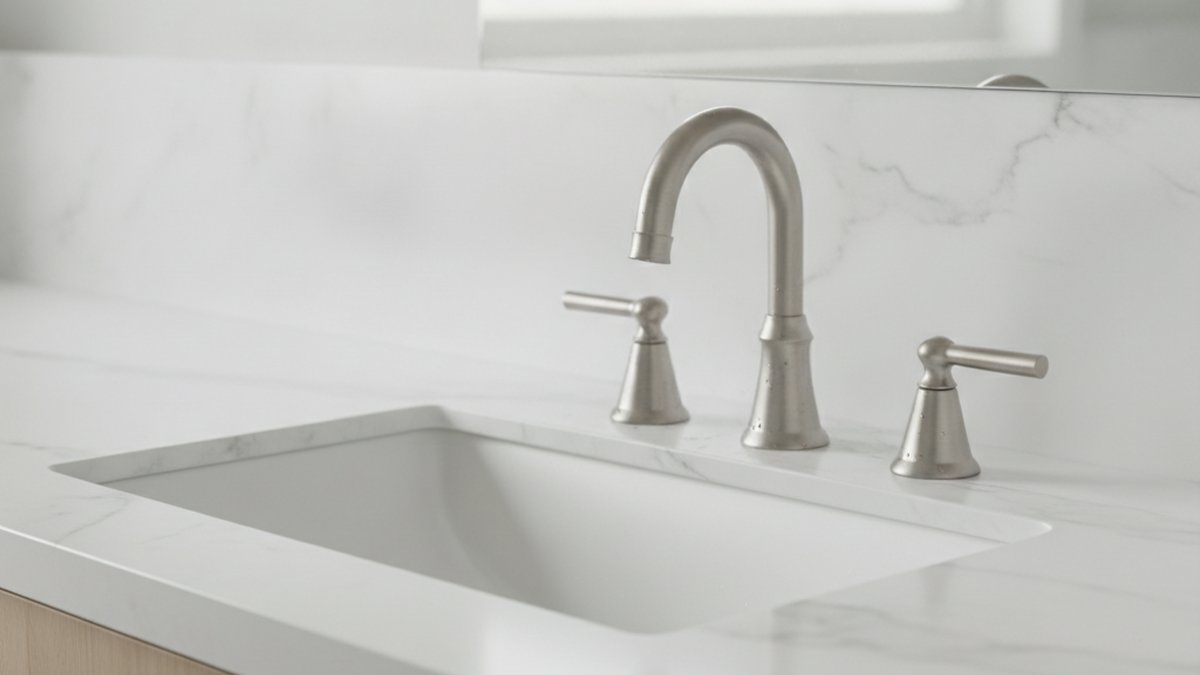
If you’re shopping for a widespread bathroom faucet nickel setup, here’s the short version: it’s one of the most forgiving, longest-lasting combinations you can put on a bathroom sink. “Widespread” means the spout and the two handles are three separate pieces, connected under the counter, so you can space them 8 to 16 inches apart. “Nickel” is the finish on top of the brass body — and it’s the finish most people are happiest with a year later, because it doesn’t scream fingerprints like chrome and doesn’t fade like cheap painted coatings.
But “nickel” isn’t one single thing, and “widespread” only works if your sink is drilled for it. So let’s answer the questions people actually ask before they buy — spacing, brushed vs. polished, how it compares to chrome, what it costs, and how to avoid the mistake that sends half of these faucets back to the store.
What exactly is a widespread bathroom faucet, and how is it different from a centerset?
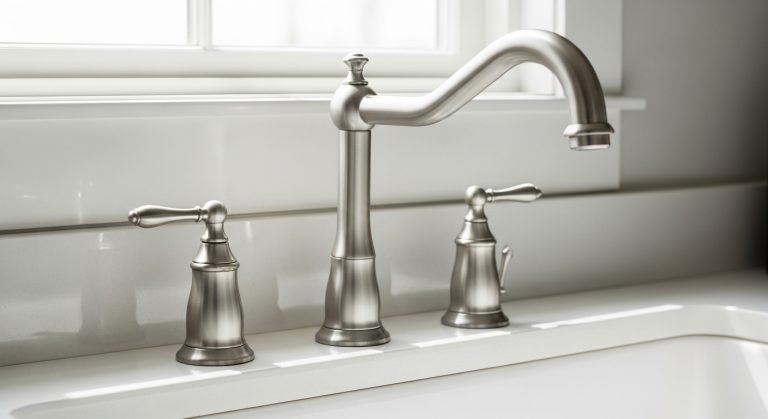
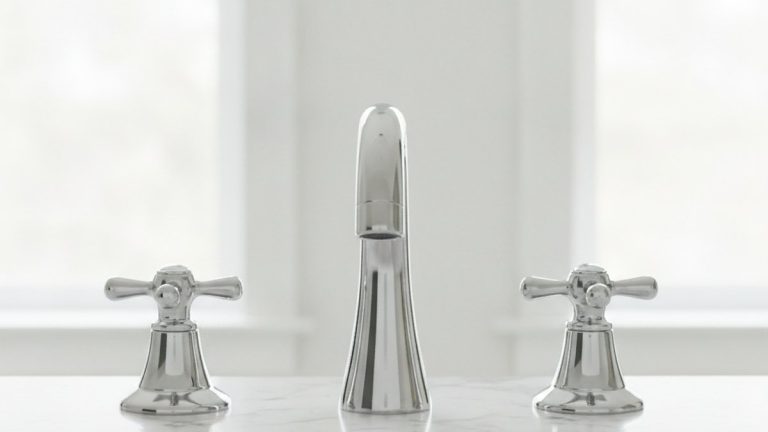
A widespread faucet is three separate pieces — a spout in the middle and two handles on either side — that mount through three individual holes in your sink or countertop. A centerset, by contrast, is one connected unit (or sits on a single base plate) built for holes just 4 inches apart. That’s the single most important distinction to get right before you fall in love with a finish.
The practical difference: a widespread gives you flexibility. Because the pieces aren’t physically joined on top, you can set the handles anywhere from 8 to 16 inches apart to fit a wide vanity, a double-basin, or a stone top drilled to a specific layout. A centerset is locked at 4 inches. Widespreads also tend to read as more upscale — the open layout looks custom, and they’re the default on higher-end vanities.
- Widespread: 3 holes, 8–16″ spread, handles mount independently, premium look, more plumbing connections underneath.
- Centerset: 3 holes on a 4″ base or 1 hole, handles and spout joined, budget-friendly, simpler install.
- Single-hole: 1 hole, one lever controls temperature and flow, modern minimalist style.
If your sink has three widely-spaced holes, you need a widespread (or a mini-widespread). You can’t put a centerset on it without a deck plate that may not even reach. We break the dimensions down fully in our guide to the right widespread faucet spacing for your bathroom sink — read that before you measure, because “8-inch” refers to center-to-center of the outer holes, not edge-to-edge.
Is brushed nickel or polished nickel better for a bathroom faucet?
For most bathrooms, brushed nickel is the better everyday choice: its satin texture hides water spots, toothpaste splatter, and fingerprints, so it looks clean with almost no wiping. Polished nickel is the better choice when you want warmth and shine — it has a slightly golden, mirror-like glow that chrome can’t match — but it shows smudges and demands more frequent polishing.
Both are genuinely nickel plated over a solid brass core, so both resist corrosion far better than painted or powder-coated finishes. The difference is purely in how the top layer is finished and how it behaves day to day.
| Factor | Brushed Nickel | Polished Nickel |
|---|---|---|
| Look | Soft satin, matte warmth | Reflective, warm mirror shine |
| Fingerprints / spots | Hides them well | Shows them readily |
| Maintenance | Wipe weekly, very forgiving | Polish often to keep the shine |
| Best for | Busy family bathrooms, hard water | Formal powder rooms, statement vanities |
| Matches | Nickel, stainless, warm neutrals | Brass accents, classic/traditional décor |
| Typical cost | $90–$220 | $180–$400+ |
One quick warning on matching: brushed nickel and stainless steel look similar but aren’t identical — brushed nickel is slightly warmer and darker. If your towel bars, shower trim, or cabinet pulls are brushed nickel, buy a faucet labeled the same way from the same brand family when you can, so the undertone matches. The same logic we cover for kitchens in our piece on the widespread kitchen faucet in brushed nickel applies to the bathroom too.
Does a nickel faucet hold up to hard water better than chrome?
Yes — especially brushed nickel. In a hard-water bathroom, brushed nickel is more forgiving than chrome because its textured surface camouflages the white mineral scale that chrome puts on full display. Chrome is slightly harder and shinier, but every water spot shows, so it looks dirtier faster even when both are equally clean.
Neither finish is damaged by hard water itself — the mineral deposits sit on the surface, they don’t corrode the plating. The real enemy of any finish is abrasive or acidic cleaners. Scrubbing nickel with a scouring pad, or spraying it with bleach, vinegar left to sit, or bathroom cleaners containing hydrofluoric or phosphoric acid, can dull or etch the finish and may void the warranty. Clean nickel with warm water, a drop of dish soap, and a soft cloth. That’s it.
Here’s the comparison that matters when you’re standing in the aisle:
- Brushed nickel: hides spots, warm tone, best all-round for hard water and busy homes.
- Chrome: hardest, brightest, cheapest — but shows every drop and reads cooler/bluer.
- Polished nickel: warmest and most luxurious, but highest maintenance in hard water.
- Matte black / bronze: trendy, but shows limescale as white streaks badly in hard water.
If your water is genuinely rough, pair whatever finish you pick with an aerator you can unscrew and soak — mineral buildup inside the aerator kills flow long before it ever hurts the finish.
Will a widespread nickel faucet fit my 8-inch sink — and what if the holes aren’t exactly 8 inches?
A standard widespread faucet fits any three-hole sink where the outer holes are spaced roughly 8 to 16 inches apart, measured center-to-center — and because the handles connect to the spout with flexible hoses underneath, it tolerates sinks that aren’t exactly 8 inches. That flexibility is the whole point of the widespread design and the reason it fits more vanities than a fixed centerset ever could.
Measure before you buy, every time. Put a tape measure across the sink deck and read the distance from the center of the left hole to the center of the right hole. If it lands anywhere from 8″ up to about 16″, a standard widespread works. If it’s closer to 4″, you need a mini-widespread or a centerset instead. Our walkthrough on finding a widespread faucet that actually fits your 8-inch sink shows exactly where to place the tape so you don’t order the wrong spread.
A few fit details people miss:
- Deck thickness. Thick stone or quartz tops (over ~1.5″) can be too deep for some mounting shanks. Check the faucet’s maximum deck thickness spec.
- Hole diameter. Standard faucet holes are 1 3/8″ (35 mm). Nickel widespreads almost always fit, but confirm if your sink is older or imported.
- Clearance behind the spout. Tall arched spouts look great but need room between the sink and the backsplash so the handle can rotate.
How much should you spend on a widespread bathroom faucet in nickel?
Expect to spend $90–$220 for a solid brushed-nickel widespread that will last a decade, and $180–$400+ for polished nickel or designer models. Below about $70, you’re usually looking at a zinc or plastic body with a thin plated coating that peels — a false economy you’ll replace in two or three years.
Here’s what your money actually buys as you move up the range:
| Price range | What you typically get |
|---|---|
| Under $70 | Zinc/plastic body, thin plating, light handles, short or no warranty |
| $90–$150 | Solid brass body, ceramic disc cartridge, true brushed-nickel plating, limited lifetime warranty |
| $150–$250 | Heavier brass, premium cartridge, better aerator, matched trim available |
| $250–$400+ | Polished nickel, designer styling, highest-grade valves, longest warranties |
The single spec that predicts longevity isn’t the finish — it’s the valve. Look for a ceramic disc cartridge; it’s what stops drips for years and survives grit in the water. A ceramic-disc brass-body faucet at $120 will outlast a $200 faucet with a rubber-washer valve. If you’re working to a tight number, our roundup of the best widespread bathroom faucet options under $100 shows which corners are safe to cut and which aren’t.
Which brands make a reliable nickel widespread faucet?
The reliable names in nickel widespreads are the brands that use solid brass bodies, ceramic disc cartridges, and back the finish with a lifetime warranty — that includes Aniflux Home alongside the major American manufacturers. Brand matters less than build quality, but a recognized brand usually means you can still get a replacement cartridge or handle in ten years, which is exactly when you’ll need one.
When you’re comparing brands, ignore the marketing and check three things: body material (solid brass, not zinc), cartridge type (ceramic disc), and finish warranty (lifetime on finish and function is the standard to expect). A faucet that nails all three will serve you well regardless of the logo. For a wider look at who makes dependable bathroom fixtures, see our breakdown of the top faucet brands for bathroom sinks worth buying in 2026.
What makes Aniflux Home’s nickel widespreads different
Every Aniflux Home widespread bathroom faucet uses a forged solid-brass body, a drip-free ceramic disc cartridge rated for 500,000 cycles, and a genuine PVD-bonded nickel finish that resists scratching and tarnishing far better than standard electroplating. All models are tested to meet ASME A112.18.1 / CSA B125.1 performance standards and are lead-free compliant with the U.S. Safe Drinking Water Act, and the finish and function are backed by a limited lifetime warranty. PVD (physical vapor deposition) is the same bonding process used on high-end watch cases — it’s why the finish doesn’t wear thin at the handle edges where your fingers touch it every day.
Widespread nickel vs. the alternatives: a quick decision guide
Still deciding? Use this to match the faucet to your situation rather than the trend of the month:
- Busy family bathroom, hard water: brushed nickel widespread — hides everything, low upkeep.
- Formal powder room, traditional home: polished nickel widespread — warm, luxurious, worth the extra polishing.
- Modern minimalist vanity, single hole: a single-hole faucet instead, in brushed nickel.
- Tight 4-inch hole spacing: centerset or mini-widespread, not a standard widespread.
- Rental or flip on a budget: a sub-$100 brushed-nickel unit with a ceramic cartridge.
For most readers landing on this page, the answer is a brushed-nickel widespread with a solid brass body and a ceramic disc valve. It’s the combination that looks good in the widest range of bathrooms, forgives hard water and skipped cleanings, and lasts long enough that you forget about it — which is exactly what you want from a faucet.
FAQ
Is brushed nickel going out of style in 2026?
No. Brushed nickel remains the most popular bathroom faucet finish because it’s neutral, hides spots, and coordinates with nearly every color palette. Matte black and warm brass are trending for statement rooms, but brushed nickel is the safe, resale-friendly default and shows no sign of fading from the market.
Can I install a widespread nickel faucet myself?
Yes, most homeowners can install a widespread faucet in about 45–90 minutes with basic tools. The extra step versus a centerset is connecting the spout to the two separate handle valves with the included hoses under the sink. Shut off the supply lines, mount the three pieces, connect the hoses and supply lines, then turn the water back on and check for leaks. If your shutoff valves are old or seized, that’s the only part worth calling a plumber for.
What’s the difference between brushed nickel and stainless steel faucets?
Brushed nickel is a plated finish over a brass body with a slightly warmer, darker satin tone; stainless steel refers either to the base metal or to a cooler, lighter-gray finish. They look close but can clash if mixed in the same room. Match finishes within a single brand family to keep the undertones consistent, and if you’re hunting for a rust-free faucet, read our guide to finding a stainless steel faucet near you that won’t rust or leak.
Does a widespread faucet need a special sink?
It needs a sink or countertop with three holes spaced 8–16 inches apart center-to-center. Many bathroom sinks are pre-drilled for exactly this. If your sink has holes only 4 inches apart, you’ll need a centerset or a mini-widespread instead. Always measure before ordering.
How do I clean a nickel faucet without ruining the finish?
Use warm water, a drop of dish soap, and a soft microfiber cloth, then dry it. Avoid abrasive pads, bleach, ammonia, and acidic cleaners (including undiluted vinegar left to sit), because they can dull or etch the nickel and may void the warranty. For stubborn hard-water spots, a 50/50 vinegar-water wipe followed immediately by a clean-water rinse is safe in moderation.
Will a brushed nickel faucet match chrome or polished fixtures I already have?
Not perfectly. Brushed nickel is satin and warm; chrome is glossy and cool. They can coexist if deliberately mixed, but for a seamless look, keep the faucet, shower trim, and accessories in the same finish family. If you already have chrome you love, a chrome widespread will blend more cleanly than nickel.
Author note: This guide was written by the Aniflux Home fixtures team, drawing on hands-on testing of widespread faucets across brushed nickel, polished nickel, and chrome finishes in real hard-water conditions. Aniflux Home (anifluxhome.com) specializes in bathroom and kitchen fixtures engineered to meet ASME A112.18.1 / CSA B125.1 standards and backed by a limited lifetime finish-and-function warranty.