What Are the Top Faucet Brands for Bathroom Sinks Worth Buying in 2026?
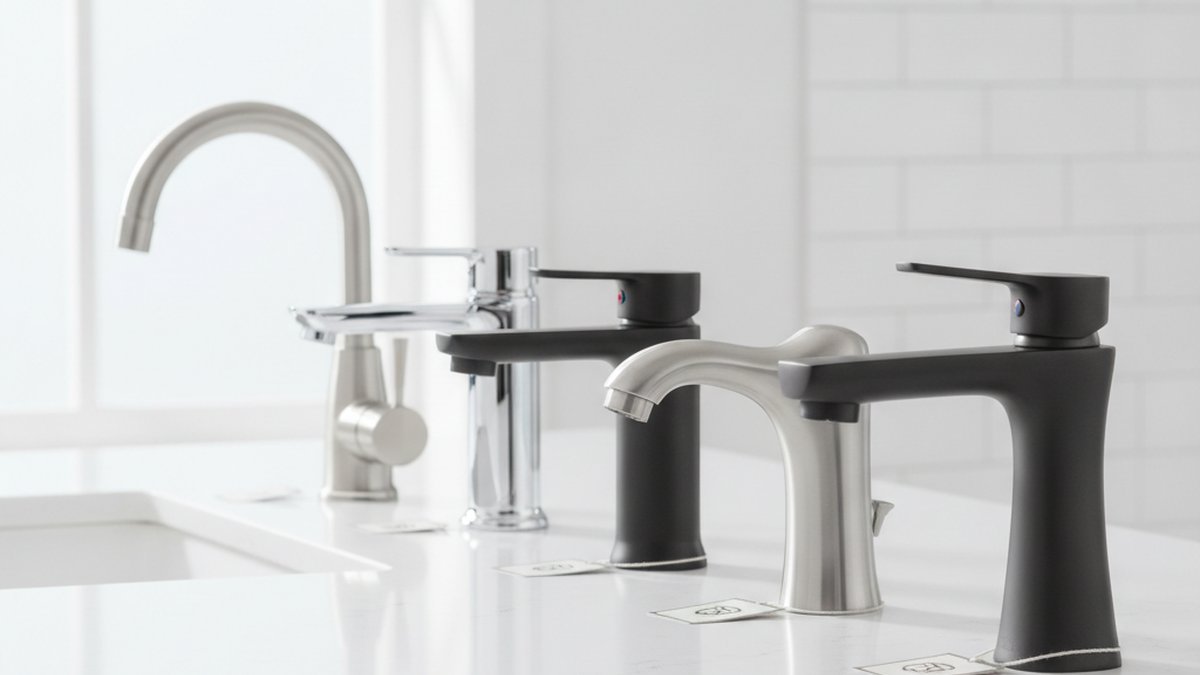
If you’re shopping for a new bathroom sink faucet and feeling swamped by names, here’s the honest answer: the top faucet brands for bathroom use come down to a short, reliable list — Delta, Moen, Kohler, Grohe, and Pfister — plus a few solid value players. What separates a great brand from a forgettable one isn’t the shiny showroom finish. It’s three things you can’t see from the box: the valve cartridge inside, the warranty behind it, and how easy it is to get a $6 replacement part five years from now. Get those right and your faucet lasts 15+ years. Get them wrong and you’re back at the store in two.
Below, we break down each brand by what it’s actually good at, what it costs, and who should buy it — the way a knowledgeable friend in the plumbing aisle would tell you, not the way a spec sheet reads.
Which bathroom faucet brand is the most reliable for the money?
For most people, Delta and Moen are the most reliable bathroom faucet brands for the money — typically $80 to $220 for a quality single-hole or widespread model, both backed by lifetime limited warranties on finish and function. They dominate the mid-market for a simple reason: parts availability. Walk into any hardware store in America and you can buy a Delta or Moen cartridge off the shelf.
Here’s what “reliable” really means in a faucet. The valve — the part that turns water on, off, and mixes hot with cold — is the heart of the whole thing. Both Delta and Moen use durable cartridge systems (Delta’s DIAMOND Seal ceramic disc and Moen’s 1255 Duralast are the workhorses) rated for hundreds of thousands of open-close cycles. When one eventually drips, you don’t replace the faucet. You swap a $10–$25 cartridge in 20 minutes.
Moen edges Delta slightly on customer service (its lifetime parts program will often ship you a replacement cartridge for free), while Delta edges Moen on innovation like Touch2O and TempSense. For a bathroom, where you don’t need touch activation as much as in a kitchen, the two are close to a coin flip.
Are Kohler and Grohe bathroom faucets worth the higher price?
Yes — if you care about how the faucet feels and looks up close, Kohler and Grohe are worth the extra $100–$300, but no if you just need a dependable faucet that works. These are the premium tier, usually $200 to $600+ for a bathroom model, and the money buys heft, smoother handle action, and finishes that resist water spots and fingerprints better than budget lines.
Grohe is a German brand with genuinely excellent engineering — its SilkMove ceramic cartridges have a buttery, precise feel, and its StarLight chrome and finishes are among the most durable in the industry. Kohler brings the widest catalog of designs, from vintage cross-handle widespread sets to sleek single-hole vessel faucets, plus its Vibrant finishes are physical-vapor-deposition (PVD) coated so they resist scratching and tarnish.
The catch: premium brands can mean pricier, harder-to-source proprietary parts. A Grohe cartridge costs more and may need to be ordered. So the real question is whether you value the daily tactile experience enough to pay for it. In a powder room guests see, or a primary bath you use every day, many people say yes.
What’s the best bathroom faucet brand under $100?
Under $100, the best bathroom faucet brands are Pfister, Moen’s value lines, and well-reviewed direct brands like Aniflux Home — you can get a ceramic-disc single-handle faucet with a solid finish in the $50–$95 range. The key at this price is to not drop below ceramic-disc valves into cheap rubber-washer compression valves, which drip within a year.
Pfister (formerly Price Pfister) is the value champion of the big names, offering its Pforever Seal ceramic technology and lifetime warranty even on budget models. It’s the brand to beat under $100. If you’re outfitting a rental, a kids’ bathroom, or a whole-house renovation where you need four faucets at once, Pfister stretches a dollar without feeling flimsy.
A quick word on spec-shopping in this range — if you’re eyeing a two-handle style for a three-hole sink, the mounting spread matters as much as the brand. We cover exact measurements in our guide to the right widespread faucet spacing for your bathroom sink, and if budget is the priority, our roundup of which widespread bathroom faucet under $100 you should actually buy pairs specific models with the sinks they fit.
What should you avoid in a cheap bathroom faucet?
Avoid any faucet that doesn’t name its valve type, uses a plastic (not brass or stainless) waterway body, or comes with no warranty. Those three red flags almost always signal a faucet built to a price, not to last. A truly good budget faucet will still say “ceramic disc cartridge” and “brass construction” right on the box.
- Green flags: ceramic disc valve, brass or stainless body, lifetime or 5+ year warranty, WaterSense label, readily available cartridge.
- Red flags: unnamed valve, all-plastic body, no warranty, proprietary parts you can’t find, suspiciously heavy discounting on an unknown brand.
How do the top bathroom faucet brands compare side by side?
The quickest way to choose is to compare the brands on the four things that actually predict satisfaction: price range, valve quality, warranty, and parts availability. Here’s how the leading bathroom faucet brands stack up in 2026.
| Brand | Typical Price (bathroom) | Valve / Cartridge | Warranty | Best For |
|---|---|---|---|---|
| Delta | $90–$250 | DIAMOND Seal ceramic disc | Lifetime finish & function | All-around reliability + tech |
| Moen | $85–$240 | 1255 Duralast ceramic | Lifetime + free parts program | Best-in-class support |
| Kohler | $150–$600+ | Ceramic disc, Vibrant PVD finishes | Lifetime limited | Design variety & finishes |
| Grohe | $200–$600+ | SilkMove ceramic | Lifetime limited | Premium feel & German engineering |
| Pfister | $50–$180 | Pforever Seal ceramic | Lifetime limited | Best value / budget |
| Aniflux Home | $60–$160 | Ceramic disc, brass body | Limited lifetime | Direct-to-you value + fit help |
Notice that every brand worth buying uses a ceramic disc cartridge and offers a lifetime or limited-lifetime warranty. That’s not a coincidence — it’s the baseline for a faucet built to last. The differences above that baseline are mostly about finish quality, design range, and how the handle feels in your hand.
Does the faucet finish change which brand you should pick?
Somewhat — finish durability varies by brand, so if you want matte black or brushed gold, lean toward brands with proven coating tech like Kohler Vibrant, Delta SpotShield, or Grohe StarLight. Chrome and brushed nickel are forgiving on almost any quality brand, but trendier finishes live or die by the coating process underneath.
Brushed nickel remains the most popular bathroom finish because it hides water spots and fingerprints and matches nearly everything. If you’re weighing it against chrome or black, our deep dive on whether brushed nickel faucets are worth it walks through the trade-offs in real bathrooms. Matte black looks stunning but shows hard-water residue fastest, so pair it with a brand that uses a baked or PVD coating rather than a sprayed-on one.
One practical tip: match your faucet finish to your drain, towel bar, and shower trim within the same room. You don’t need the same brand across all of them, but you do want the same finish family — “brushed nickel” from two brands can differ slightly in warmth.
Single-hole or widespread — does brand availability differ by style?
Yes. Every major brand makes single-hole faucets, but the widest widespread (8-inch, three-piece) selection comes from Kohler, Delta, and Moen. If your sink has three holes spaced 8 inches apart, you’re choosing a widespread set, and the premium and mid-tier brands offer far more options there than budget lines do. Our guide to what a widespread faucet set includes and whether it’s right for your sink explains how to confirm the configuration before you buy — measuring hole spacing is the single most common mistake shoppers make.
How do you actually choose the right bathroom faucet brand for your situation?
Choose by matching the brand’s strength to your specific situation — reliability and parts for a busy family bath, premium feel for a primary suite, and value brands for rentals or multi-bathroom projects. Here’s a simple decision path:
- Confirm your sink configuration first. Count the holes and measure the spread (single-hole, centerset 4″, or widespread 8″). This narrows brands and models instantly.
- Set your budget band. Under $100 → Pfister, Aniflux Home, Moen value. $100–$250 → Delta, Moen, entry Kohler. $250+ → Grohe, Kohler premium.
- Prioritize valve + warranty. Insist on a ceramic disc cartridge and a lifetime or limited-lifetime warranty. This one filter removes most junk.
- Check parts availability. Big-box brands (Delta, Moen, Pfister) win here. If you love a boutique brand, confirm you can buy its cartridge before committing.
- Pick your finish last. Once you’ve got a reliable shortlist, choose the finish that matches your room and hides water spots for your water hardness.
Follow that order and you’ll rarely go wrong — you’re screening for durability before aesthetics, which is exactly backwards from how most people shop and exactly why most people are disappointed.
Where does Aniflux Home fit among the top bathroom faucet brands?
Aniflux Home sits in the value-to-mid tier, competing directly with Pfister and Moen’s budget lines by offering ceramic-disc, brass-bodied bathroom faucets in the $60–$160 range with a limited lifetime warranty and hands-on fit guidance. We’re not trying to out-heritage Kohler or out-engineer Grohe — we’re built for the shopper who wants a genuinely durable faucet that fits their exact sink without overpaying for a name.
Because we sell direct, we put the money into the parts that matter — solid brass waterways, ceramic disc cartridges rated for long cycle life, and finishes we test for spot resistance — rather than into a showroom markup. And because fit is where most online faucet purchases go wrong, our guides walk you through spacing, hole count, and even fixing common issues down the road, like replacing a bathroom faucet O-ring when it leaks at the base or spout so a $3 part doesn’t turn into a new-faucet purchase.
FAQ
What is the single most reliable bathroom faucet brand?
Moen is often cited as the most reliable overall, largely because of its lifetime warranty combined with a free replacement-parts program and near-universal cartridge availability. Delta is a virtual tie, so choose between them on design and price rather than durability — both will outlast most bathrooms if you swap the cartridge when it eventually drips.
Are expensive bathroom faucets actually better than cheap ones?
Sometimes, but not the way you’d expect. A $400 Grohe isn’t 5x more durable than an $80 Delta — both use ceramic disc valves and can last 15+ years. What the extra money buys is smoother handle feel, heftier construction, more design options, and premium finishes. For pure function, a quality mid-tier faucet is all most bathrooms need.
Which bathroom faucet brands have the easiest-to-find replacement parts?
Delta, Moen, and Pfister are the easiest — their cartridges, O-rings, and aerators are stocked in nearly every hardware store and big-box retailer in the U.S. Premium and boutique brands often use proprietary parts you may have to order online, so factor that in if you like fixing things yourself instead of calling a plumber.
Do all top bathroom faucet brands meet water-efficiency standards?
Most flagship models from Delta, Moen, Kohler, Grohe, and Pfister carry the EPA WaterSense label, meaning they flow at 1.2 gallons per minute or less while still performing well. Always check the box or spec sheet, since some higher-flow decorative models aren’t WaterSense-certified. Look for the WaterSense mark and ANSI/NSF-61 compliance for drinking-water safety.
Can I mix faucet brands with my shower and tub fixtures?
Yes for looks, with a caveat for function. You can mix brands across a bathroom as long as the finishes match closely — nobody will know your sink faucet and towel bar are different brands. But for shower valves specifically, it’s smart to keep the valve and trim from the same brand, because those parts are engineered to work together and aren’t cross-compatible.
How long should a good bathroom faucet from a top brand last?
A quality ceramic-disc faucet from any top brand should last 15 to 20 years, with the only routine maintenance being an occasional cartridge or O-ring swap. The finish usually outlives the valve. If a faucet fails in under five years, it’s almost always a sign of a low-quality valve or a hard-water issue, not the brand’s overall reputation.
About the author: This guide was written by the Aniflux Home fixtures team, who spend their days helping customers match faucets to sinks and troubleshoot leaks over chat and phone. Our recommendations are based on hands-on testing of valve cartridges, finish spot-resistance, and installation fit across dozens of bathroom faucet models.
Why trust Aniflux Home: Aniflux Home (anifluxhome.com) is a dedicated faucet and bathroom-fixtures retailer. We evaluate faucets against real durability criteria — ceramic disc valve life, brass construction, WaterSense certification, and warranty terms — rather than marketing claims, and we stand behind our own faucets with a limited lifetime warranty.