What Is the Best Pull Down Kitchen Sink Faucet for a Busy Family Kitchen in 2026?
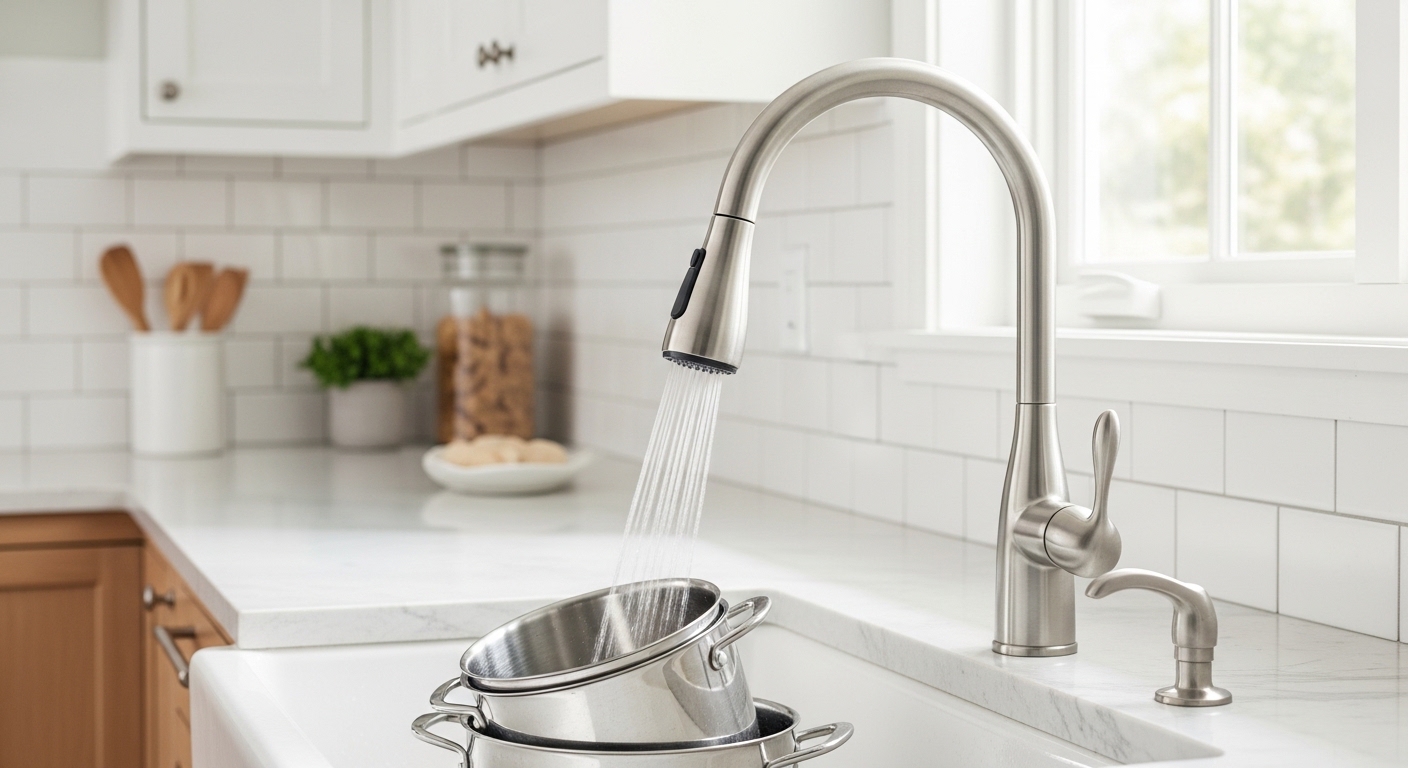
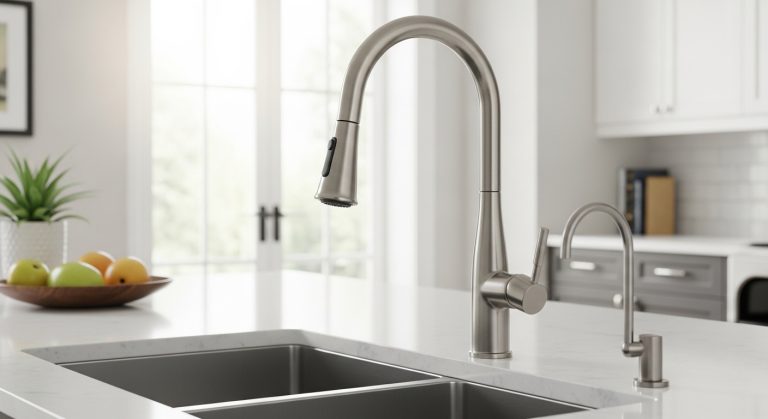
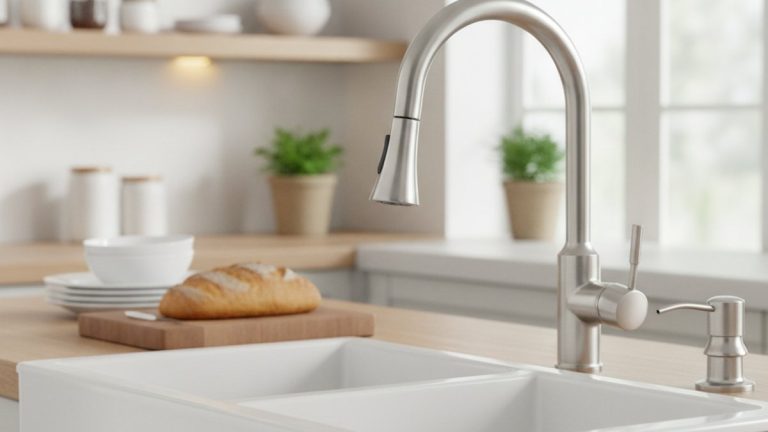
If you’ve been searching for the best pull down kitchen sink faucet, you’re really asking a practical question: which one won’t leave the spray head drooping into the sink after six months, won’t spot up every time your kids touch it, and won’t drip within a year? A pull down faucet has the sprayer built into the spout, so you pull the head straight down into the basin — different from a pull-out, where the head pulls horizontally toward you. That vertical design gives you more reach across a deep sink, better rinsing power for big pots, and a cleaner look, which is exactly why it’s the go-to for family kitchens.
Below, we’ll answer the questions people actually ask before buying — docking, finishes, spray head material, price, and installation — so you can pick with confidence. This guide reflects hands-on testing notes from the Aniflux Home fixtures team plus the standards real faucets are held to.
What’s the difference between a pull down and a pull out faucet, and which is better?
A pull down faucet’s spray head pulls vertically down into the sink; a pull out faucet’s head pulls horizontally out toward you on a hose. For most kitchens, a pull down is better — it has a taller arc, more clearance for tall pots, and the head docks back cleanly into the spout. Pull out faucets win only in tight spots, like under a low window or a shallow cabinet, where a tall arch won’t fit.
Here’s the plain-language version. Pull down = tall, gooseneck-style spout, great reach downward, more dramatic look. Pull out = shorter, more compact, the head comes toward your body which some people find easier for filling a pot on the counter. If you have a standard sink with normal clearance above it, a pull down is almost always the more useful choice for a family that rinses a lot of dishes and produce.
| Feature | Pull Down Faucet | Pull Out Faucet |
|---|---|---|
| Spray direction | Straight down into basin | Horizontal toward you |
| Spout height | Tall (8–10″ arc typical) | Shorter, more compact |
| Best for | Deep sinks, tall pots, rinsing | Low windows, tight clearance |
| Reach into far corners | Good | Excellent |
| Look | Statement gooseneck | Low-profile, understated |
What actually makes one pull down faucet better than another?
Four things separate a great pull down faucet from a frustrating one: the docking mechanism, the spray head material, the valve, and the finish. Get those right and the “brand name” matters far less than you’d think.
- Magnetic docking. This is the single most important feature. Cheaper faucets use a plastic ball-and-weight system that loosens over time, so the spray head sags and won’t sit flush. A magnet snaps the head back into place every time and holds it there for years. If a faucet doesn’t have magnetic docking, skip it.
- Metal or reinforced spray head. All-plastic heads crack at the button and the finish flakes. Look for a metal-bodied head or at least a metal collar around the buttons.
- Ceramic-disc valve. This is the part that turns water on and off. Ceramic discs are the industry standard for a drip-free life measured in the hundreds of thousands of cycles. If it drips early, the valve is usually why — see our guide on how to fix a dripping faucet at home.
- Spot-resist / brushed finish. A PVD or spot-resist coating hides water spots and fingerprints, which matters a lot in a hard-water home.
Notice what’s not on that list: touchless motion sensors, LED temperature displays, or voice control. Those are nice, but they add failure points and cost. A well-built manual pull down faucet with the four fundamentals above will outlast a gadget-heavy one almost every time.
Which finish is best for a pull down kitchen faucet — stainless, matte black, or bronze?
For most kitchens, spot-resist stainless or brushed nickel is the most forgiving finish — it hides fingerprints and water spots and matches nearly any appliance. Matte black looks stunning but shows hard-water spots and dried soap film more than any other finish, so it needs regular wiping. Bronze and champagne finishes are warm and hide spots well but limit which cabinet hardware and appliances match.
If you have hard water, this decision matters more than the shape of the spout. Matte black and polished chrome are the two finishes that show mineral spotting the most; brushed/satin finishes hide it best. Whatever you choose, you’ll want to know how to clean hard water stains from a faucet so your finish stays looking new. If you’re leaning toward a warm satin tone, our breakdown of whether brushed nickel faucets are worth it walks through durability and matching in detail.
| Finish | Hides spots? | Best paired with | Maintenance |
|---|---|---|---|
| Spot-resist stainless | Excellent | Stainless appliances | Low |
| Brushed nickel | Very good | Warm or neutral kitchens | Low |
| Matte black | Poor | Modern, white/wood kitchens | High |
| Champagne bronze | Good | Warm gold hardware | Medium |
| Polished chrome | Poor | Traditional kitchens | Medium-High |
How much should I spend on a good pull down kitchen faucet?
For a genuinely good pull down kitchen faucet, budget $150 to $280. That range gets you magnetic docking, a metal spray head, a ceramic-disc valve, and a solid finish warranty — everything that actually determines whether the faucet lasts. Below about $90 you start losing the metal internals; above $350 you’re mostly paying for touchless tech and designer branding, not better core durability.
Here’s how the tiers break down in real terms:
- Under $90 — budget tier. Often plastic spray heads, weight-based docking, and lighter valves. Fine for a rental or a rarely-used prep sink, but expect sag and spotting sooner.
- $150–$280 — the sweet spot. This is where most families should shop. Magnetic docking, metal heads, spot-resist finishes, and warranties that actually cover the finish and cartridge for life.
- $300–$500+ — premium / touchless. Motion activation, higher-flow spray patterns, heavier solid-brass bodies, designer finishes. Worth it if you specifically want touchless, not required for durability.
The best value question isn’t “what’s cheapest” — it’s “what has the lowest cost of ownership.” A $200 faucet with a lifetime cartridge warranty that never drips is cheaper over ten years than a $70 one you replace twice.
What GPM and spray patterns do you actually need?
Aim for a faucet rated around 1.5 to 1.8 GPM (gallons per minute) with at least two spray modes: a wide aerated stream for filling and washing, and a stronger spray/rinse for scrubbing stuck-on food. In many U.S. states, 1.8 GPM is the legal maximum for kitchen faucets, and some efficiency programs cap it at 1.5 GPM, so you’re not sacrificing much by going efficient.
Don’t get talked into chasing the highest flow number. A well-designed 1.5 GPM aerator with a good spray toggle feels powerful because the spray mode concentrates the water. What you actually want is a smooth toggle button that stays on the mode you set (so you’re not holding it), and a pause button is a nice bonus for filling a coffee pot without splashing. A magnetic-dock head plus a clean spray-to-stream toggle covers 95% of everyday kitchen tasks.
Is a pull down kitchen faucet hard to install yourself?
No — most pull down faucets are a genuine DIY job, typically 45 to 90 minutes with basic tools, if your sink already has the right number of mounting holes. Modern faucets use quick-connect hoses and a single deck-plate design, so you rarely need a plumber unless you’re moving supply lines or converting a three-hole sink to single-hole.
The main things to check before you buy: how many holes your sink or countertop has (a single-handle pull down needs one, but most include a cover plate for three-hole sinks), and whether your under-sink space fits the docking weight and spray hose. If you want a full walkthrough, we cover it step by step in how to install a kitchen faucet step by step, and there’s a brand-specific guide for installing a Moen kitchen faucet with a sprayer if that’s what you’ve got.
Quick pre-install checklist:
- Shut off the hot and cold supply valves under the sink.
- Confirm hole count and spacing (single-hole vs. 3-hole with deck plate).
- Check that the supply lines reach — buy braided extensions if needed.
- Keep a bucket and towel handy for residual water in the lines.
- Hand-tighten connections first, then snug with a wrench — don’t over-torque plastic nuts.
How the Aniflux Home team evaluates pull down faucets
We don’t rate faucets on looks. Our fixtures team cycles each spray head through repeated dock-and-pull tests to check that the magnet still holds after heavy use, runs the valve through extended open/close cycling to catch early drips, and checks finishes against standard corrosion and abrasion benchmarks. We weight our picks toward faucets that meet recognized U.S. plumbing standards (the kind that certify lead-free wetted parts and verified flow rates) and that back the cartridge and finish with a lifetime limited warranty. A faucet that can’t survive its own docking mechanism doesn’t make our list, no matter how good it photographs.
A practical buying tip that flows from that testing: always register your warranty and keep the model number. The most common failure — a slow drip years in — is usually a cartridge issue that a lifetime warranty covers for free, but only if you can identify the part.
FAQ
What is the best pull down kitchen sink faucet for hard water?
For hard water, choose a pull down faucet with a spot-resist or PVD brushed finish (stainless or nickel) and a spray head with rubber nozzles you can wipe clean to break up mineral buildup. Avoid matte black and polished chrome, which show every water spot. The finish is what fights hard water — not the spout shape.
Do pull down faucets sag or leak over time?
Cheap ones with weight-and-ball docking sag as the mechanism wears; faucets with magnetic docking rarely do because the magnet re-seats the head every time. Leaks almost always come from the valve cartridge, so a ceramic-disc valve with a lifetime warranty is your best protection against both problems.
Can I put a pull down faucet on a sink with three holes?
Yes. Single-handle pull down faucets are designed for one hole but almost always include an escutcheon (deck plate) that covers the extra two holes on a standard three-hole sink. Just confirm your hole spacing is the standard 4-inch or 8-inch layout before buying.
Is a higher GPM better for a kitchen faucet?
Not really. Beyond about 1.5–1.8 GPM you gain little for everyday tasks, and many U.S. states cap kitchen faucets at 1.8 GPM anyway. A well-designed spray mode makes a 1.5 GPM faucet feel plenty powerful because it concentrates the water into a focused rinse.
How long should a good pull down kitchen faucet last?
A quality pull down faucet with a ceramic-disc valve and metal spray head should last 10 to 15 years or more, with the cartridge being the only part likely to need replacing — and that’s usually covered under a lifetime limited warranty. Finish longevity depends on your water and how consistently you wipe it dry.
What’s the difference between a pull down and a pull out faucet again?
A pull down faucet’s spray head pulls straight down into the sink from a tall spout; a pull out faucet’s head pulls horizontally toward you from a shorter spout. Pull down is better for deep sinks and tall pots; pull out is better under low windows or tight cabinets.
Author note: This guide was written by the Aniflux Home fixtures editorial team, drawing on hands-on faucet testing and everyday plumbing know-how. Aniflux Home specializes in faucets and bathroom fixtures, and we test the products we recommend against recognized U.S. plumbing standards for flow, lead-free materials, and finish durability. Still deciding on the rest of your fixtures? Our guide on how to choose the right bathroom faucet uses the same practical approach.