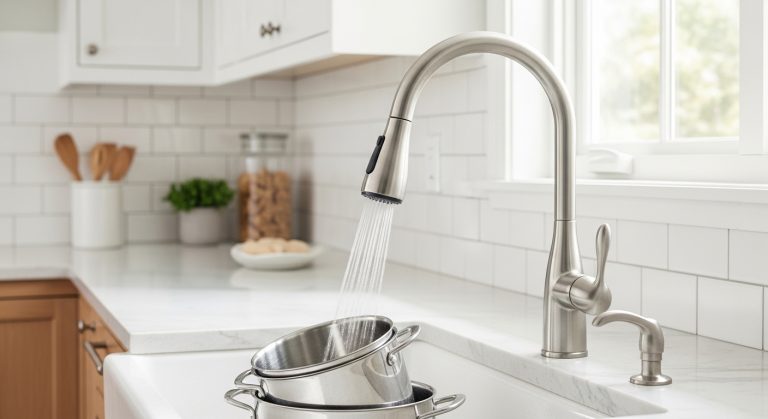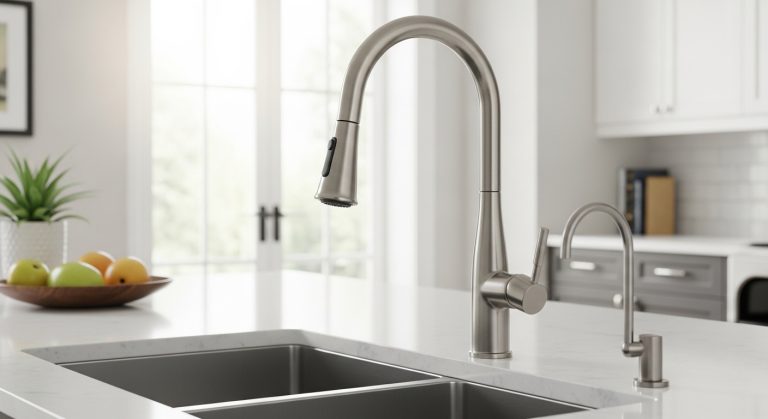
What’s the Best Pull Down Kitchen Faucet With Soap Dispenser for a Busy Home in 2026?
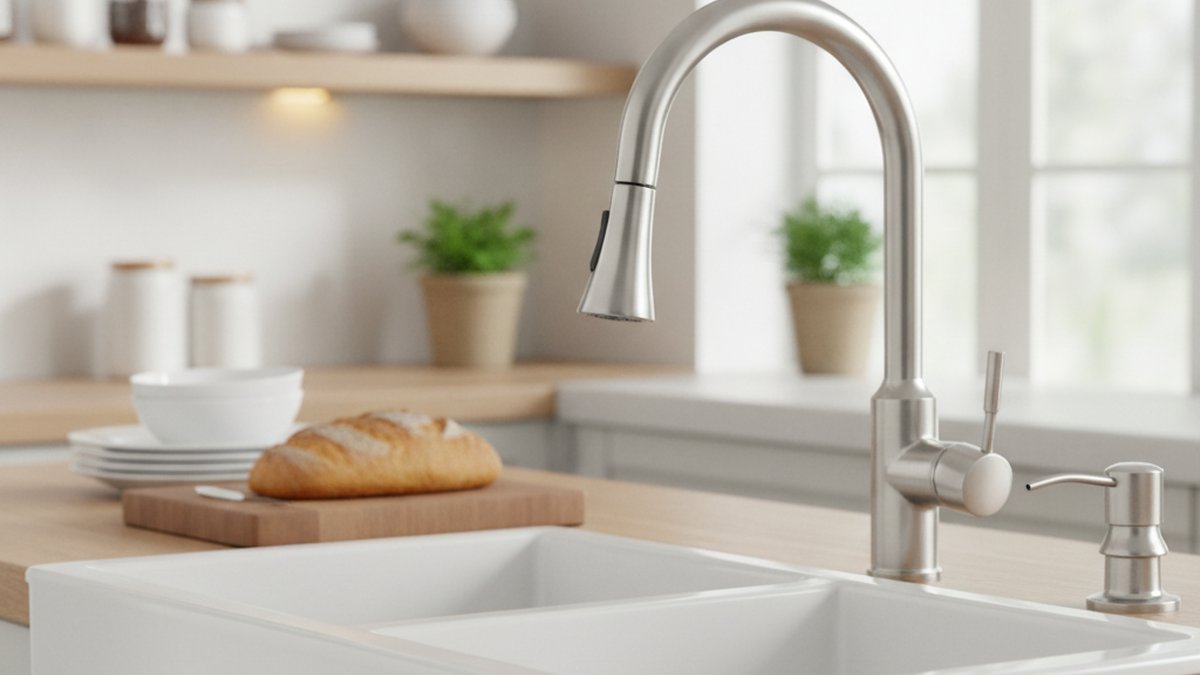
If you’ve been hunting for the best pull down kitchen faucet with soap dispenser, you already know the appeal: one clean fixture that handles rinsing pots, filling stockpots, spraying down the sink, and keeping dish soap right where your hands are — no plastic bottle cluttering the counter. But “best” depends on your sink, your water, and how hard your kitchen gets used. This guide breaks down exactly what to look for, what the specs actually mean, and how to avoid the two mistakes that make people hate their faucet within a year.
Why get a pull down faucet with a built-in soap dispenser at all?
Because it clears your counter and keeps soap where you’re already working — at the faucet. A built-in dispenser replaces the squeeze bottle that lives next to your sink, feeds from a refillable reservoir under the counter (typically 13–16 oz), and dispenses with a single push of the pump head. Combined with a pull-down sprayer, you get reach for rinsing and a tidy deck in one coordinated set.
There’s a practical hygiene angle too. A pump you press with the back of your hand or wrist means you’re not grabbing a greasy bottle with dirty fingers. And because the reservoir sits below the counter, you refill from the top — no crawling into the cabinet to unscrew a bottle in the dark. That single feature, top-fill vs. bottom-fill, is the difference between a dispenser you’ll actually use and one you’ll abandon by month three.
One caveat: a soap dispenser needs a deck hole. If your sink is a single-hole cutout and you don’t have a spare hole (or an escutcheon plate that adds coverage), you’ll need to drill one — usually straightforward in stainless steel, more involved in granite or quartz. We’ll cover that below.
What should you actually look for in a pull down kitchen faucet with soap dispenser?
Prioritize five things: valve type, spray-head material and docking, hose reach, finish durability, and how the soap dispenser refills. Nail those and the rest is preference.
- Ceramic disc valve. This is the part that controls flow and temperature. Ceramic discs outlast rubber-washer valves by years and are the single biggest predictor of a drip-free faucet. Look for a valve rated to 500,000 cycles or a valve that meets industry cycle testing.
- Magnetic docking. After you use the sprayer, it needs to snap firmly back into the spout. Magnetic docks hold the head straight for years; older ball-weight docks tend to sag so the head droops over time.
- Hose reach of 18–24 inches. Enough to reach both bowls of a double sink and fill a pot on the counter, without so much slack that the counterweight tangles.
- Solid brass body. Zinc-alloy bodies are cheaper and corrode faster, especially where water sits. Brass resists corrosion and holds threads better for a lifetime of use.
- Top-fill soap dispenser. Refill from above the counter. Non-negotiable if you want to keep using it.
Two spray modes matter more than a dozen. You want an aerated stream for filling and everyday washing, and a concentrated spray for blasting stuck-on food off pans. Some models add a “pause” button on the head — genuinely useful when you’re moving a dripping sprayer across the kitchen. Fancy multi-function heads with five modes usually just mean more spots for mineral buildup.
How much should you spend — and what do you get at each price?
Plan on $120–$180 for a genuinely good faucet-and-dispenser combo, and $200–$320 if you want touchless activation or a premium finish like matte black or champagne bronze. Below $100, you’re usually getting a zinc body and a plastic spray head that will disappoint within a year or two.
| Price range | What you typically get | Best for |
|---|---|---|
| $60–$100 | Zinc or thin-brass body, plastic head, ball-weight dock, bottom-fill dispenser, 200k-cycle valve | Rentals, short-term use, backup kitchens |
| $120–$180 | Solid brass body, magnetic dock, dual spray modes, ceramic valve, top-fill dispenser, spot-resist finish | Most family kitchens — the sweet spot |
| $200–$320 | Touchless or touch activation, premium PVD finish, 500k+ cycle valve, larger reservoir, lifetime warranty | Heavy daily use, design-forward kitchens, hard-water homes |
Where does the extra money actually go? Mostly into the finish and the valve. A PVD (physical vapor deposition) finish is bonded at the molecular level and resists scratching and tarnish far better than an electroplated coat — worth it in brushed nickel, matte black, or bronze. If you’re weighing finishes, our deep dive on whether brushed nickel faucets are worth it walks through how each finish hides water spots and fingerprints day to day.
Pull-down vs. pull-out: which sprayer style is better with a soap dispenser?
For most kitchens, a pull-down is the better pairing. Pull-down faucets have a tall, high-arc spout and the spray head pulls straight down into the sink — great clearance for tall pots and a natural match for a deck-mounted soap pump beside it. Pull-out faucets have a lower spout and the head pulls horizontally toward you, which suits shallow sinks, low-clearance windows over the sink, or small prep sinks.
| Feature | Pull-Down | Pull-Out |
|---|---|---|
| Spout height | High-arc (8–10″) | Low to medium |
| Best sink type | Deep single or double bowl | Shallow or bar/prep sink |
| Pot clearance | Excellent | Limited |
| Window over sink | May be too tall | Fits under low windows |
| Pairs with soap dispenser | Very cleanly | Yes, but tighter deck layout |
If you’ve decided on high-arc, it’s worth understanding the tradeoffs of spout height and spray pressure — our guide to the best high arc pull down kitchen faucet covers how tall is too tall for splash, and how arc shape affects where water lands in the bowl. And if you’re comparing whole categories for a household that runs the sink constantly, the roundup on the best pull down kitchen sink faucet for a busy family kitchen pairs well with this one.
Will a soap dispenser fit my sink — and how hard is it to install?
If your sink already has a spare deck hole, installation is genuinely a weekend-afternoon job with no drilling. If it doesn’t, you’ll need to add one — easy in stainless steel, more careful work in granite or quartz. Standard soap dispensers need a hole roughly 1 to 1.25 inches in diameter.
Here’s the honest breakdown by sink material:
- Stainless steel sink: A step drill bit and 15 minutes gets you a clean hole. Deburr the edge and you’re done.
- Granite or quartz countertop: Use a diamond hole saw with water cooling, go slow, and don’t force it. If you’re not confident, a stone fabricator will do it for $75–$150 — cheaper than a cracked counter.
- Existing sprayer hole: If you’re replacing an old side-sprayer, that hole is often perfect for the new soap dispenser — no drilling at all.
The faucet itself installs like any modern single-hole model: drop the supply lines and hose through the deck, secure the mounting nut from below, connect hot and cold supply lines, and attach the sprayer hose and counterweight. If you want a full walkthrough, we’ve documented the step-by-step kitchen faucet install including the under-sink connections that trip most people up. For the dispenser, you thread the pump body up through the deck, tighten the mounting nut underneath, and clip on the reservoir bottle.
Does hard water ruin these faucets — and how do I keep it working?
Hard water won’t ruin a good faucet, but it will clog the spray head and streak the finish if you ignore it. The fix is routine, not dramatic: wipe the head weekly, and soak the aerator and spray face in white vinegar every couple of months to dissolve mineral scale. A ceramic disc valve is largely immune to hard water; it’s the tiny spray holes and the aerator screen that gum up.
If your water leaves white crust fast, choose a spray head with silicone nozzle nubs — you rub them with a fingertip and the scale flakes right off, no disassembly. For finishes, spot-resist and matte surfaces hide mineral spotting better than polished chrome. When buildup does show up on the body, our guide on cleaning hard water stains from a faucet covers what’s safe on each finish (skip anything abrasive on PVD and matte black).
The soap dispenser needs a little care too. If you use thick or “gel” soaps, dilute them slightly or the pump will get sluggish. Every few months, run warm water through the pump to clear dried soap from the mechanism — the most common dispenser complaint is a pump that stops priming, and it’s almost always dried soap, not a broken part.
What’s the best pull down kitchen faucet with soap dispenser setup for most people?
For the majority of homes, the winning setup is a single-hole high-arc pull-down in solid brass with a spot-resist stainless or matte black PVD finish, a magnetic dock, dual spray/stream modes, a 20-inch hose, and a matching top-fill soap dispenser with a 14+ oz reservoir. That combination survives daily family use, resists hard water, keeps the counter clear, and stays drip-free for years thanks to the ceramic valve.
Skip touchless if your budget is tight — it’s a nice convenience but it’s the first thing to fail and it adds $60–$100. Spend that money on the finish and valve instead. Do prioritize the top-fill dispenser and magnetic dock; those two features are what separate a faucet you love from one you tolerate.
Author note & why you can trust this guide
This guide was written by the Aniflux Home fixtures team — the same people who install, pressure-test, and warranty faucets for a living. We evaluate faucets against real-world criteria: valve cycle testing, hose durability, dock retention over time, and finish resistance to abrasion and hard water. Aniflux Home has fitted out thousands of kitchens across the U.S., and the picks here reflect what actually holds up in daily use, not just spec sheets.
A note on standards: look for faucets certified to NSF/ANSI 61 and 372 (safe drinking-water contact and low-lead compliance) and finishes tested to ASTM corrosion standards. And always check the warranty — a genuine limited lifetime warranty on the finish and valve is a strong signal the manufacturer trusts the build. If a brand only offers one year, that tells you something too.
FAQ
Can I add a soap dispenser to a faucet I already own?
Yes — a soap dispenser is a fully independent fixture, so it doesn’t need to match or connect to your faucet’s plumbing. As long as you have a spare deck hole (or can drill one), you can add a standalone dispenser to any existing setup. Buy one in a finish that matches your faucet for a coordinated look.
How big is the soap reservoir, and how often do I refill it?
Most under-counter reservoirs hold 13–16 oz. For an average family, that’s a refill every 2–4 weeks. Because good models are top-fill, you just pour soap into the pump head from above the counter — no reaching into the cabinet. A larger reservoir simply means fewer refills.
Do these faucets work with a water filter or reverse-osmosis system?
The main faucet works normally with a water softener, but a pull-down sprayer isn’t ideal for a dedicated RO drinking line — that’s usually a separate small tap. If you have an RO system, keep its dedicated faucet and use the pull-down for general washing. Your soap dispenser is unaffected either way.
Why does my new dispenser pump stop working after a few weeks?
Nine times out of ten it’s dried or overly thick soap clogging the pump, not a defect. Pull the reservoir, run warm water through the pump head to clear the passage, and dilute thick gel soaps slightly. If the pump still won’t prime after cleaning, check the pickup tube is seated fully in the bottle.
What’s the difference between top-fill and bottom-fill soap dispensers?
Top-fill means you refill from the pump head above the counter; bottom-fill means you unscrew the reservoir under the sink to refill it. Top-fill is far more convenient and is the feature most people wish they’d prioritized — always choose it if you can.
Is a single-handle or double-handle better for a pull-down faucet?
Single-handle is standard and best for pull-downs. It lets you adjust flow and temperature with one hand — often your wrist or forearm when your hands are full or messy — which is exactly what you want at a busy sink. Double-handle setups are rare on pull-down kitchen faucets and offer no real advantage here.