Which Widespread Faucet Fits a Pedestal Sink — and How Do You Choose the Right One?
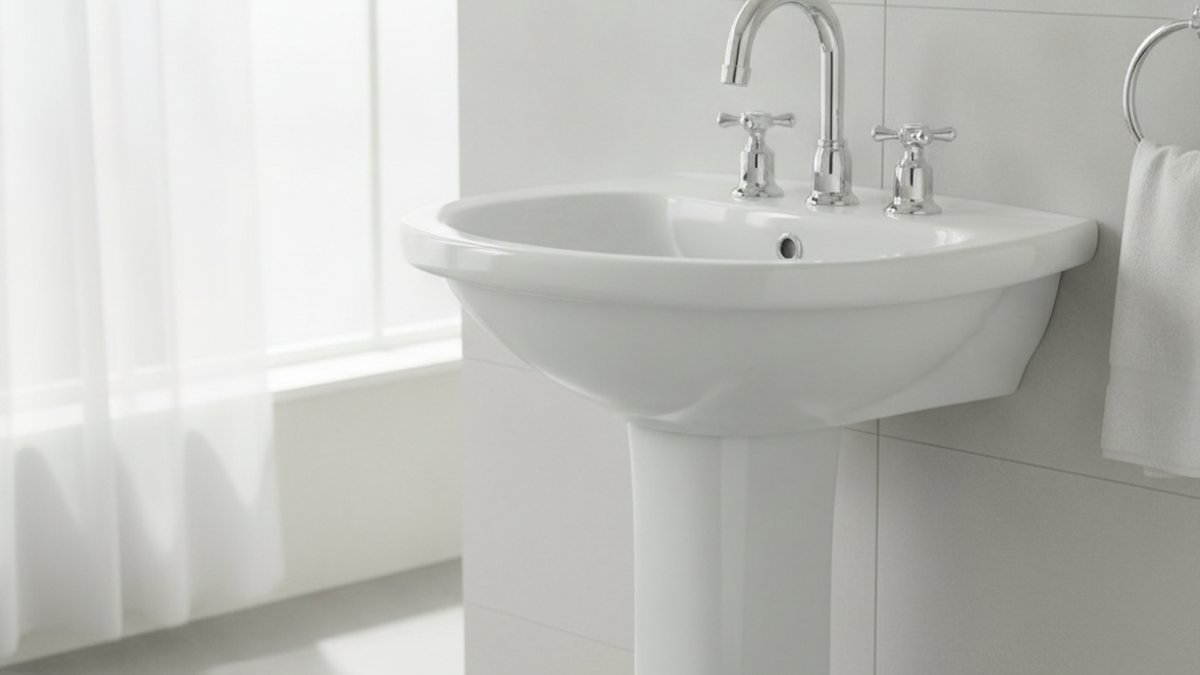
Choosing a widespread faucet pedestal sink combination trips up more people than almost any other bathroom fixture pairing, and it’s because pedestal sinks look deceptively simple. There’s no vanity to hide plumbing, the deck space is tiny, and the drilled holes are already set at the factory — so you can’t just grab any faucet you like and hope it lands. The good news: once you know your hole count and spacing, the decision becomes almost mechanical. This guide walks you through exactly how to confirm a widespread faucet will fit, what to measure, which finishes and styles suit a pedestal, and how to avoid the two or three mistakes that force people into a return.
Will a widespread faucet actually fit a pedestal sink?
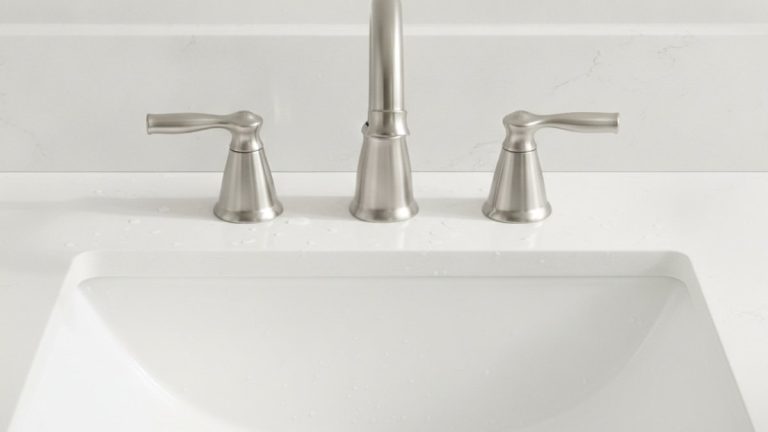
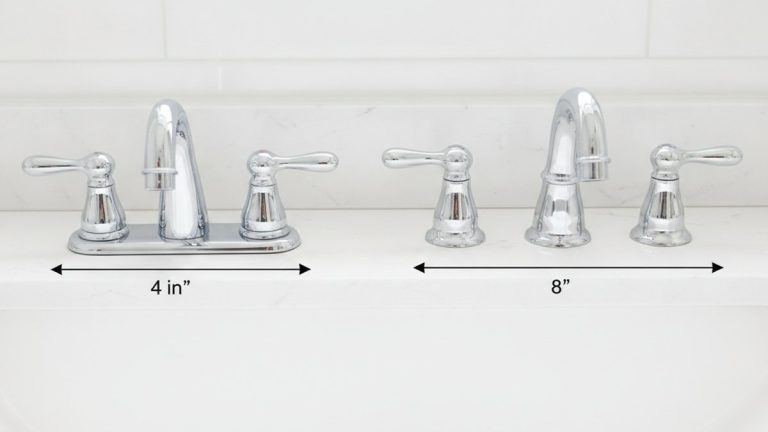
Yes — but only if your pedestal sink is drilled for three holes at 8-inch spacing. A widespread faucet is a three-piece set: a spout in the center and two independent handles, each mounted in its own hole. The industry-standard spread is 8 inches measured center-to-center between the two outer (handle) holes, though “widespread” technically covers anything from 6 to 16 inches. If your pedestal sink deck has three holes and the outer two sit roughly 8 inches apart, you’re cleared for a widespread.
Here’s the catch that catches everyone: many pedestal sinks are drilled as single-hole or centerset (4-inch) sinks instead. A centerset sink has three holes only 4 inches apart, and the handles-plus-spout are joined on one 6-inch base plate. You cannot install an 8-inch widespread faucet on a 4-inch centerset sink — the holes are physically too close and the valve bodies won’t reach. So before you fall in love with a faucet, flip the question around: what is your sink drilled for?
- Single hole: one hole only — use a single-hole/monoblock faucet, not a widespread.
- Centerset (4″): three holes, 4 inches apart — use a centerset or a 4-inch minispread faucet.
- Widespread (8″): three holes, ~8 inches apart — this is your widespread faucet zone.
If you’re buying a new pedestal sink at the same time, you get to pick — just order the sink drilled for 8-inch widespread and everything downstream gets easier. Our deeper dive on the right widespread faucet spacing for your bathroom sink shows exactly where to put a tape measure so you don’t guess.
How do I measure my pedestal sink to know which faucet to buy?
Measure center-to-center between the two outer holes: 8 inches means widespread, 4 inches means centerset, and one lone hole means single-hole. That single measurement decides 90% of your purchase. Grab a tape measure and put the tip on the center of the left hole, then read the number at the center of the right hole.
But two more measurements matter for a pedestal specifically, because the deck is narrow and the pedestal column is in the way:
- Hole diameter. Most faucet shanks need a 1-1/4″ to 1-3/8″ hole. Porcelain pedestal sinks are drilled to standard, but measure anyway if the sink is old or imported.
- Deck depth (front-to-back). Pedestal decks are shallow. Confirm the faucet’s footprint — especially the handle bases — won’t crowd the front edge or overhang the basin.
- Under-deck clearance. This is the pedestal killer. The valve bodies, mounting nuts, and flexible supply lines all hang below the deck, and the pedestal column sits right behind them. Reach under and confirm you have room to get a basin wrench on the mounting nuts.
Write those numbers down before you shop. If you already know you have an 8-inch sink but want to see real options that fit it, our roundup of a widespread faucet for sale that actually fits your 8-inch sink is a good next stop.
Why do people choose a widespread faucet for a pedestal sink over a centerset?
Because a widespread faucet visually matches the proportions of a pedestal sink and elevates a plain fixture into a statement piece. Pedestal sinks are already a design choice — you install one because you want the clean, freestanding, furniture-like look. A widespread faucet, with its three separate pieces spread across the deck, echoes that intentional, tailored feel far better than a compact centerset that can look dinky on a wider deck.
There are practical reasons too:
- Independent temperature control. Separate hot and cold handles let you dial in a precise mix — nice for washing your face versus filling a cup.
- Easier repairs. Because the valves are separate, you can rebuild or replace one side without touching the other. A worn hot-side stem is a cheap, isolated fix.
- Flexible spout height. Widespread sets come in low-arc and high-arc spouts, so you can match the spout to the basin depth.
- Perceived value. Widespread faucets read as higher-end, which matters if you’re staging a home or renovating a guest bath.
The trade-off is cost and complexity: three mounting points, more connections, and a slightly harder install than a one-piece faucet. If you want the widespread look without the premium price, see which widespread bathroom faucet under $100 is actually worth buying in 2026 — several land well within a pedestal-sink budget.
Widespread vs. centerset vs. single-hole on a pedestal sink: which is right for you?
Match the faucet type to your sink’s drilling first, then to your style. Here’s the head-to-head so you can decide at a glance:
| Faucet type | Sink holes needed | Best for | Typical price range | Pedestal fit notes |
|---|---|---|---|---|
| Widespread (8″) | 3 holes, ~8″ spread | Larger pedestal decks, upscale look, precise temp control | $90–$350+ | Needs deck width and under-deck clearance; best visual match |
| Centerset (4″) | 3 holes, 4″ spread | Smaller or older pedestal sinks drilled at 4″ | $50–$180 | Compact; can look small on a wide deck |
| Single-hole / monoblock | 1 hole | Narrow-deck pedestals, modern minimalist style | $60–$250 | Easiest install; won’t fit a 3-hole sink without a base plate |
| Mini-widespread (4″) | 3 holes, 4″ spread | Wanting the 3-piece look on a centerset sink | $80–$220 | Great compromise when your sink is drilled at 4″ |
Notice the mini-widespread row — it’s the unsung hero for pedestal owners. If your sink came drilled at 4 inches but you love the separated-handle look, a mini-widespread gives you three visible pieces on standard centerset spacing. It’s the closest you’ll get to a true widespread on a small deck.
What clearance problems should I watch for behind a pedestal sink?
The pedestal column and the wall behind it can leave too little room for the faucet’s supply lines, mounting hardware, and shut-off valves — so measure the under-deck space before you buy. Unlike a vanity, a pedestal offers no cabinet to route plumbing through, and the decorative column often hides the rough-in but crowds your working space.
Three things go wrong most often:
- No room for a basin wrench. The mounting nuts for widespread valves sit deep under the deck, close to the pedestal. If you can’t fit a wrench, tightening the faucet becomes a knuckle-scraping ordeal. Dry-fit before final assembly.
- Supply-line kinks. Widespread faucets connect the spout to the two valves with flexible tubing. On a tight pedestal, those tubes can bind against the column. Choose a faucet with braided stainless supply lines that flex without kinking.
- Shut-off valve collisions. If your wall shut-offs stick out far, they can bump the pedestal or the faucet’s tubing. Quarter-turn angle stops with a low profile solve this.
A smart move: assemble the faucet’s valve bodies and connect the spout tubing before you set the sink onto the pedestal, if your sink design allows the basin to be worked on separately. It turns a cramped blind job into an open-air one.
Which finish holds up best on a bathroom pedestal sink?
Brushed nickel and chrome are the most forgiving and durable finishes for a bathroom faucet, with matte black and brushed gold trending for style but demanding a bit more cleaning discipline. On a pedestal sink, the faucet is fully exposed from every angle — there’s no vanity to distract the eye — so the finish carries a lot of the visual weight.
Here’s how the popular finishes behave in a real bathroom:
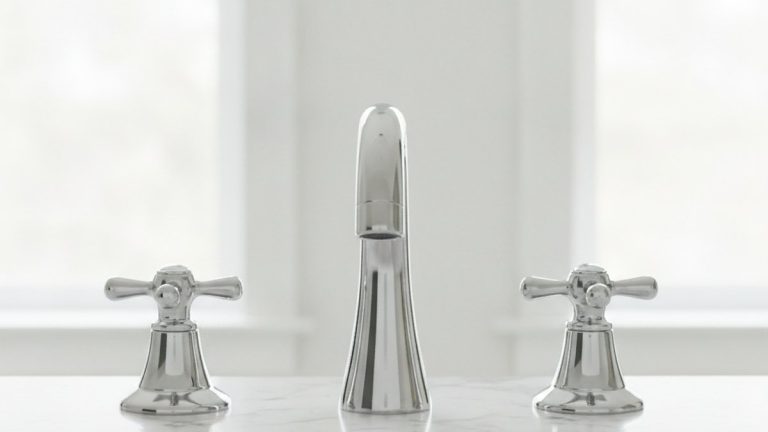
- Chrome: Cheapest, brightest, easiest to find matching accessories. Shows water spots and fingerprints readily, but wipes clean instantly.
- Brushed nickel: Warm, satin sheen that hides water spots and fingerprints better than chrome. The go-to for a low-maintenance, timeless look. If you’re weighing it, we break down whether brushed nickel faucets are worth it in detail.
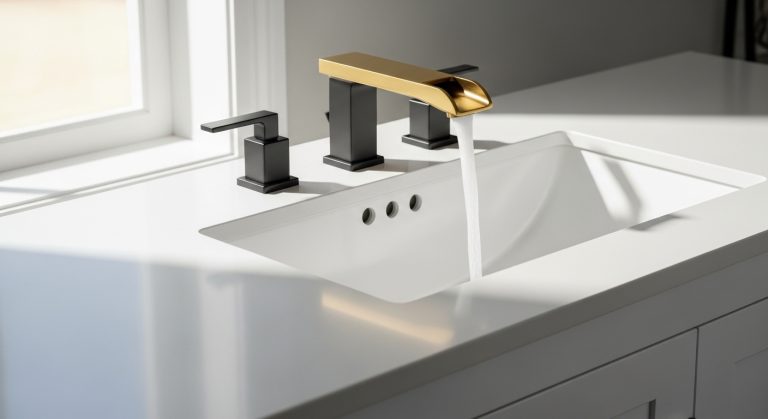
- Matte black: Bold and modern, pairs beautifully with a white porcelain pedestal. Shows dust and hard-water residue, so keep a microfiber cloth handy.
- Brushed/champagne gold: Upscale and warm, hides spots well, but confirm the finish is PVD-coated for durability.
Whatever finish you choose, match it to your drain and any accessories — a mismatched pop-up drain is the giveaway that undermines an otherwise clean pedestal install. And if you live with hard water, expect any finish to spot; our guide on cleaning hard water stains from a faucet keeps that gleam alive.
How hard is it to install a widespread faucet on a pedestal sink yourself?
It’s a moderate DIY job — about 1 to 2 hours for a first-timer — and the hardest part is working in the tight space behind the pedestal, not the plumbing itself. If you can turn a wrench and follow a sequence, you can do this. The connections are all compression or threaded; no soldering, no glue.
Here’s the honest sequence for a pedestal:
- Shut off the water at the angle stops and open the faucet to drain the lines.
- Set the two valve bodies into the outer holes and the spout into the center hole; hand-thread the mounting nuts from below.
- Connect the spout tubing to each valve (this is the widespread-specific step — a T-connection or two flex tubes join the valves to the spout).
- Snug the mounting nuts with a basin wrench — this is where pedestal clearance matters most.
- Connect the braided supply lines from the valves to your shut-offs.
- Turn the water on slowly, check every joint for drips, and tighten a quarter-turn more if you see weeping.
Pedestal-specific tip: if the basin lifts off the pedestal, do steps 2–4 on a towel-covered counter, then set the whole assembly onto the pedestal. Far easier than lying on the floor. For the general mechanics of faucet plumbing that carry over here, the fundamentals in our guide to what a widespread faucet set is and whether it’s right for your bathroom sink are worth a read before you start.
Aniflux Home’s take: getting the pairing right the first time
After fielding hundreds of returns and fitment questions, the single biggest cause of a bad widespread faucet pedestal sink purchase is skipping the measurement step. People buy the faucet they love, then discover their sink is drilled at 4 inches, or that the pedestal column blocks the wrench. Measure your hole spread and your under-deck clearance first — everything else is style preference.
If you’re starting from scratch, order a pedestal sink drilled for 8-inch widespread and pick a faucet with braided stainless supply lines and quarter-turn ceramic-disc valves. That combination gives you the cleanest look, the easiest install, and the fewest drips down the road.
FAQ
Can I put a widespread faucet on any pedestal sink?
No. A widespread faucet only fits a pedestal sink drilled for three holes at roughly 8-inch spacing. If your sink is single-hole or centerset (4-inch), a widespread won’t physically mount. Measure center-to-center between the outer holes before buying.
What’s the difference between a widespread and a centerset faucet on a pedestal sink?
A widespread has three separate pieces spread ~8 inches apart, giving a high-end, tailored look and independent hot/cold valves. A centerset joins the spout and handles on one 6-inch base at 4-inch spacing — more compact and cheaper, but it can look small on a wide pedestal deck.
My pedestal sink only has 4-inch spacing — what are my options?
Use a centerset or, for the three-piece look, a mini-widespread faucet, which mounts on 4-inch centers but keeps separate handles and spout. A true 8-inch widespread will not fit a 4-inch sink.
Is there enough room behind a pedestal sink for a widespread faucet’s plumbing?
Usually yes, but confirm before buying. The valve bodies, mounting nuts, and supply lines sit below the deck near the pedestal column. Choose flexible braided supply lines and low-profile quarter-turn shut-off valves, and dry-fit to make sure you can get a basin wrench on the mounting nuts.
What finish is best for a widespread faucet on a white pedestal sink?
Brushed nickel is the most forgiving — it hides water spots and fingerprints and pairs cleanly with white porcelain. Chrome is the budget classic, matte black is bold and modern, and brushed gold reads upscale. Whatever you pick, match your pop-up drain to the faucet finish.
How long does it take to install a widespread faucet on a pedestal sink?
About 1 to 2 hours for a first-time DIYer. The plumbing is straightforward compression and threaded connections; the tight space behind the pedestal is the only real challenge. Assembling the faucet on the basin before setting it on the pedestal makes it much easier.
About the author: This guide was written by the Aniflux Home fixtures team, drawing on hands-on installation and testing of widespread, centerset, and single-hole faucets across dozens of sink configurations. Aniflux Home specializes exclusively in faucets and bathroom fixtures, and every faucet we recommend is evaluated for fitment, valve quality, and finish durability.
Standards & warranty note: Look for faucets certified to NSF/ANSI 61 and 372 (lead-free) and cUPC-listed for North American plumbing code compliance. Reputable widespread faucets use ceramic-disc cartridges rated for hundreds of thousands of cycles and typically carry a limited lifetime warranty on the finish and function — always confirm the warranty terms before purchase.