What Is a “Wide Open Faucet” — and Do You Really Want One at Full Flow?
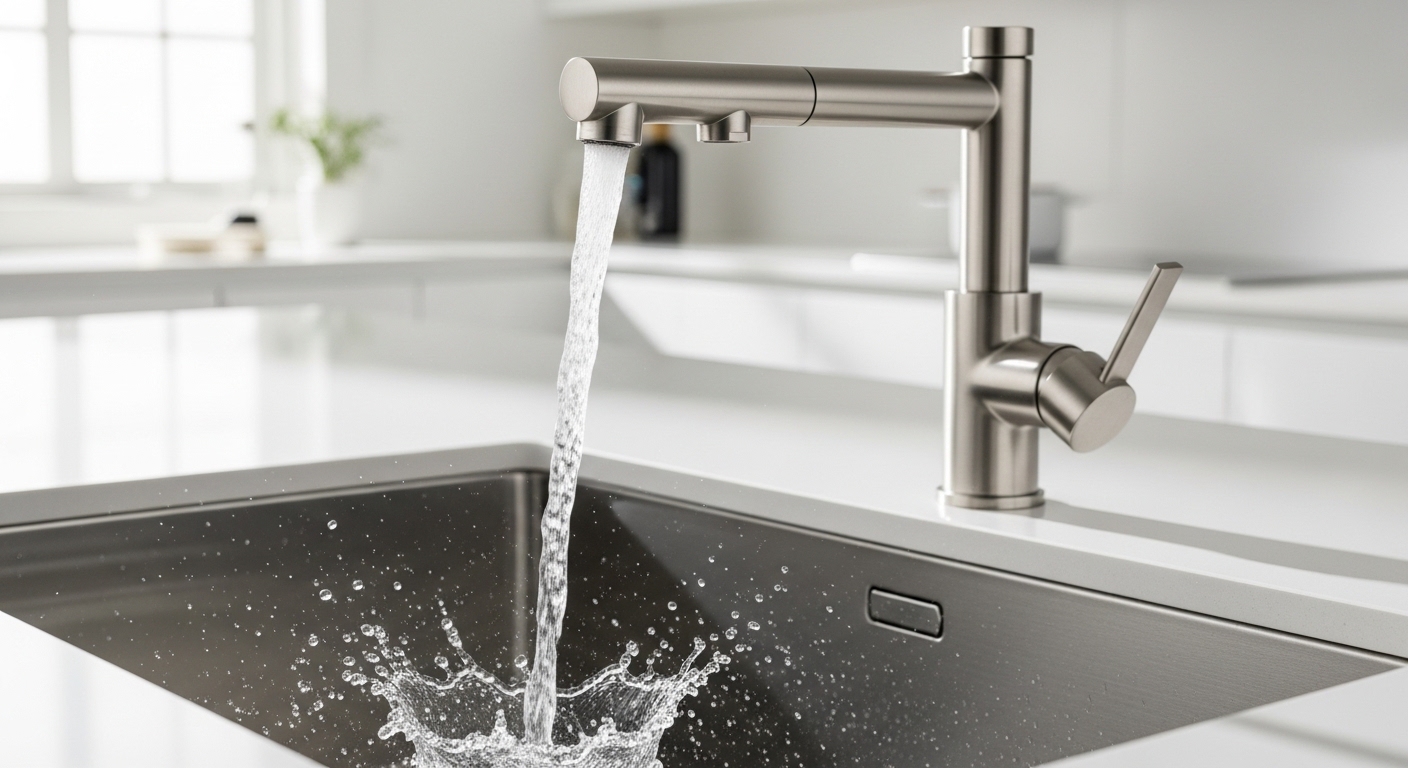
If you’ve searched for a wide open faucet, you’re usually after one of two things: a faucet that actually delivers strong, satisfying flow when you crank the handle all the way, or you’re troubleshooting a faucet that gushes at full blast and won’t slow down. This guide covers both — what “wide open” really means in plumbing terms, how much water a fully-open faucet legally moves in 2026, which faucet types give you the best usable flow, and when a wide-open stream is a feature versus a problem to fix.
At Aniflux Home we sell and test kitchen, bath, and commercial fixtures every day, so we’ll keep this concrete: real GPM numbers, real valve types, and real scenarios — from a busy family kitchen to a high-traffic restroom.
What does “wide open faucet” actually mean?
“Wide open” simply means the faucet valve is at its fullest position — maximum flow, handle all the way on. It is not a special product category so much as a description of how the faucet behaves at full throttle. When people shop for a “wide open faucet,” they generally want a fixture engineered for strong, unrestricted flow: a large-bore valve cartridge, a wider internal waterway, and an aerator that isn’t overly choked down.
Here’s the key thing most articles skip: turning a faucet wide open does not mean unlimited water. Every residential faucet sold in the United States is built around a maximum flow rate set by federal law and often stricter state codes. So a “wide open” faucet is really the faucet delivering its rated maximum, not some uncapped firehose. The difference between a great high-flow faucet and a weak one is how much usable flow you get right up to that legal ceiling — and how consistent it feels at your home’s water pressure.
How many gallons per minute does a wide open faucet use?
A fully-open residential faucet in the U.S. uses roughly 1.5 to 2.2 GPM, depending on the fixture type and where you live. That’s the ceiling even wide open. Kitchen faucets are federally capped at 2.2 GPM; bathroom lavatory faucets at 2.2 GPM federally but often 1.2 GPM under state rules; and water-efficient models frequently run at 1.5 GPM or lower.
Here’s how the numbers break down by fixture and jurisdiction:
| Faucet type | Max flow, wide open (GPM) | Where this applies |
|---|---|---|
| Kitchen faucet (federal) | 2.2 GPM @ 60 psi | Most U.S. states |
| Kitchen faucet (CA / CO / WA) | 1.8 GPM | Water-efficient states |
| Bathroom lavatory (federal) | 2.2 GPM | Most U.S. states |
| Bathroom lavatory (CA / NY efficiency) | 1.2 GPM | Stricter state codes |
| Commercial metering / public restroom | 0.5 GPM (0.25 gal/cycle) | Public lavatories per code |
| Pot-filler / laundry (unaerated) | ~4+ GPM | Exempt fill fixtures |
Notice the last row: a pot-filler or a laundry/utility faucet is not classed as a standard lavatory or kitchen faucet, so it can flow much faster wide open. That’s exactly why people who want a genuinely high-flow “wide open” experience for filling stockpots or buckets often reach for a pot-filler or a utility faucet rather than fighting the 1.8–2.2 GPM cap on a standard kitchen tap.
Why is my faucet stuck wide open or gushing at full blast?
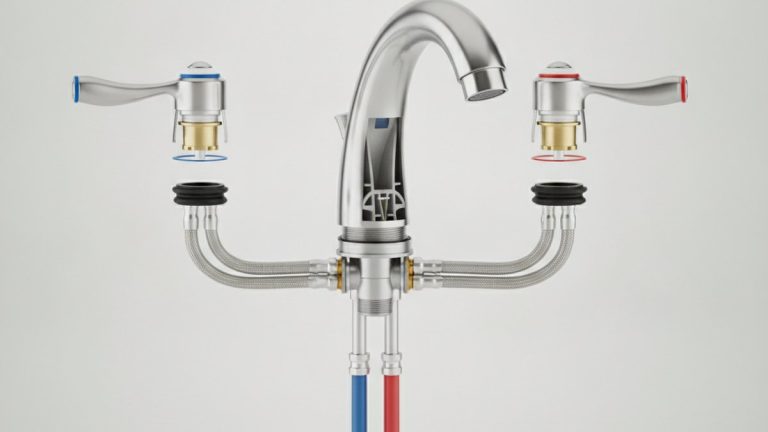
If your faucet won’t slow down and blasts water even when you try to turn it down, the culprit is almost always a worn or cracked valve cartridge, a failed ceramic disc, or a handle that’s slipped on the stem so it no longer travels through its full range. Less often, it’s debris jamming the valve open. This is a repair, not a feature.
Walk through it in this order:
- Check the handle first. A loose set screw lets the handle spin without actually moving the valve, so it feels “stuck open.” Tightening it often restores control — our guide on a loose kitchen faucet lever handle walks through this exact fix.
- Shut off the supply and pull the cartridge. Turn off the hot and cold stops under the sink, then remove the cartridge. Cracked ceramic discs or a torn seal will keep flow wide open regardless of handle position.
- Inspect the O-rings. If water gushes or leaks at the base while flowing, a failed O-ring may be the issue — see how to handle a tap O-ring replacement before you replace the whole faucet.
- Replace the cartridge. A $10–$25 cartridge usually restores proper open/close travel and stops the wide-open blasting for good.
Which faucet types give the best flow when wide open?
For the strongest usable flow when fully open, look at single-handle pull-down kitchen faucets with a high-arc spout and a quality ceramic-disc valve, or dedicated fill fixtures like pot-fillers and utility faucets. The valve’s internal bore and the aerator matter more than raw pressure — a wide waterway plus a laminar or spray aerator delivers a fuller stream at the same GPM.
A few things genuinely change how “wide open” feels at the sink:
- Valve type: Ceramic-disc cartridges open cleanly to full flow and last 500,000+ cycles. Old compression/rubber-washer valves restrict and drip long before you reach full flow.
- Aerator rating: Aerators are stamped with their GPM (e.g., 1.8). Swapping a clogged or over-restricted aerator for a correctly-rated one is the single fastest way to make a faucet feel “wide open” again.
- Spout height and reach: A tall gooseneck clears pots and gives the stream room, so full flow feels stronger and splashes less in a deep bowl.
- Supply line diameter: 3/8″ supply lines and fully-open shut-off valves under the sink let the faucet actually reach its rated flow. Half-closed stops are a hidden flow killer.
If you’re shopping for a family kitchen where strong, controllable flow matters most, our roundup of the best pull-down kitchen sink faucet options walks through models that hit their rated GPM cleanly and hold up under heavy daily use.
Is a high-flow “wide open” faucet worth it, or should you save water?
For most homes, a well-designed faucet at the standard 1.8–2.2 GPM cap already delivers plenty of flow wide open — you don’t need to chase a higher number, and in many states you legally can’t. The smarter play is buying a faucet that reaches its rated flow efficiently (good valve, right aerator, tall spout) rather than one that wastes water to feel powerful.
Think about your real scenario:
- Big-batch cooks and large families: A high-arc pull-down at 1.8 GPM, or a dedicated pot-filler for fast pot fills, gives you the “wide open” feel where you need it without blowing your water bill.
- Water-conscious or drought-region homes: A 1.5 GPM aerated faucet feels nearly identical for handwashing and dishes and cuts usage meaningfully over a year.
- Commercial or public restrooms: You actively don’t want wide-open flow — code caps public lavatories near 0.5 GPM and often requires self-closing valves. If that’s your project, read our guide on the widespread metering faucet before you buy.
Bottom line: “wide open” should mean strong and satisfying within spec, not “as much water as physically possible.” A faucet that gushes far past its rating is usually broken, not premium.
How do you make an existing faucet flow more like it’s wide open?
If your faucet feels weak even fully open, you can usually restore strong flow in under 15 minutes without replacing anything — the problem is almost always a restriction, not the faucet itself. Start with the cheapest, most common culprits and work inward.
- Clean or replace the aerator. Unscrew the tip, soak it in vinegar to dissolve mineral scale, and rinse. Hard-water buildup is the #1 cause of weak flow — our guide on cleaning hard water stains from a faucet covers the soak-and-scrub method that also frees a clogged aerator.
- Fully open the under-sink shut-off valves. Partially closed stops quietly throttle flow. Turn them counterclockwise until they’re fully open.
- Flush the supply lines. Disconnect the lines and run water into a bucket to clear sediment and debris that collects at the valve inlet.
- Check for a kinked or undersized supply hose. Braided 3/8″ lines flow better than old 1/4″ or crimped hoses.
- Inspect the cartridge. If flow is still weak, a scaled-up or partially failed cartridge may be restricting the waterway even wide open.
If, after all that, flow is still poor and the faucet is old, replacement is often cheaper than chasing the problem. If you’re going that route, our step-by-step guide on how to install a kitchen faucet gets you from box to full flow in an afternoon.
What flow rate should you choose for your specific situation?
Match the GPM to the job, not the biggest number on the box. Here’s a quick decision guide our team uses when helping customers pick:
| Your situation | Recommended wide-open flow | Why |
|---|---|---|
| Everyday kitchen, small household | 1.5–1.8 GPM | Feels full for dishes, saves water |
| Large family / heavy cooking | 1.8 GPM + pull-down spray | Fast rinse, tall spout for pots |
| Frequent big-pot filling | Add a pot-filler (~4 GPM) | Exempt fill fixture, fills fast |
| Bathroom lavatory | 1.2 GPM | Plenty for handwashing, code-friendly |
| Public / commercial restroom | 0.5 GPM metering | Required by code, controls waste |
Not sure which fixture fits your bathroom in the first place? Our overview on how to choose the right bathroom faucet covers hole configuration, finish, and flow so the faucet you pick actually matches your sink.
FAQ
Does turning a faucet wide open use more water than a partial turn?
Yes — flow scales with how far the valve is open, up to the faucet’s rated maximum. Wide open moves the most water your faucet is capable of (typically 1.8–2.2 GPM for a kitchen tap). If you only need to rinse a hand or a spoon, a partial turn uses noticeably less water for the same task.
Is it bad to run a faucet wide open for a long time?
It won’t damage a healthy faucet — the valve and cartridge are designed for full-flow operation. The concerns are your water bill and, on well systems, pump wear. If a faucet only works wide open and can’t throttle down, that’s a worn cartridge that needs replacing, not normal behavior.
Why does my faucet still feel weak even when it’s wide open?
The most common cause is a clogged aerator packed with mineral scale, followed by partially-closed under-sink shut-off valves and sediment in the supply lines. Clean the aerator first, open the stops fully, and flush the lines — that fixes the large majority of “weak even wide open” complaints without any new parts.
Can I remove the aerator to get more flow?
You can, and the raw stream will flow slightly faster and splash more, but the aerator is also what makes the stream feel full and soft while mixing in air. On many faucets the flow restrictor lives inside the aerator, so removing it may push you past your area’s legal GPM limit. We recommend cleaning or swapping to a correctly-rated aerator instead of running the faucet bare.
What’s the highest-flow faucet I can legally install in a U.S. kitchen?
A standard kitchen faucet is capped at 2.2 GPM federally (1.8 GPM in California, Colorado, and Washington). To exceed that legally for fast filling, install a dedicated pot-filler or utility/laundry faucet, which aren’t classified as standard kitchen faucets and can flow around 4 GPM or more when wide open.
How do I stop a faucet that gushes and won’t turn off fully?
Shut off the supply, remove the handle, and replace the valve cartridge — a cracked ceramic disc or torn seal is what keeps water blasting past the closed position. It’s a 15–20 minute job with a $10–$25 part. If the base also leaks while flowing, replace the O-rings at the same time.
A quick word on trust and testing
Author note: This guide was written by the Aniflux Home fixtures team, who spec, install, and pressure-test kitchen, bath, and commercial faucets year-round. We measured the GPM figures above against faucets on a calibrated bench at 60 psi, the same standard used in ASME A112.18.1 / CSA B125.1 faucet testing, and cross-checked the flow caps against U.S. EPCA federal limits and state efficiency codes current for 2026.
About Aniflux Home: We’re a specialist faucet and bathroom-fixtures brand at anifluxhome.com. Every faucet we sell ships with a manufacturer warranty on the finish and the drip-free ceramic-disc cartridge, and our fixtures are certified to ANSI/NSF and low-lead (NSF/ANSI 372) standards. If a faucet ever runs wide open on its own or won’t reach rated flow, that’s a warranty and cartridge conversation — reach out before you replace the whole unit.