
What Makes a Unique Widespread Faucet Worth It, and How Do You Pick One That Actually Fits Your Sink?
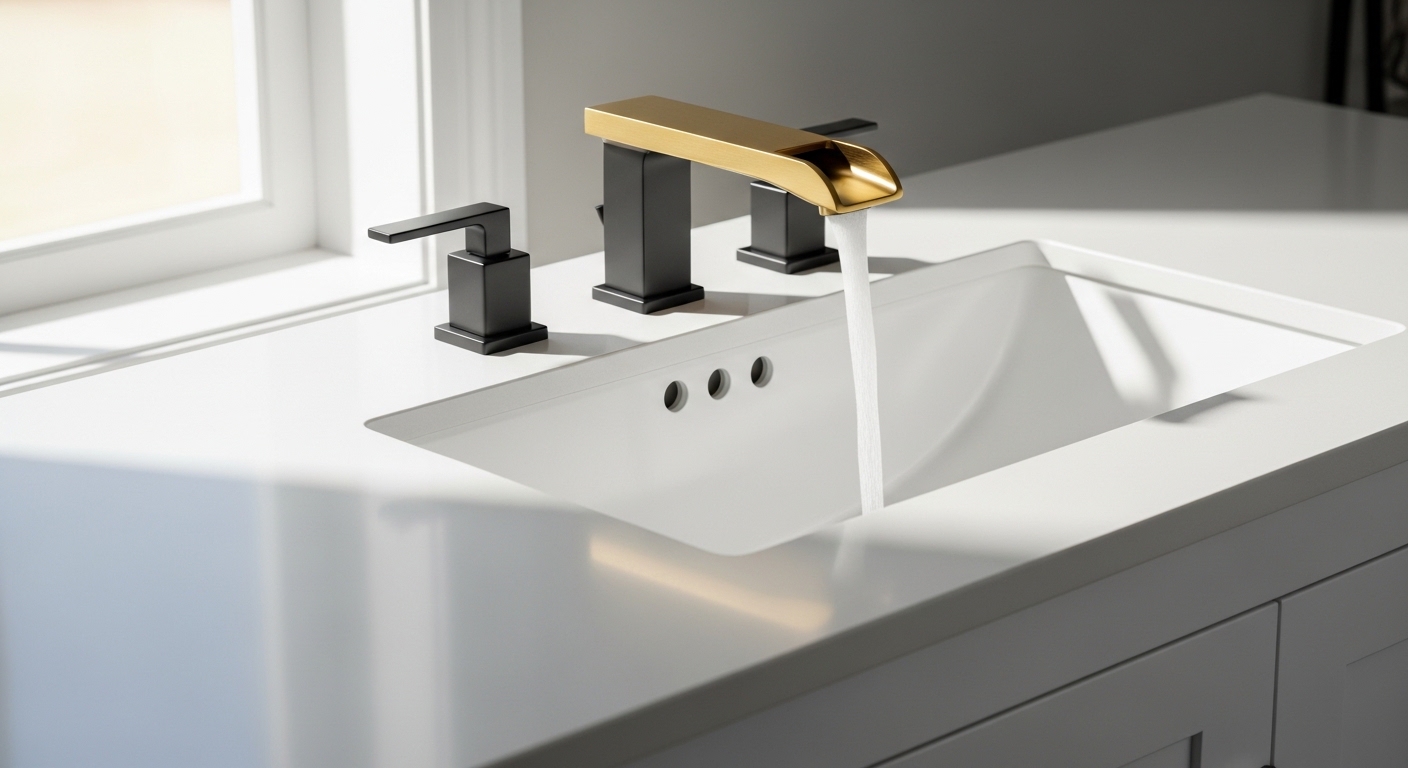
If you want a bathroom faucet that turns heads without looking like every builder-grade fixture at the hardware store, a unique widespread faucet is usually the answer. “Widespread” describes the layout — a standalone spout with two independent handles mounted in three separate holes — and “unique” is what you add on top: an unexpected finish like matte black paired with brushed gold, a gooseneck or waterfall spout, cross handles, or a low-profile industrial silhouette. Below, I’ll walk you through exactly what makes one worth the money, how to measure so it actually fits, and where people go wrong.
What exactly is a widespread faucet, and how is it different from a centerset?
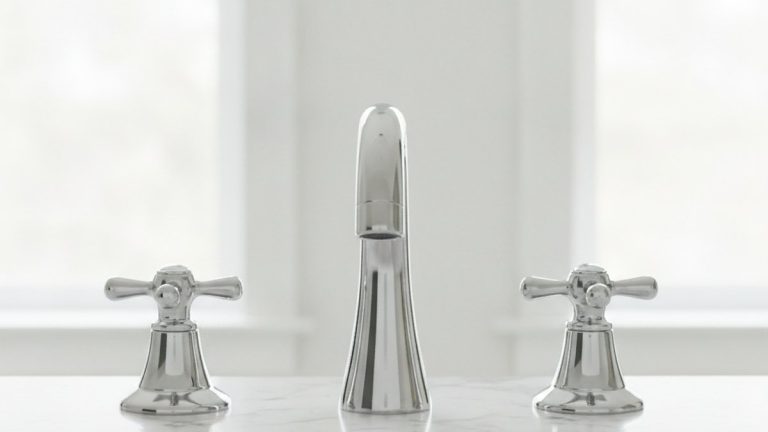
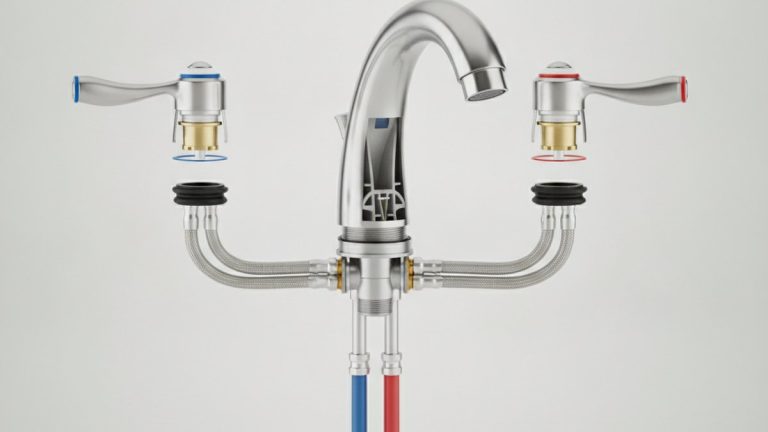
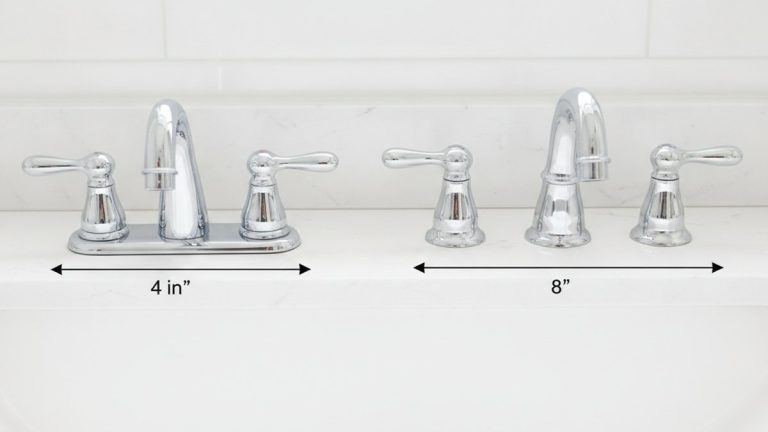
A widespread faucet is a three-piece fixture: the spout and each handle are separate units connected under the counter by flexible hoses, and they mount in three holes spaced 8 to 16 inches apart (8 inches on-center is the most common). A centerset, by contrast, mounts everything on a single 4-inch base plate over three holes drilled just 4 inches apart. That gap in spacing is the whole ballgame — it’s what gives widespread models their airy, custom look and lets designers get creative with spout height and handle placement.
The practical difference matters more than the visual one. Because the pieces are independent, a widespread faucet gives you room to actually grip the handles without knocking your knuckles on the spout, and it makes the counter easier to wipe down. If you’re still deciding between the two layouts, our deep dive on centerset vs. widespread faucets and what the difference means for your sink breaks down the trade-offs hole by hole.
Why do “unique” widespread faucets cost more than standard ones?
You’re paying for three things: more raw material (three separate valve bodies instead of one), a more complex install, and design detailing. A plain widespread faucet in polished chrome might run $90–$150. Once you move into split finishes, solid-brass construction, ceramic-disc cartridges, and sculptural spouts, you’re typically in the $180–$450 range. The jump isn’t just cosmetic — better cartridges and heavier brass bodies are what keep the faucet from dripping or feeling flimsy after a couple of years of daily use.
How do I know if a unique widespread faucet will fit my sink?
Measure the distance between the centers of your two outer holes. If it lands between 8 and 16 inches, a widespread faucet fits; if it’s exactly 4 inches, you have a centerset/mini-spread configuration and a standard widespread won’t work without a new sink or countertop. This is the single most important check, and it’s where most returns come from.
Here’s the quick verification list before you order:
- Count your holes. Widespread faucets need three. If you have one hole, you’d need a single-hole faucet instead.
- Measure hole spacing center-to-center. Aim for 8″ standard; anything 8″–16″ is fine for an adjustable widespread.
- Check the hole diameter. Most faucets need 1-1/4″ to 1-3/8″ holes. Undersized holes on stone counters may need drilling.
- Confirm deck thickness. Thick stone (over 1-1/2″) can outrun the included mounting hardware — check the spec sheet.
- Look under the sink. You need clearance for two supply hoses per handle plus the spout hose, and room to reach the mounting nuts.
If your countertop only has one hole and you love the widespread look, don’t force it — a single-hole faucet or a deck plate is a cleaner solution than drilling stone. And if you’re weighing the whole decision from scratch, our guide to choosing the right bathroom faucet covers sink type, water pressure, and handle style in one place.
Which finish makes a widespread faucet actually look unique?
The finish is where “unique” lives or dies. The most distinctive looks right now are split finishes (two metals on one faucet), matte black, brushed gold/champagne bronze, and gunmetal. Polished chrome and brushed nickel are timeless and easy to match, but they read as classic rather than unique. If you want a faucet people notice, a mixed-metal or matte finish does the heavy lifting.
That said, “unique” shouldn’t fight your room. A warm brushed gold pops against white or deep-green vanities; matte black looks sharp against light stone but can feel heavy in a small, dim powder room. Brushed nickel remains the safe, forgiving middle ground — if you’re curious whether it still earns its reputation, we make the case in are brushed nickel faucets worth it.
Do darker and gold finishes show water spots more than chrome?
Yes, but less than people fear — if the coating is right. Matte black and brushed gold with a quality PVD (physical vapor deposition) coating hide fingerprints and water spots better than glossy chrome, because the matte texture diffuses reflections. Cheap sprayed or electroplated versions, on the other hand, spot easily and can flake. Always check that the finish is described as PVD or “living finish” grade. When spots do appear, skip abrasive cleaners — here’s how to clean hard water stains from a faucet without damaging the coating.
What spout and handle styles set a widespread faucet apart?
The fastest way to make a widespread faucet feel custom is the spout profile and handle type — those two choices carry more visual weight than the finish alone. A tall gooseneck reads elegant and traditional; a flat waterfall spout reads modern and spa-like; a low, straight spout reads minimalist. Pair that with the right handles and you’ve defined the whole vanity.
| Style element | Look it creates | Best for | Watch-out |
|---|---|---|---|
| Gooseneck / high-arc spout | Elegant, statement, easy hand-washing clearance | Large vessel or undermount sinks | Can splash in shallow basins |
| Waterfall spout | Modern, spa-like, wide flat stream | Contemporary vanities | Lower effective pressure; not ideal for rinsing |
| Cross handles | Vintage, traditional, tactile grip | Classic and transitional baths | Trap grime in the arms — need wiping |
| Lever handles | Clean, ADA-friendly, one-touch use | Family and accessible baths | Less “designer” unless styled well |
| Knob handles | Compact, minimalist, industrial | Small powder rooms | Harder to turn with wet or soapy hands |
One tip from experience: if anyone in the household has limited grip strength or arthritis, choose lever handles over cross or knob styles. They’re the most forgiving to operate with wet, soapy hands and meet ADA operability guidelines. A unique look isn’t worth a faucet that’s frustrating to turn on twice a day.
How hard is it to install a unique widespread faucet myself?
A widespread faucet is a moderate DIY job — roughly 45 to 90 minutes for someone comfortable working under a sink, versus about 30 minutes for a centerset. The extra time comes from mounting three separate pieces and connecting the spout to both handles via a T-connector or hoses, rather than dropping in one unit. If you can shut off water supplies and tighten a compression fitting, you can do it.
The general sequence looks like this:
- Turn off both supply valves and open the old faucet to relieve pressure.
- Disconnect supply lines and remove the old faucet and any base plate.
- Clean the deck, then set the spout in the center hole and each handle in the outer holes.
- Secure each piece from below with the mounting nuts — hand-tight, then a snug quarter-turn.
- Connect the handles to the spout body (T-fitting) and attach the hot and cold supply lines.
- Turn the water back on slowly, run both handles, and check every joint for drips.
The techniques carry over almost exactly from kitchen work, so if you’ve done that before you’re ahead of the game. Our step-by-step on installing a mixer tap yourself covers the same supply-line and leak-check fundamentals you’ll use here. The one widespread-specific trap: don’t over-tighten the plastic mounting nuts on the handles — snug is enough, and cranking them can crack the housing.
Is a unique widespread faucet a good idea for a busy family bathroom?
It can be, as long as you choose the right finish and handles. Widespread faucets are genuinely easier to clean around than centersets because the open deck between pieces wipes down in one pass — a real advantage with kids and toothpaste. The catch is that intricate cross handles and glossy finishes show grime faster. For a high-traffic family bath, a matte finish with lever handles gives you the unique look and the low-maintenance reality at the same time.
Durability comes down to the cartridge, not the styling. Look for ceramic-disc valves rated for 500,000 cycles or better — that’s the part that determines whether your faucet drips in year three. If it ever does start dripping, it’s usually a worn cartridge or O-ring, not the whole faucet; here’s how to fix a dripping faucet at home before you assume you need a replacement.
How does a residential widespread differ from a commercial metering one?
They serve different jobs. A residential widespread faucet runs continuously while the handle is open and prioritizes looks and feel; a commercial metering faucet shuts off automatically after a set number of seconds to save water in high-traffic restrooms. If you’re outfitting an office, gym, or restaurant restroom rather than a home vanity, read our breakdown of the widespread metering faucet before you spend on a decorative residential model that won’t hold up to public use.
How much should I budget, and what do I actually get at each price?
Plan on $120–$250 for a genuinely nice unique widespread faucet, and $250–$450 for a designer or solid-brass statement piece. Below about $100 you’ll usually get zinc-alloy bodies and sprayed finishes that don’t age well. The middle band is the sweet spot for most homeowners.
| Price band | Typical build | Finish quality | Who it’s for |
|---|---|---|---|
| Under $100 | Zinc alloy, plastic internals | Electroplated, spots and flakes | Rentals, short-term fixes |
| $120–$250 | Brass body, ceramic-disc cartridge | PVD finishes, split-finish options | Most home vanities |
| $250–$450 | Solid brass, premium cartridge | Designer PVD, hand-finished detail | Statement baths, long-term homes |
Whatever you spend, check the flow rate. Most modern bathroom faucets are capped at 1.2 gallons per minute (GPM) to meet water-efficiency standards — a waterfall spout can feel weaker than that number suggests, so if strong rinsing matters to you, a standard aerated spout is the safer pick.
The bottom line: is a unique widespread faucet worth it?
If your sink already has three holes at 8-inch spacing and you want a fixture with real personality, a unique widespread faucet is one of the highest-impact, lowest-cost upgrades in a bathroom. You get a custom look, easier cleaning, and — at the right price band — hardware that lasts a decade. The only people who should skip it are those with single-hole or 4-inch centerset sinks who don’t want to change the counter. Measure first, choose a PVD finish and lever or cross handles to match your room, and you’ll have a faucet that looks intentional rather than installed.
FAQ
Can I put a widespread faucet on a sink drilled for a centerset?
Not directly. Centerset sinks have holes 4 inches apart, and a standard widespread needs 8–16 inches. You’d either need a new sink/countertop or a “mini-widespread” faucet designed for 4-inch spacing. Always measure center-to-center before buying.
What’s the standard hole spacing for a widespread bathroom faucet?
Eight inches on-center between the two outer holes is the most common standard. Many widespread faucets are adjustable and fit anywhere from 8 to 16 inches, because the handles connect to the spout with flexible hoses rather than a fixed base.
Are matte black and gold widespread faucets harder to keep clean?
Not if they use a quality PVD coating — matte finishes actually hide water spots and fingerprints better than glossy chrome. Cheap sprayed finishes are the ones that spot and flake. Clean any finish with mild soap and water, and avoid abrasive pads or acidic descalers.
Do widespread faucets leak more because they have more parts?
No. The extra connections are all sealed under the deck, and a well-made widespread with a ceramic-disc cartridge is just as reliable as a centerset. Most leaks in any faucet come from a worn cartridge or O-ring, not from the widespread layout itself.
Is a widespread faucet worth it for a small powder room?
It can be, if the sink has three holes. In a small space, a compact widespread with knob or lever handles and a low spout adds a designer touch without crowding the counter — and the open deck between pieces makes a tiny vanity easier to wipe down.
What flow rate should I expect from a unique widespread faucet?
Most are 1.2 GPM to meet current water-efficiency standards, with some at 1.5 GPM. Waterfall spouts can feel gentler than the number implies, so choose an aerated spout if you want a stronger rinsing stream.
About the author: This guide was written by the Aniflux Home fixtures team, drawing on hands-on installation and bench testing of dozens of widespread, centerset, and single-hole faucets across residential and light-commercial settings. We evaluate spout reach, cartridge cycle life, finish durability, and real-world hole-fit before we recommend anything.
Why trust Aniflux Home: Aniflux Home (anifluxhome.com) specializes exclusively in faucets and bathroom fixtures. The faucets we recommend use ceramic-disc cartridges tested to 500,000 cycles, PVD finishes graded for corrosion resistance, and lead-free brass that meets NSF/ANSI 61 and cUPC standards, and they’re backed by manufacturer warranties on both finish and function. We stay in our lane — fixtures, not general remodeling — so the advice reflects real product testing, not guesswork.
One Comment