Bathtub Faucet Not Switching to Shower? Here’s How to Fix It (and When to Replace the Diverter)
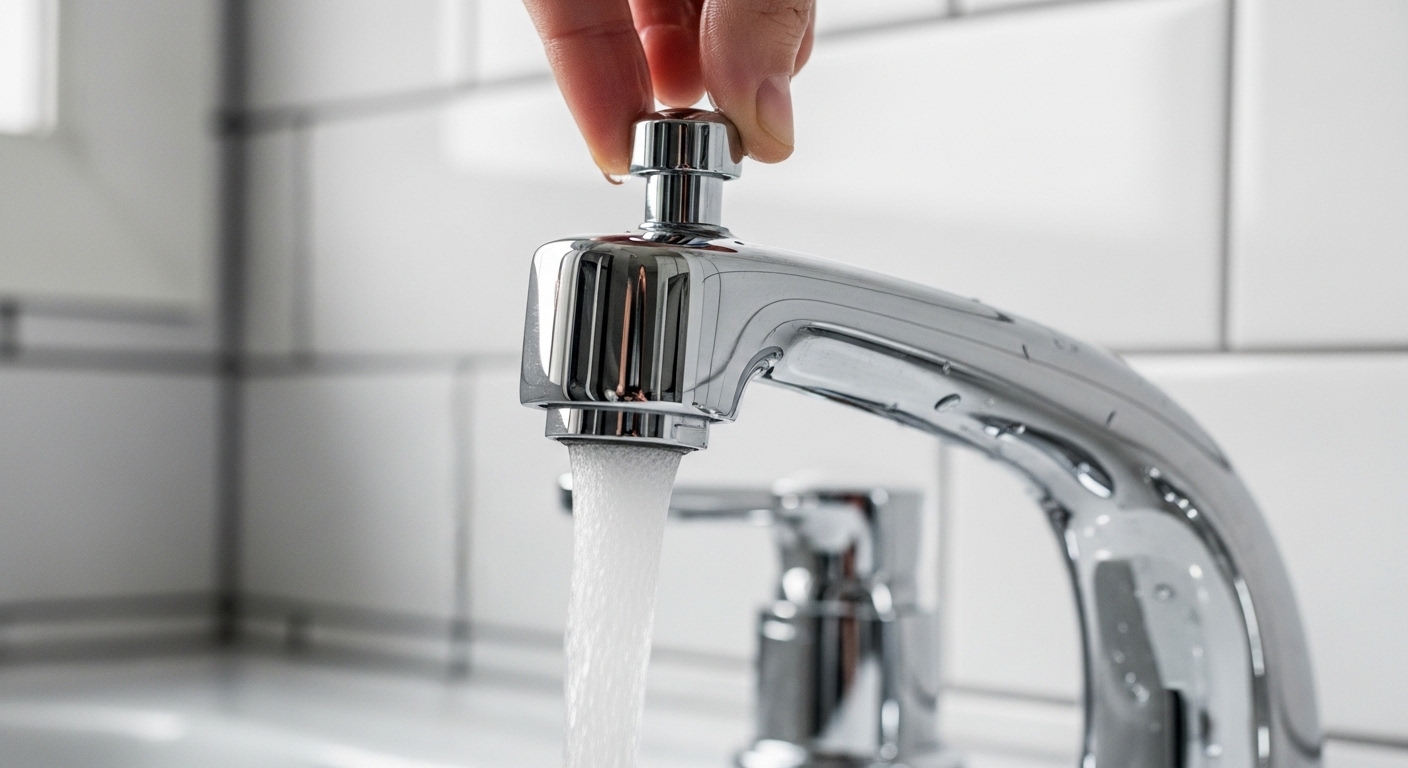
If your bathtub faucet is not switching to shower — you pull the little knob up, the water keeps pouring out of the tub spout, and only a weak dribble (or nothing) reaches the shower head — the culprit is a diverter that’s worn out, gummed up with mineral scale, or broken. The good news: this is one of the most common and most fixable bathroom-fixture problems there is. You usually don’t need a plumber, you rarely need to open the wall, and the parts are cheap. Below, we’ll walk through exactly why it happens, how to diagnose which type of diverter you have, and how to fix each one — plus when it’s smarter to just replace the spout or valve entirely.
At Aniflux Home, tub-spout diverters and shower valves are some of our most-returned-to product categories, so we see this exact failure constantly. Let’s get your shower working again.
Why is my bathtub faucet not switching to the shower?
Your bathtub faucet won’t switch to the shower because the diverter isn’t sealing. The diverter is a valve that blocks the flow out of the tub spout and forces water up the riser pipe to the shower head. When it wears out, cracks, or gets clogged with hard-water mineral buildup, it can no longer create that seal — so water follows the path of least resistance and keeps dumping out of the spout instead of going up.
There are three usual suspects, in order of how often we see them:
- A worn spout diverter (most common). The pull-up knob on top of the tub spout is attached to a small internal gate. Rubber washers and plastic gates wear out after years of use, so the gate no longer fully closes.
- Mineral / scale buildup. In hard-water homes, calcium and lime crust up inside the spout and around the diverter gate, jamming it partly open. This is the same buildup that causes those crusty white rings — the kind we cover in our guide on cleaning hard water stains from a faucet.
- A failing rotary or three-valve diverter behind the wall. If your diverter is a separate handle in the middle of the wall (not a knob on the spout), the internal valve stem or its washer has worn out.
One quick tell: if water still gushes hard from the spout when you engage the diverter, the diverter gate isn’t sealing (worn or broken). If almost nothing comes out of the spout OR the shower head when you switch, you likely have a clog or low water pressure in the riser instead.
What kind of diverter do I actually have?
Before you fix anything, identify your diverter type — the repair is completely different for each. There are three common designs, and you can tell them apart in about ten seconds by looking at your tub and wall.
| Diverter type | What it looks like | Typical fix | DIY difficulty |
|---|---|---|---|
| Spout-mounted (pull-up) | A small knob or lever on top of the tub spout you pull up | Replace the entire tub spout (diverter is built in) | Easy — 20 min |
| Single-handle integrated | One handle controls temp + flow; you pull/push or turn a button to divert | Replace the pressure-balance cartridge or diverter cartridge | Moderate — 45 min |
| Three-valve (separate diverter) | A dedicated middle handle between hot & cold handles | Rebuild or replace the diverter stem, seat, and washer | Moderate — 1 hr |
The most common by far in American bathrooms is the spout-mounted pull-up diverter — that little knob on top of the spout. Here’s the key thing most people don’t realize: you almost never repair that knob. You replace the whole spout. The diverter mechanism is sealed inside the spout casting and isn’t a serviceable part, so the fix is a new spout, which is genuinely one of the easiest plumbing jobs in the house.
How do I fix a tub spout diverter that won’t divert? (Step-by-step)
To fix a pull-up tub spout diverter that won’t send water to the shower, replace the tub spout — it’s a 20-to-40-minute job that needs one or two basic tools and a $15–$40 spout. Because the diverter gate is built into the spout and can’t be rebuilt, swapping the spout is the actual repair, not a workaround.
First, figure out how your existing spout attaches. Look underneath the spout near the wall:
- Set-screw spout: There’s a small hex (Allen) screw on the underside near the wall. Loosen it, and the spout slides straight off a copper pipe.
- Threaded spout: No set screw. The spout twists onto a threaded nipple. You unthread it counterclockwise (grip with a cloth-wrapped wrench or insert a wooden dowel/screwdriver handle into the spout for leverage).
Here’s the full replacement process:
- You don’t need to shut off the main water for a spout swap, but do make sure the tub faucet is fully off.
- Remove the old spout. Loosen the set screw, or unthread it. Note whether the connection is a slip-fit copper pipe (set-screw type) or a threaded nipple.
- Measure. Take the old spout to the hardware store or measure the pipe length and the distance to the wall. Spouts vary in length and connection type — bring the old one to match it exactly.
- Wrap the threads (threaded type) with 3–4 wraps of plumber’s tape (PTFE) clockwise. For set-screw types, put a bead of silicone around the pipe base where it meets the wall to prevent water getting behind the wall.
- Install the new spout. Thread it on hand-tight plus a slight turn until it points straight down, or slide it onto the copper pipe and tighten the set screw.
- Test. Run the water, pull the diverter, and confirm strong flow at the shower head with only a light dribble at the spout.
A tiny bit of water still weeping from the spout while showering is normal on many diverters — a heavy stream is not. If you’re doing broader work on the fixtures at the same time, our guide to choosing the right bathroom faucet covers how to match finishes and styles across the room so a new spout doesn’t clash.
Can I fix the diverter without replacing the whole spout?
Sometimes — if the problem is mineral buildup rather than a worn gate. On a threaded spout you can unthread it, soak it overnight in white vinegar (or a 50/50 vinegar-water mix) to dissolve the scale, scrub the internal gate with an old toothbrush, and reinstall it. If the diverter was just jammed with lime, this brings it back to life for the cost of nothing. But if the rubber seal or plastic gate is cracked or worn smooth, no cleaning will fix it — you need a new spout. Given that spouts are cheap, most people just replace rather than soak.
My shower has a single handle — how is that different?
If you have one handle that controls both temperature and flow, and you divert to the shower by pulling the handle out, pushing a button, or turning a collar, the diverter lives inside the valve cartridge — not in the spout. When it stops diverting, you replace the cartridge or the diverter mechanism inside the wall trim, not the spout.
The process:
- Shut off the water — either at the shower’s built-in stops (behind the trim plate on some models) or at the house main.
- Remove the handle and trim plate to expose the cartridge.
- Pull the cartridge (often held by a retaining clip or nut) and match it to a replacement by brand and model. This is where brand matters — a Moen 1222, a Delta RP, or a Kohler cartridge are not interchangeable.
- Insert the new cartridge, reassemble, and test.
This is a moderate DIY job — very doable, but if you’re not comfortable working inside the valve body or your model is obscure, it’s the point where calling a plumber makes sense. Getting the wrong cartridge is the #1 mistake here, so photograph your existing one and note every number stamped on it.
How much does it cost to fix a bathtub faucet that won’t switch to shower?
Fixing a bathtub faucet that won’t switch to shower costs $10–$40 in parts if you DIY, or roughly $125–$300 if you hire a plumber, depending on the diverter type and your region. It’s one of the cheapest plumbing repairs precisely because the failing part is small and standardized.
| Repair | DIY part cost | Plumber total (parts + labor) | Time |
|---|---|---|---|
| New tub spout (pull-up diverter) | $15–$40 | $125–$225 | 20–40 min |
| Single-handle cartridge swap | $20–$60 | $150–$300 | 45–90 min |
| Three-valve diverter rebuild | $10–$30 | $175–$350 | 1–2 hr |
| Vinegar de-scale (cleaning only) | ~$3 | N/A | Overnight soak |
Because parts are so inexpensive, the honest math is: if you can turn a wrench, DIY saves you well over $100. The main reason to call a pro is a stubborn threaded connection that won’t budge (corroded pipe risks snapping inside the wall) or a valve body that needs to be replaced entirely.
When is it NOT the diverter — and I need a plumber?
It’s not the diverter when water flow is weak at both the spout and the shower head, when you hear banging in the walls, or when you see moisture on the wall or ceiling below the valve. Those point to a clogged riser pipe, failing valve body, or a leak inside the wall — issues that go beyond a simple spout swap.
Watch for these red flags:
- Weak flow everywhere: Suggests a clog in the riser pipe or shower head, or low household water pressure — not a diverter. Try cleaning the shower head first.
- Water stains or drips inside the wall: A leaking valve behind the tile needs professional attention before it causes rot or mold.
- The spout won’t come off: A corroded, seized connection can snap the pipe inside the wall. If it won’t move with reasonable force, stop and call a plumber.
- New spout still won’t divert: If a fresh spout doesn’t fix it, the issue is upstream in the valve — time for the cartridge or valve repair.
One related note: if you’re also dealing with a spout that drips constantly even when off, that’s a separate washer/cartridge issue — our walkthrough on fixing a dripping faucet at home covers that failure mode in detail.
Which replacement spout or valve should I buy?
Buy a spout that matches your existing connection type (set-screw vs. threaded), your pipe length, and your other fixtures’ finish. Connection compatibility matters more than brand — a beautiful spout that doesn’t fit your pipe is useless. Match the finish (chrome, brushed nickel, matte black, brushed gold) to your shower head and handles so the bathroom stays cohesive.
A few buying tips from what we see returned and exchanged most:
- Universal-fit spouts come with adapters for both slip-fit and threaded connections — the safest choice if you’re unsure of your setup.
- Solid brass construction outlasts pot-metal and plastic, especially in hard-water areas where corrosion is faster.
- Finish durability: PVD (physical vapor deposition) coatings resist scratching and tarnish far better than electroplated finishes. If you like the look of nickel, our take on whether brushed nickel faucets are worth it applies to spouts too.
- Match the drop: Measure how far your pipe protrudes from the wall so the new spout sits flush.
Aniflux Home tub spouts and shower valve trims are built from solid brass with PVD finishes and ship with universal adapter kits, so most customers can complete the swap without a second trip to the store.
FAQ
Why does water come out of both the tub spout and shower head at the same time?
Because the diverter isn’t fully sealing the spout. Some minor weeping from the spout during a shower is normal and by design, but a strong stream from both means the diverter gate is worn, cracked, or scaled up. Replace the spout (pull-up type) or the diverter cartridge (single-handle type) to restore full flow to the shower head.
Can I fix a stuck shower diverter without turning off the water?
For a spout-mounted pull-up diverter, yes — you can swap the spout without shutting off the main, since no water flows through it when the faucet is off. For a single-handle cartridge or three-valve diverter, you must shut off the water first, either at the fixture’s built-in stops or the house main, because you’ll be opening the pressurized valve body.
How long does a tub spout diverter last?
A tub spout diverter typically lasts 5–10 years, though hard water can cut that in half by accelerating mineral buildup and rubber-seal wear. Solid-brass spouts with quality internal components last longer than budget pot-metal ones. If you’re on well or hard municipal water, periodic vinegar de-scaling extends the life of the diverter noticeably.
Is a bathtub faucet not switching to shower an emergency?
No — it’s an inconvenience, not an emergency, because no water is escaping into the wall. You can keep using the tub normally while you order a part. It only becomes urgent if you also notice water stains, drips inside the wall, or a leak, which signals a valve failure that should be addressed quickly to prevent water damage.
Do I need a plumber to replace a tub spout?
Most people don’t. Replacing a pull-up-diverter spout is a genuine beginner DIY job requiring only an Allen wrench or a cloth-wrapped pipe wrench and about 20–40 minutes. Call a plumber only if the old spout is seized on corroded pipe, if you have a single-handle or three-valve system you’re not comfortable opening, or if a new spout doesn’t solve the problem.
Will replacing the shower head help if the diverter is the problem?
Not usually. If the diverter can’t send water up the riser, a new shower head won’t get any more water than the old one did. However, if your flow is weak everywhere, a clogged shower head could be part of the issue — clean or replace it first to rule it out before assuming the diverter is at fault.
The bottom line
A bathtub faucet not switching to shower is one of the most satisfying repairs to knock out yourself: the diagnosis takes ten seconds, the part costs less than lunch for two, and the fix takes under an hour. Identify your diverter type first — pull-up spout, single-handle, or three-valve — then either de-scale it, replace the spout, or swap the cartridge. Only weak flow everywhere, in-wall leaks, or a seized connection warrant a plumber. Match your replacement spout’s connection type and finish, buy solid brass where you can, and you’ll likely get another decade of reliable showers out of it.
About the author: This guide was written by the Aniflux Home fixtures team, drawing on hands-on testing of tub spouts, diverters, and shower valve trims across chrome, brushed nickel, matte black, and brushed gold finishes. Aniflux Home designs and sells bathroom and kitchen fixtures built to ASME A112.18.1 / CSA B125.1 standards, and our tub spouts and shower trims are backed by a limited lifetime warranty on finish and function. Always follow your fixture manufacturer’s instructions and local plumbing codes; when in doubt, consult a licensed plumber.