Which Faucet Adapter for a Whirlpool Portable Dishwasher Do You Actually Need?
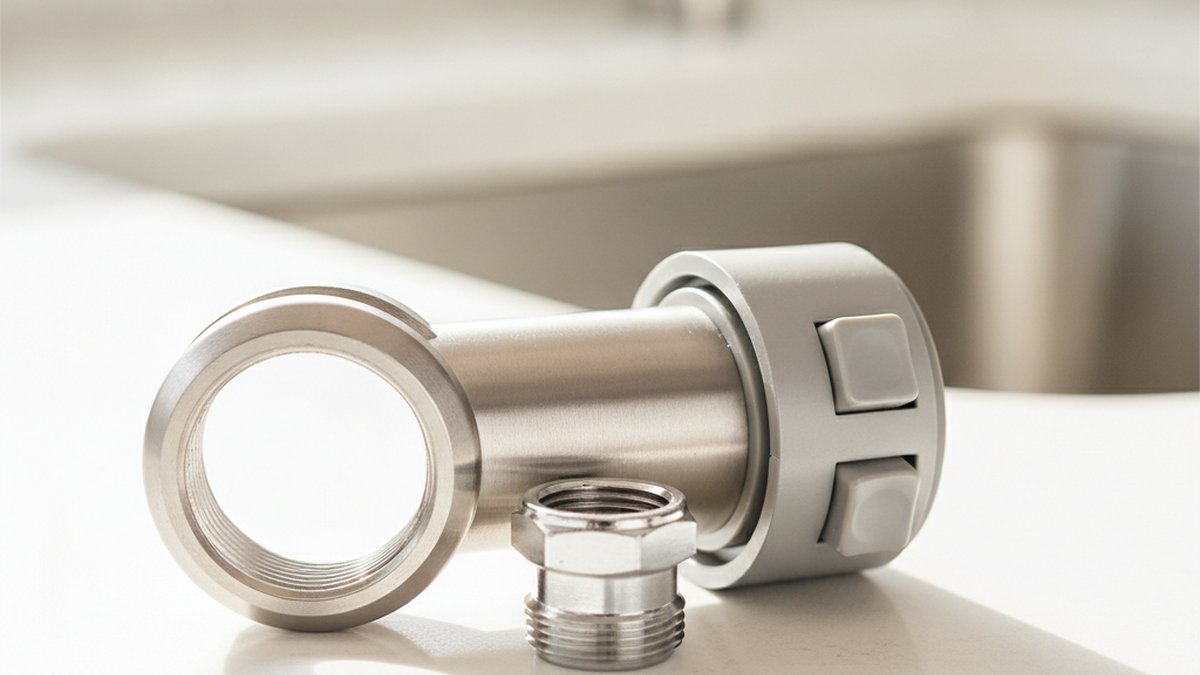
Buying the right faucet adapter for a Whirlpool portable dishwasher trips people up because the dishwasher’s hose ends in a chunky plastic quick-connect coupler that almost never threads directly onto a kitchen faucet. The coupler grabs a threaded ring — an adapter — that you first screw onto your faucet spout where the aerator normally lives. Get the thread size and gender right and the whole thing snaps together in ten seconds. Get it wrong and you’re standing at the sink with a coupler that spins, drips, and won’t lock. This guide walks you through exactly which adapter to buy, how to measure, and how to fix the leaks that show up when the fit is close-but-wrong.
At Aniflux Home we sell and test faucet aerators, couplers, and adapter kits across dozens of faucet models, so the advice below is based on the threads and finishes people actually run into — not a generic spec sheet.
What faucet adapter does a Whirlpool portable dishwasher actually use?
A Whirlpool portable dishwasher uses a quick-connect coupler that mates to a 55/64″-27 externally threaded faucet adapter — the same thread as a standard U.S. kitchen faucet aerator. The dishwasher ships with the plastic coupler on the hose; what you supply (or replace) is the metal aerator adapter that screws into your spout so the coupler has something to lock onto.
Here’s the chain of parts, from faucet to dishwasher, so you know what you’re looking at:
- Your faucet spout — internally threaded where the aerator screws in.
- The aerator adapter — a threaded metal ring that replaces your normal aerator. Its outside gives the coupler a lip to grab. This is the part most people are missing.
- The Whirlpool quick-connect coupler — the spring-loaded plastic collar on the end of the fill hose. Pull the collar down, push it onto the adapter, release, and it locks.
The confusion usually starts because “adapter” gets used for both the coupler and the little threaded ring. When you’re shopping, the piece you almost always need is that threaded ring sized to fit your faucet — the coupler is already attached to the dishwasher hose.
How do you know if your faucet is male or female thread — and what size?
Look at where the aerator screws in: if the threads are on the outside of the faucet tip, it’s male; if they’re hidden inside the spout, it’s female. This one detail decides which adapter you buy, and it’s the single most common reason a “correct” part doesn’t fit.
To check it yourself in under a minute:
- Unscrew your current aerator (turn counter-clockwise; use a cloth or the plastic key that came with it so you don’t scar the finish).
- Feel the faucet tip. Threads on the outer surface = male. Smooth outside with threads recessed inside = female.
- Note the diameter. Standard kitchen size is 15/16″-27 (male) or 55/64″-27 (female). Smaller “junior” size is 13/16″-24. Most kitchen faucets are the standard size.
If you’re reassembling and something feels cross-threaded or won’t seat, our walk-through on how to put a kitchen faucet aerator back together shows the correct stack order for the washer, screen, and housing — the same order matters when you swap in a dishwasher adapter.
Which adapter do I buy for my specific faucet type?
Match the adapter to your faucet’s thread gender and whether it has a pull-down sprayer. Standard kitchen faucets take a simple aerator-to-dishwasher adapter; pull-down and pull-out spray faucets often can’t be adapted at all because the spray head has no aerator threads. Use the table below to find your case.
| Your faucet | Adapter you need | Notes |
|---|---|---|
| Standard kitchen faucet, male thread (15/16″-27) | Female-thread aerator adapter (55/64″-27 male out for the coupler) | Most common; screws right on where the aerator was |
| Standard kitchen faucet, female thread (55/64″-27) | Male-thread aerator adapter | Also very common; adapter threads up into the spout |
| “Junior” small faucet (13/16″-24) | Junior-size adapter | Common on bar and older faucets; measure carefully |
| Pull-down / pull-out sprayer faucet | Usually none available | Spray head lacks aerator threads — see workarounds below |
| Touchless / motion-sensor faucet | Depends on model; often not compatible | Electronic shut-off can fight the dishwasher’s flow |
A universal dishwasher adapter kit — the kind with a chrome-plated brass body and both male and female threaded ends plus washers — covers the two standard cases and is the safest buy if you’re unsure. Chrome-plated brass lasts far longer than the raw plastic couplers, and it won’t crack when you tighten it snug.
What if I have a pull-down or pull-out sprayer faucet?
Most pull-down and pull-out spray faucets can’t accept a portable-dishwasher adapter, because the spray wand has no standard aerator threads to grab. This is the single biggest reason a portable dishwasher won’t connect in a modern kitchen. You have three realistic options:
- Use a separate faucet — a bar/prep faucet or laundry tap with standard aerator threads.
- Install a dedicated dishwasher connection — some owners add a small diverter valve under the sink or a permanent supply line, which turns the “portable” unit into a semi-permanent one.
- Swap to a standard-spout faucet — if the kitchen is otherwise a good fit, a fixed high-arc faucet with a normal aerator solves it cleanly. If you’re weighing that route, our guide to the best high-arc pull-down kitchen faucet explains which models keep aerator threads accessible and which don’t.
How do you install and connect the adapter step by step?
Remove the old aerator, hand-thread the adapter with its rubber washer seated, snug it lightly, then snap the Whirlpool coupler onto it and lock the collar. The entire job takes about five minutes and needs no tools beyond maybe pliers and a cloth.
- Turn off the faucet and unscrew the existing aerator counter-clockwise. Set the parts aside — you’ll want the aerator back when the dishwasher isn’t in use.
- Check the rubber washer. A flat rubber or fiber washer must sit inside the adapter’s threaded end. No washer = guaranteed leak.
- Thread the adapter on by hand until it stops, then give it a gentle quarter-turn with pliers wrapped in a cloth. Do not crank it — you’ll strip the threads or crack a plastic spout tip.
- Pull the coupler collar down, push it straight onto the adapter, and release. You should feel it click and it shouldn’t pull off with a light tug.
- Run a test. Turn the faucet to warm (about 120°F is ideal for cleaning) and full flow, then start a short cycle and watch the connection for drips before you walk away.
Because you’re taking the aerator on and off repeatedly, the threads take more wear than usual. If you start seeing a slow weep at the joint later on, it’s almost always a tired washer — the same root cause we cover in how to fix a dripping faucet at home. Swapping the washer is a cents-not-dollars fix.
Why does my portable dishwasher coupler leak or pop off?
A leaking or popping coupler almost always means a worn washer, a mismatched thread size, or mineral buildup keeping the collar from seating fully. Before you assume the part is wrong, run through these in order:
- Missing or flattened washer — the rubber washer inside the adapter compresses over time. Replace it; keep a couple of spares.
- Wrong thread (close but not exact) — a 13/16″ adapter forced onto a 15/16″ faucet will start but never seal. Re-check your measurement against the table above.
- Hard-water scale — mineral crust on the faucet tip stops the coupler collar from clicking fully home, so it pops under pressure. Descale the threads. Our guide to cleaning hard water stains from a faucet covers a vinegar soak that clears the threads without scratching the finish.
- Over-tightened plastic coupler — cranking the collar warps it. Snug is enough.
- Faucet flow too high — some faucets throw more pressure than the coupler likes. Back the faucet off slightly from full-blast.
If you’d rather step up from the flimsy plastic coupler entirely, a solid brass quick-connect coupler seals more reliably and survives years of daily snapping on and off. It’s the same logic behind choosing a metal faucet body over plastic internals — covered in our overview of how to choose the right faucet, where material quality is the difference between a five-year part and a five-month one.
What finish and material should the adapter be?
Choose a chrome-plated solid brass adapter over zinc or plastic — brass resists corrosion, won’t crack under tightening, and the chrome matches most kitchen faucets. Finish rarely matters visually here because the adapter is only on the faucet while the dishwasher runs, but material matters a lot for durability.
Quick guidance on what to look for:
- Solid brass body: the gold standard — machined threads that hold up to repeated cycling.
- Chrome plating: corrosion-resistant and easy to wipe clean; hides water spots.
- Avoid raw zinc alloy: cheap, brittle, and prone to seizing onto the faucet after a few months.
- Confirm the washer material: a food-safe rubber or EPDM washer handles hot dishwasher fill water better than a bargain vinyl one.
Do all portable dishwashers use the same adapter?
No — while most Whirlpool, KitchenAid, GE, Frigidaire, and Danby portable units share the standard aerator-thread quick-connect, the coupler collar diameter and hose fittings can differ. The faucet-side adapter thread (55/64″-27 / 15/16″-27) is nearly universal, so a standard adapter kit usually works across brands. What varies is the coupler that ships on the hose. If you buy a replacement coupler rather than just the faucet adapter, match it to your Whirlpool model number, because a KitchenAid or Danby collar may not lock onto a Whirlpool hose the same way.
The practical takeaway: the small threaded faucet adapter is the interchangeable, “buy-with-confidence” part. The coupler is the model-specific part. When people search for a faucet adapter for a Whirlpool portable dishwasher and end up frustrated, it’s usually because they bought a whole coupler for the wrong hose when all they needed was the two-dollar threaded ring.
How Aniflux Home tests these adapters
Every adapter and coupler we recommend is checked against the two standard U.S. aerator thread sizes on real faucet spouts — not just measured on paper — and pressure-tested for leaks at typical household supply pressure (around 40–60 psi) with hot fill water. We look for thread bite, washer seal, and collar retention after repeated on/off cycles, since that snap-on wear is what kills cheap adapters first. Our fixtures and fittings meet standard U.S. plumbing thread specs, and adapter kits carry a warranty against thread and washer failure. Always confirm your dishwasher’s manual and local plumbing code before a semi-permanent hookup.
Author note: This guide was written by the Aniflux Home fixtures team, who install, disassemble, and bench-test kitchen faucets and connectors year-round. We wrote it after watching too many customers buy the wrong “adapter” — the coupler instead of the threaded ring — and we wanted the measurement step spelled out so you buy once.
FAQ
Does a Whirlpool portable dishwasher come with the faucet adapter?
Yes — Whirlpool portable dishwashers ship with the quick-connect coupler already attached to the fill hose, and usually a basic faucet adapter. If your faucet’s thread doesn’t match the included adapter, or the adapter is lost, you buy a standard aerator-thread adapter separately. That replacement ring is inexpensive and widely available.
What size is the thread on a portable dishwasher faucet adapter?
The faucet side is the standard U.S. kitchen aerator thread: 15/16″-27 for male (external) faucet threads or 55/64″-27 for female (internal) threads. A smaller “junior” 13/16″-24 size exists on some bar and older faucets. Unscrew your aerator and measure before buying.
Can I connect a portable dishwasher to a pull-down sprayer faucet?
Usually not directly, because pull-down and pull-out spray wands have no aerator threads for the coupler to grab. Your options are using a separate standard-thread faucet, adding an under-sink connection, or switching to a fixed-spout faucet with an accessible aerator.
Why does my dishwasher coupler leak where it meets the faucet?
Nearly always a worn or missing rubber washer, a thread size that’s close but not exact, or hard-water scale keeping the collar from seating. Replace the washer first, confirm the thread size, and descale the faucet tip — that clears the vast majority of leaks.
Is a brass adapter worth it over the plastic one that came with the dishwasher?
Yes, if you’ll use the dishwasher often. Chrome-plated solid brass adapters don’t crack when tightened, resist corrosion, and survive years of snapping the coupler on and off, whereas the stock plastic parts tend to strip or split within months of daily use.
Can I leave the adapter on the faucet all the time?
You can, but you’ll lose the aerator’s spray control and splash reduction while it’s on. Most people unscrew the adapter and re-install their normal aerator between dishwasher uses. A brass adapter tolerates that repeated swapping far better than plastic.