Which Widespread Bathroom Faucet Under $100 Should You Actually Buy in 2026?
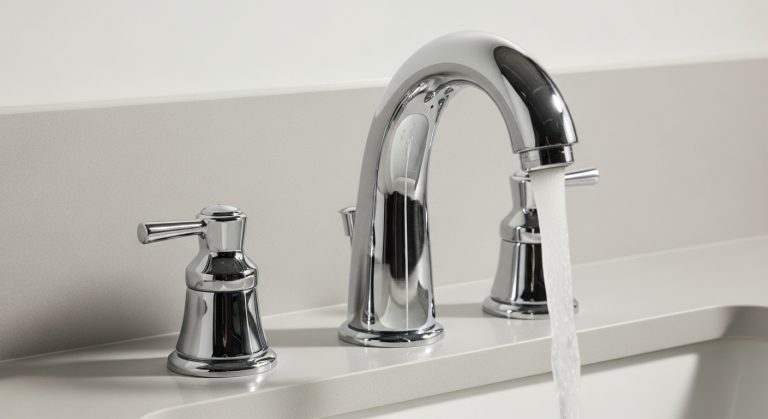
Yes, a genuinely good widespread bathroom faucet under $100 exists in 2026 — you just have to know which two or three specs actually matter and which ones are marketing. A widespread faucet is the three-piece setup: a separate hot handle, a separate cold handle, and a spout, each mounted in its own hole, with the handles spaced anywhere from 8 to 16 inches apart. It looks like a premium, custom fixture because the pieces float independently on the sink deck. The good news is that the “premium look” and the “premium price” got divorced years ago. Plenty of faucets in the $60–$99 range now ship with the same ceramic disc cartridges and brass bodies that $250 faucets used a decade ago.
The trap is that this same price band is also where the worst faucets live — hollow zinc bodies, rubber washer valves that drip in a year, and painted finishes that flake around the base. So the whole game under $100 is telling the two apart. This guide walks through exactly how to do that, what a fair price buys you, and which scenarios call for spending the extra $30 versus saving it.
What does “widespread” actually mean, and how is it different from centerset?
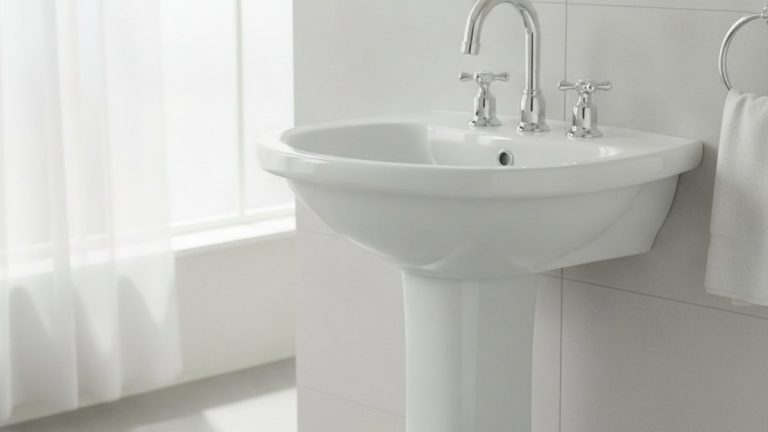
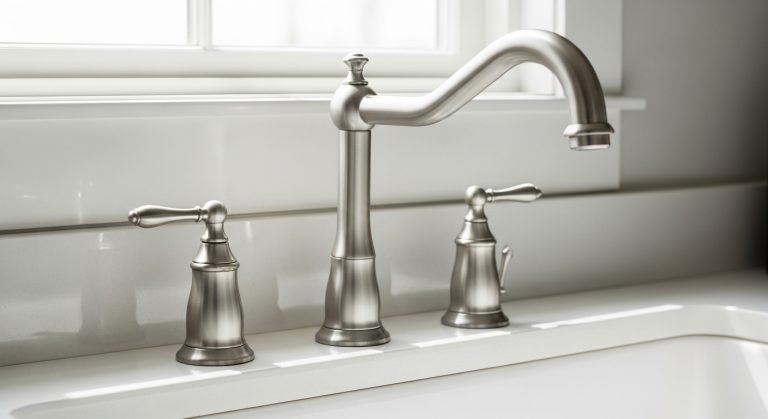
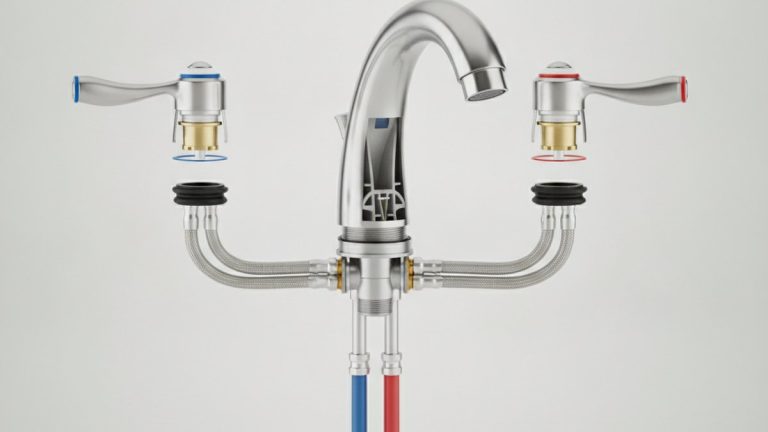
Widespread means the three parts — two handles and a spout — are fully separate pieces connected only by flexible hoses under the counter, mounted in three holes that are typically 8 to 16 inches apart. Centerset, by contrast, mounts everything on a single base plate over holes just 4 inches apart. That distance is the whole difference, and it changes both the look and how you shop.
Because a widespread faucet’s pieces aren’t locked to a base plate, it reads as more custom and higher-end, and it fits wider sinks and vanities without looking cramped. It also means you must confirm your sink actually has three holes spaced for it — dropping a widespread faucet onto a sink drilled for centerset won’t work without an adapter or a new sink. If you’re still deciding between the two layouts, our full breakdown of centerset vs. widespread faucets and what the difference means for your bathroom covers the hole-spacing math in detail.
One more term you’ll see: “mini-widespread.” That’s a faucet with the separated three-piece look but a fixed 4-inch spread, made to fit a standard centerset sink. If your sink is drilled 4 inches on center but you want the split-handle style, mini-widespread is the honest answer — a true 8-inch widespread won’t fit.
Can you really get a good widespread bathroom faucet under $100?
Yes — a widespread bathroom faucet under $100 can be genuinely good, as long as you buy for the cartridge and the body material rather than the finish name. The single biggest quality driver in a faucet is the valve cartridge, and the good kind — a ceramic disc cartridge — now appears routinely on faucets in the $65–$95 range. Ceramic disc is what keeps a faucet from dripping; two polished ceramic plates slide against each other to open and close the water, with no rubber washer to wear out.
Here’s the honest breakdown of what your money buys at different points in this band:
| Price | Typical body | Valve type | Finish durability | What to expect |
|---|---|---|---|---|
| Under $40 | Zinc alloy or thin plastic | Rubber washer or cheap cartridge | Painted, flakes in 1–2 yrs | Skip for daily-use bathrooms |
| $40–$65 | Zinc with some brass | Ceramic disc (basic) | PVD on high-touch areas | Fine for a guest bath |
| $65–$99 | Solid or mostly brass | Ceramic disc cartridge | PVD, often lifetime warranty | The sweet spot — buy here |
| $100–$180 | Solid brass | Ceramic disc + branded valve | PVD lifetime | Mostly paying for the brand |
The takeaway: the jump from a $50 faucet to a $90 faucet is real and worth it — you’re moving from a hollow body to a brass one and from a mediocre finish to a PVD one. The jump from $90 to $160 is mostly the brand’s name and packaging. That’s why the $65–$99 window is the sweet spot for a widespread bathroom faucet under $100.
What specs actually matter when buying under $100?
Four specs matter, in this order: the cartridge, the body material, the finish process, and the drain type. Everything else — handle shape, spout curve, box art — is preference. Nail these four and you’ll get a faucet that outlives the sink.
- Ceramic disc cartridge. Non-negotiable. It’s the difference between a faucet that’s silent and dry in five years and one that drips at 2 a.m. If the listing doesn’t say “ceramic disc,” assume it isn’t.
- Brass or mostly-brass body. Brass resists corrosion and holds threads for the mounting hardware. Zinc is heavier-feeling but brittle and corrodes from the inside. A quick tell: brass faucets usually list a real weight and say “lead-free brass”; zinc listings stay vague.
- PVD or electroplated finish. PVD (physical vapor deposition) bonds the finish at a molecular level, so brushed nickel and matte black won’t flake or discolor. Cheaper “painted” or “coated” finishes chip at the handle bases first.
- Drain type included — or not. Many budget faucets ship without a drain assembly, or include a non-matching one. A pop-up drain in your finish adds $15–$25 if it’s not in the box, which can quietly blow your under-$100 budget.
Certification is the fifth thing worth thirty seconds of checking. Look for cUPC (or UPC) and NSF/ANSI 61 and 372 compliance — these confirm the faucet is lead-free and legal to install in a U.S. or Canadian home. A faucet that can’t be bothered to certify itself lead-safe is telling you something about the rest of it.
Which finish holds up best in a real bathroom — and does color cost more?
For a widespread faucet under $100, brushed nickel and matte black are the most forgiving finishes, and no, a good finish shouldn’t cost extra at this price. Polished chrome is the cheapest to produce and still fine, but it shows every water spot and fingerprint, which matters more in a bathroom you clean weekly than in a guest bath.
Here’s the practical ranking for daily bathrooms:
- Brushed nickel — the safest all-rounder. It hides water spots and fingerprints, matches most hardware, and PVD versions basically never wear through. If you want the full case for it, we broke down whether brushed nickel faucets are worth it across durability and resale.
- Matte black — dramatic and great at hiding water spots, but it shows dust and toothpaste splatter, and only PVD-grade black resists scratching. Under $100, insist on PVD here specifically.
- Polished chrome — cheapest, brightest, easiest to find, but a fingerprint magnet.
- Brushed gold / champagne bronze — increasingly available under $100, but this is where you’re most likely to get a painted fake. Verify PVD before buying gold tones at this price.
If you’re in a hard-water area, brushed finishes are your friend regardless of color — the texture masks mineral spotting between cleanings. You’ll still get buildup on the aerator and spout tip, so it helps to know how to clean hard water stains from a faucet without scratching the finish, because the wrong scrubber can undo a good PVD coating.
How do I make sure it fits my sink before I buy?
Measure the distance between the centers of your two outer faucet holes — if it’s 8 to 16 inches, a standard widespread fits; if it’s exactly 4 inches, you need a mini-widespread or a centerset instead. This one measurement causes more returns than anything else, so do it before you add to cart, not after the box arrives.
Walk through this quick pre-purchase checklist:
- Count your holes. A widespread faucet needs three. If your sink has one, you need a single-hole faucet, not this.
- Measure hole spacing, center to center. 8″–16″ outer holes means true widespread. 4″ means mini-widespread.
- Check the deck thickness. Thick stone or double-layer decks sometimes exceed a budget faucet’s included mounting shanks. The spec sheet lists max deck thickness.
- Confirm the supply lines. Most U.S. faucets use 3/8″ compression connections; verify your shutoff valves match or grab an adapter.
- Decide on the drain. If the faucet doesn’t include a matching pop-up drain, budget for one in the same finish.
If you’re choosing between models and want a broader framework than just fit — arc height, handle style, spout reach — our guide on how to choose the right bathroom faucet lays out how those choices interact with your vanity size.
Is a cheaper widespread faucet harder to install?
No — a budget widespread faucet installs the same way as an expensive one, and most people can do it in under an hour with a basin wrench and plumber’s tape. Widespread faucets actually have one installation quirk worth knowing: because the three pieces are separate, you connect them under the deck with a small T-fitting or connector hoses, so there’s slightly more under-sink work than a single-piece faucet. It’s not hard, just a couple more connections.
The steps in plain terms: shut off the water at the two supply valves, drop each piece into its hole from above, secure them from below with the mounting nuts, connect the handles to the spout via the included connectors, then attach your supply lines. Wrap every threaded connection with plumber’s tape, hand-tighten, then give it a quarter turn with a wrench — no more, or you’ll crack a fitting. Turn the water back on slowly and watch every joint for weeping.
The most common budget-faucet install headaches are a loose handle or a base leak, and both are simple fixes rather than reasons to return the faucet. If a lever ever feels wobbly after a few months, tightening it is a two-minute job — the same principle as fixing a loose kitchen faucet lever handle, just on a smaller fixture. And if you ever spot water pooling at the base, that’s almost always a worn O-ring, not a dead faucet; here’s how to replace a bathroom faucet O-ring when it leaks at the base or spout.
When is it worth spending more than $100?
Spend more than $100 only in three specific situations: a high-traffic primary bathroom used by a big family, a design where the faucet is the visual centerpiece, or a rare finish like unlacquered brass or true champagne bronze that budget makers fake badly. Outside those cases, the extra money buys brand recognition and packaging, not longevity.
A family bathroom that sees a faucet handle turned 30-plus times a day benefits from a branded cartridge with a longer proven life and a dealer network for free replacement cartridges. A powder room used twice a week does not — a solid $85 widespread faucet will outlast the decor trend. And if you want a statement piece with an unusual silhouette, it’s worth reading what makes a unique widespread faucet worth it and how to pick one that actually fits your sink before you assume you have to pay premium for character.
FAQ
Are widespread bathroom faucets under $100 actually reliable long-term?
Yes, if you buy one with a ceramic disc cartridge and a brass body. Those two features are what determine longevity, and both are available under $100. A faucet with those internals and a PVD finish routinely lasts 10–15 years. The under-$100 faucets that fail early are the sub-$40 ones with rubber washer valves and zinc bodies — avoid those, not the price band itself.
What’s the minimum I should spend for a widespread faucet I won’t regret?
Around $65. Below roughly $60 you start losing the brass body and the reliable ceramic cartridge, and you often lose the matching drain assembly too. The $65–$99 window gets you brass, ceramic disc, PVD finish, and usually a lifetime finish warranty — the same core specs as faucets costing twice as much.
Do budget widespread faucets come with a warranty?
Many do, and it’s a key thing to check. Reputable makers — including Aniflux Home — back their widespread faucets with a limited lifetime warranty on the finish and the cartridge even at this price. If a listing offers only a 1-year or 90-day warranty, treat that as a signal the internals may be cheaper than they look.
Will an 8-inch widespread faucet fit a sink drilled for 4-inch centerset?
No. A true 8-inch (or wider) widespread faucet needs holes spaced 8–16 inches apart. A 4-inch centerset sink can’t take it. What you want instead is a mini-widespread faucet, which gives the same separated three-piece look but fits the 4-inch spacing. Always measure center-to-center before buying.
Is brushed nickel or matte black better for hiding water spots under $100?
Both hide water spots far better than polished chrome because their textured or non-reflective surfaces mask mineral spotting. Brushed nickel is the more forgiving of the two day-to-day since it also hides dust; matte black hides water but shows dust and toothpaste. In both cases, insist on a PVD finish at this price so the color doesn’t wear or scratch.
Does an under-$100 widespread faucet include the drain?
Sometimes, but not always — this is the most common hidden cost. Check the listing for “includes pop-up drain assembly.” If it doesn’t, add $15–$25 for a matching-finish drain, and factor that into whether the faucet is truly under $100 installed.
Author note: This guide was written by the Aniflux Home fixtures team, who specify, pressure-test, and cycle-test bathroom faucets against the ASME A112.18.1 / NSF 61 standards for flow, durability, and lead-free safety. Every widespread faucet we sell ships with cUPC-certified ceramic disc cartridges and a limited lifetime finish warranty, because we’d rather over-build the internals than over-decorate the box. When a spec here says “expect X,” it reflects units we’ve actually run on the bench, not marketing copy.