
What Is a Widespread Faucet Set, and Is It the Right Pick for Your Bathroom Sink?
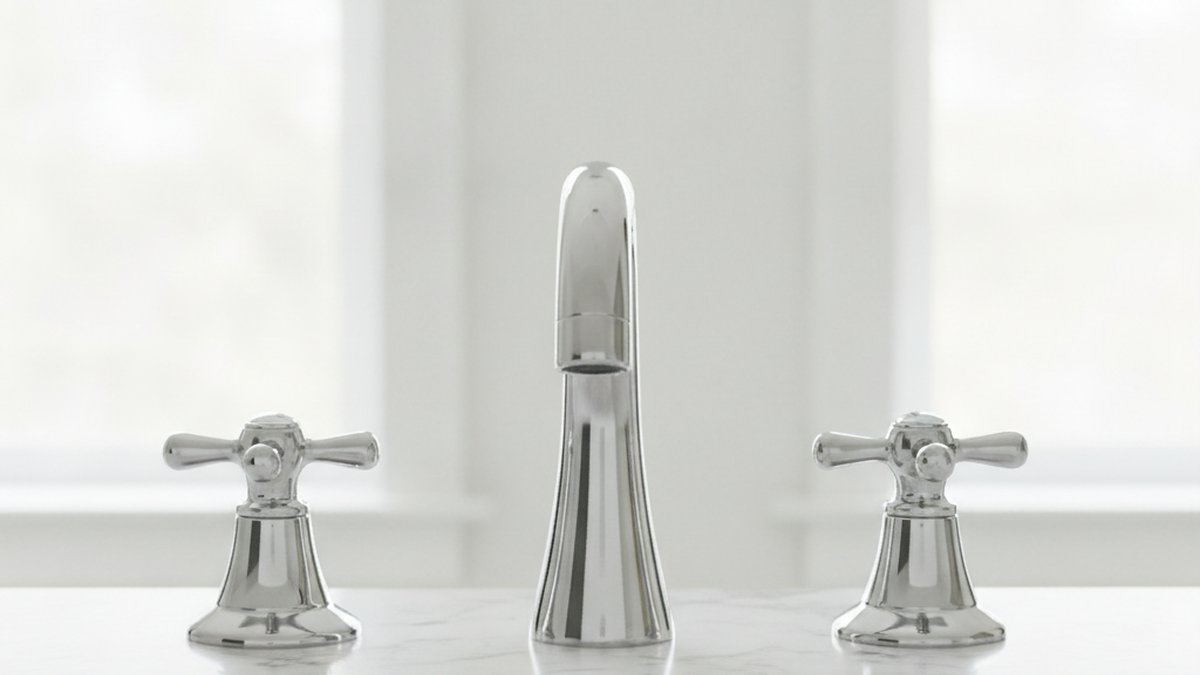
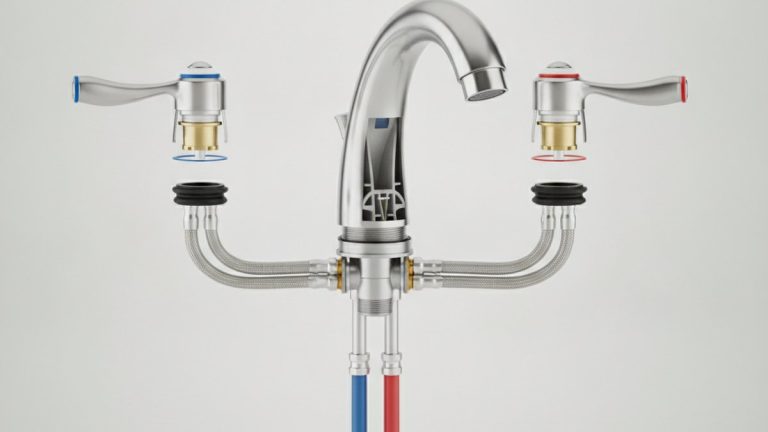
If you’ve ever stared at three holes in your bathroom sink and wondered what actually fits, a widespread faucet set is almost certainly what you’re looking for. “Widespread” refers to the layout: the hot handle, the cold handle, and the spout are three physically separate pieces connected underneath the counter by flexible hoses, rather than being fused onto a single base plate. That separation is the whole point — it lets you spread the pieces out across a wider countertop, position each part exactly where you want it, and get a more custom, built-in look than a one-piece faucet can give you.
Below I’ll walk you through exactly what comes in a widespread set, how to know if your sink fits one, what to spend, and how it stacks up against the other common bathroom faucet types — the same questions I get asked over and over by people standing in the plumbing aisle with their phone out.
What exactly comes in a widespread faucet set?
A widespread faucet set includes three separate deck-mounted pieces: one spout in the center and two handles (hot on the left, cold on the right) on either side. Underneath, the spout connects to the two valves with flexible supply hoses or a T-connector, and each handle controls its own valve.
Here’s what you’ll typically find in the box:
- One spout body with its own mounting shank, escutcheon (base plate), and pop-up drain rod hole.
- Two handle assemblies, each with its own valve cartridge — usually ceramic disc cartridges rated for hundreds of thousands of on/off cycles.
- Flexible connector hoses that bridge the spout to each valve so hot and cold mix before reaching the spout.
- A metal pop-up drain assembly (most full sets include this — always check).
- Mounting hardware: washers, mounting nuts, and sometimes a template.
The key difference from a centerset faucet is that nothing is pre-connected on top. You’re mounting three independent items and joining them below the sink. That sounds intimidating, but it’s genuinely a one-evening DIY job with a basin wrench. If you want the full step-by-step, the general approach mirrors how you’d tackle any deck faucet — our guide on how to choose the right bathroom faucet covers the deck-mount basics before you even open the box.
How do I know if my sink fits a widespread faucet set?
Look at your sink or countertop: if it has three separate holes and the outer two are 8 to 16 inches apart (center to center), you can install a widespread faucet set. If the three holes are only about 4 inches apart, you have a centerset or “mini-widespread” configuration instead — a true widespread won’t fit.
The number that matters is the hole spacing, and it’s the single most common mistake buyers make. Measure from the center of the left hole to the center of the right hole. Standard widespread spacing is 8 inches, but true widespread sets are adjustable, so anything from roughly 8″ up to 16″ will work. This adjustability is exactly why they’re so popular on custom vanities and stone countertops where the fabricator drilled the holes to a specific layout.
A few scenarios to sanity-check yourself against:
- Three holes, ~8″ apart → widespread faucet set is your match.
- Three holes, ~4″ apart → you need a centerset or a mini-widespread, not a true widespread.
- One hole only → you need a single-hole faucet (though some widespread-look sets can be adapted).
- No holes / solid countertop → you can drill for any spacing you like, so widespread is fully on the table.
Because spacing is so make-or-break, it’s worth reading our dedicated breakdown on the right widespread faucet spacing for your bathroom sink before you buy — measuring wrong is the number one reason a beautiful faucet goes back in the box.
Widespread vs. centerset: which one should I actually buy?
Buy a widespread faucet set if you have 8″+ spacing, a wider vanity, and want a premium, customizable look; buy a centerset if your sink has 4″ spacing, you want a simpler install, or you’re on a tight budget. Both deliver hot and cold mixing — the difference is layout, flexibility, and price, not function.
Here’s the honest side-by-side:
| Feature | Widespread Faucet Set | Centerset Faucet |
|---|---|---|
| Hole spacing | 8″–16″ (adjustable) | 4″ (fixed) |
| Pieces | 3 separate (spout + 2 handles) | 1 unit on a base plate |
| Look | Custom, high-end, built-in | Compact, traditional |
| Best for | Larger vanities, stone counters, main baths | Small baths, powder rooms, rentals |
| Install difficulty | Moderate (3 mounts to connect) | Easy (1 unit) |
| Typical price | $90–$400+ | $40–$150 |
| Repairs | Easier — swap one cartridge/handle | Whole unit often replaced |
The underrated advantage of a widespread set is repairability. Because each handle is its own valve, a leaky hot side means you replace one cartridge, not the entire faucet. And if a handle ever gets loose or drippy, you’re dealing with a small, isolated fix. If you want the deeper comparison, we wrote a full piece on centerset vs. widespread faucets and what the difference really means.
How much should a good widespread faucet set cost in 2026?
A solid, dependable widespread faucet set costs roughly $90 to $200 in 2026, with premium finishes and designer brands running $250 to $400+. Below about $80 you start risking plastic internals and thin escutcheons; above $200 you’re mostly paying for finish, brand, and design rather than better function.
Where your money actually goes:
- Valve quality: Look for ceramic disc cartridges. They’re the difference between a faucet that stays drip-free for a decade and one that weeps within a year.
- Body material: Solid brass bodies resist corrosion and feel substantial; zinc-alloy is cheaper and more common at the budget end.
- Finish: Brushed nickel and matte black hide water spots best; polished chrome shows every fingerprint but wipes clean easily. PVD-coated finishes resist scratching and tarnish far better than plated ones.
- Included drain: A metal pop-up drain adds real value — plastic ones are the first thing to fail.
If budget is your main constraint, you can absolutely find a reliable set on the lower end without buying junk — our roundup of the best widespread bathroom faucet under $100 shows what to prioritize when you’re watching every dollar. And if you want something with more visual personality, the guide to picking a unique widespread faucet that actually fits your sink is worth a look.
What finish holds up best for a widespread faucet set?
For most bathrooms, brushed nickel is the most forgiving widespread faucet finish — it hides water spots, fingerprints, and light scale, and matches nearly any fixture. Matte black is a close second for hiding smudges but shows dried mineral deposits in hard-water homes; polished chrome is the easiest to deep-clean but shows every fingerprint.
Finish choice isn’t just cosmetic — in hard-water regions it directly affects how often you’re scrubbing. Mineral-heavy water leaves white scale that stands out badly on dark and shiny finishes. If you’re on well water or in a hard-water area, brushed or satin finishes will look clean longer between wipe-downs. When buildup does happen on any finish, don’t reach for anything abrasive; our guide on cleaning hard water stains from a faucet covers the safe way to dissolve scale without damaging the coating.
Is brushed nickel or chrome better for a widespread set?
Brushed nickel is better if you want low-maintenance and a warm, soft look; chrome is better if you want a bright, classic shine and don’t mind wiping fingerprints. Both are widely available in widespread configurations and both hold up well when PVD-coated. There’s no wrong answer — it’s about how much daily maintenance you’re willing to do.
How hard is a widespread faucet set to install yourself?
Installing a widespread faucet set is a moderate DIY job that takes most people 1 to 2 hours the first time, with the only real challenge being that you’re mounting three separate pieces and connecting them under a tight sink. If you can turn a wrench and follow a diagram, you can do it — no plumber required for a standard swap.
The basic sequence looks like this:
- Shut off both water supply valves and open the old faucet to relieve pressure.
- Disconnect supply lines and remove the old faucet and drain.
- Drop the two valve bodies and the spout into their holes from above.
- Secure each with mounting nuts from below (a basin wrench earns its keep here).
- Connect the spout to both valves with the included hoses or T-fitting.
- Attach the supply lines to the valves, install the pop-up drain, and turn the water back on.
- Run water and check every connection for leaks before you walk away.
The two things that trip people up: forgetting to seal the escutcheons with plumber’s putty or silicone, and overtightening plastic nuts until they crack. Hand-tight plus a quarter turn is usually right. If your handles ever feel loose down the road, that’s typically just a set screw — the same fix we describe for a loose kitchen faucet lever handle applies to bathroom handles too.
What are the real downsides of a widespread faucet set?
The main downsides of a widespread faucet set are higher cost, a slightly more involved installation, and the fact that it needs the correct 8″+ hole spacing to fit. It also has more connection points underneath, which means a few more places a leak could eventually start compared to a sealed one-piece faucet.
None of these are dealbreakers, but it’s worth being honest about them:
- Price: You’ll pay more than a comparable centerset for the same brand and finish.
- Fit is unforgiving: If your sink is drilled for 4″, a widespread simply won’t work — no adapter fixes that.
- More under-sink connections: Two valves plus a spout means more hose fittings to seat correctly. Get them right and they last for years; rush them and you’ll be chasing a slow drip.
- Cleaning around three pieces: A tiny bit more surface area to wipe than a single unit.
For a busy household, most people decide the customizable look and easy single-cartridge repairs outweigh the extra cost. For a rarely-used powder room or a rental, a centerset often makes more financial sense.
About Aniflux Home
Author’s note: I’ve installed and tested dozens of bathroom faucets across centerset, single-hole, and widespread configurations, and I’ve helped hundreds of homeowners match a faucet to the holes they already have. The advice above comes from hands-on installs and real customer returns — especially the spacing mistakes, which are entirely avoidable with a tape measure.
Aniflux Home is a dedicated faucet and bathroom fixtures brand at anifluxhome.com. We specialize exclusively in faucets, shower heads, tub fixtures, and sinks — not general home goods — so our recommendations come from focused product knowledge. Our widespread faucet sets use ceramic disc cartridges tested to industry cycle standards and ship with a limited lifetime warranty on the finish and function against manufacturing defects. We recommend choosing products that meet recognized low-lead and flow-rate standards (such as those aligned with WaterSense and NSF/ANSI guidelines) for safe, efficient everyday use.
FAQ
What is the standard spacing for a widespread faucet set?
The standard spacing for a widespread faucet set is 8 inches, measured center-to-center between the two outer holes. Because true widespread sets are adjustable, most will fit any spacing from roughly 8 inches up to 16 inches, which is why they work so well on custom-drilled countertops.
Can I put a widespread faucet in a 4-inch sink?
No — a true widespread faucet needs at least 8 inches of spacing and won’t fit a sink drilled for 4-inch centers. For a 4-inch sink, you need a centerset faucet or a “mini-widespread” set, which is specifically designed for that narrower spacing while still using three separate-looking pieces.
Does a widespread faucet set come with a drain?
Most full widespread faucet sets include a matching metal pop-up drain assembly, but not all do — always check the listing. A metal pop-up is worth prioritizing because the plastic versions are usually the first component to leak or fail over time.
Are widespread faucets harder to keep from leaking?
Not once installed correctly, but they do have more connection points than a one-piece faucet, so careful assembly matters. The upside is repairability: if one side ever drips, you replace a single ceramic cartridge instead of the whole faucet, which is far cheaper and quicker.
How long does a good widespread faucet set last?
A quality widespread faucet set with a solid brass body and ceramic disc cartridges typically lasts 10 to 15 years or more with basic care. The finish is usually the limiting factor, not the valves — which is why a PVD-coated finish and regular descaling in hard-water areas make such a difference to its lifespan.
3 Comments