What Is a Widespread Faucet Stem, and How Do You Pick the Right Replacement?
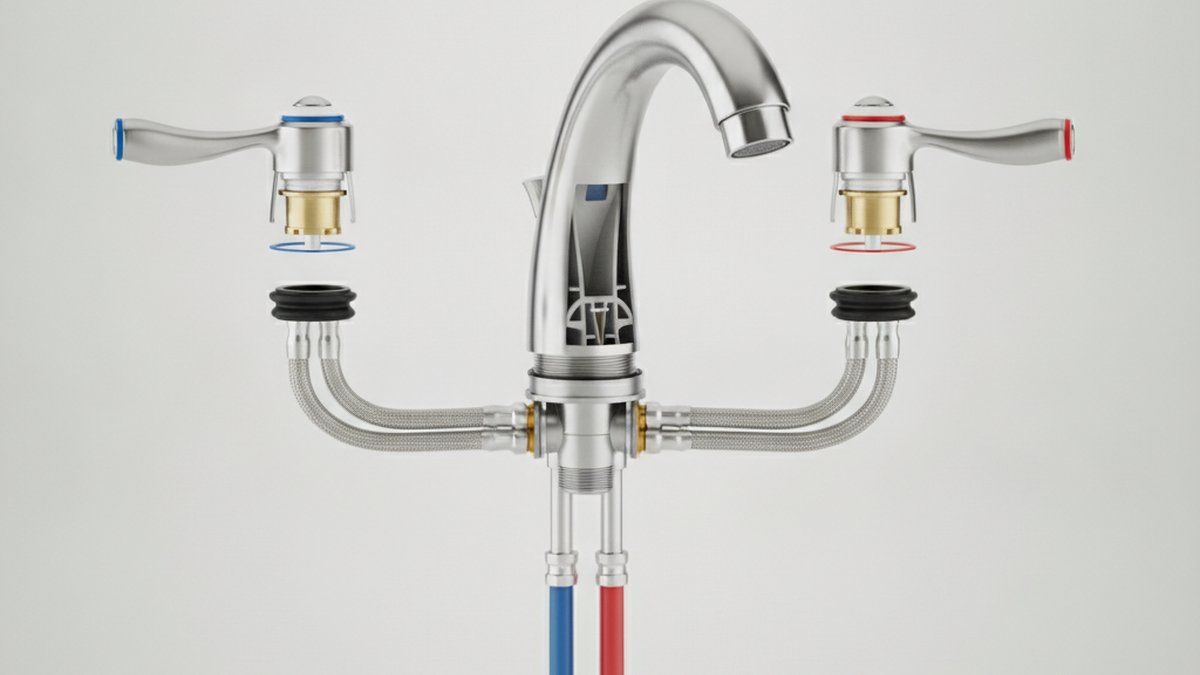
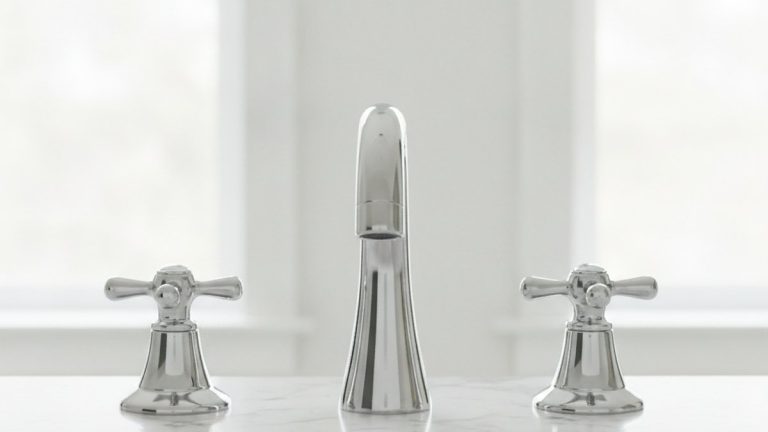
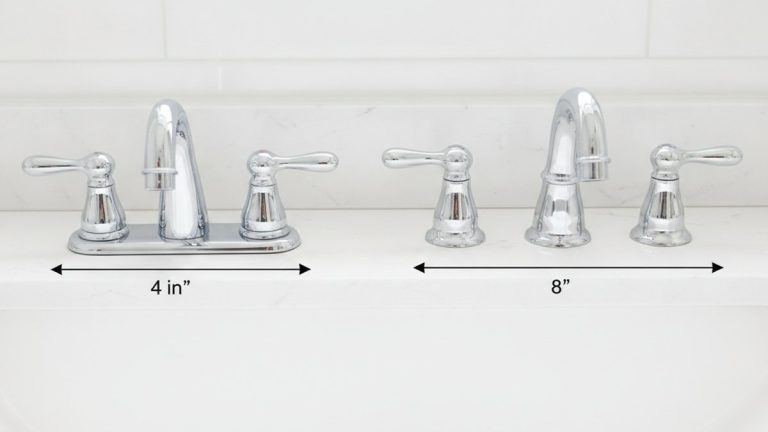
If your two-handle bathroom faucet drips, gets stiff, or one handle won’t shut off all the way, the culprit is almost always the widespread faucet stem — not the whole faucet. The stem (sometimes called the valve stem, cartridge, or “hot/cold cartridge”) is a small brass-and-rubber or brass-and-ceramic part that lives directly under each handle. Because a widespread set spreads the handles 8 inches apart into three separate holes, it uses two independent stems: one hot, one cold. Replacing them is a $10–$40 fix instead of a $150+ faucet swap, and you can usually do it in under 30 minutes with an adjustable wrench and a seat wrench.
Below, we’ll walk through exactly what the stem does, how to tell which type you have, how to measure it so the new one actually fits, and when a stem swap won’t cut it. This is written for real-world DIYers standing at the sink with a leaky handle, so we’ll keep it concrete.
What exactly is a widespread faucet stem, and what does it do?
A widespread faucet stem is the internal valve that opens and closes when you turn the handle — it’s the part that actually starts and stops the water. In a widespread faucet, each handle sits on its own valve body, so there are two stems: the hot stem on the left and the cold stem on the right. Turn the handle, the stem rotates or lifts, and water passes through to the spout in the middle.
Physically, a stem is a threaded brass column with a broach (the splined or square top the handle grips), a packing area with an O-ring or packing nut to seal against leaks, and a business end that either presses a rubber washer against a seat (compression) or aligns two polished ceramic discs (cartridge). When people say “my faucet stem is bad,” they almost always mean one of three things: the washer or seat is worn (causing a drip), the O-ring has dried out (causing a leak around the handle base), or the ceramic disc is scored (causing a stiff or grinding handle).
Because the two stems are separate parts, you can — and often should — replace only the one that’s failing. If only the cold handle drips, you only need the cold stem. That said, if a faucet is 8+ years old, replacing both at once is cheap insurance since they age at the same rate.
How do I know if my faucet uses a compression stem or a cartridge?
You can usually tell by how the handle feels. If the handle turns several full rotations — a multi-turn motion, like an outdoor spigot — you have a compression stem with a rubber washer. If the handle stops after a quarter or half turn (roughly 90–180°) and feels smooth, you have a ceramic-disc cartridge stem. This one distinction decides which repair path you’re on.
Compression stems are the older, most common design in budget and mid-range widespread faucets. They’re the cheapest to fix — often just a $2 washer — but they wear out faster and drip when the rubber hardens. Ceramic cartridge stems are the modern standard; they last far longer and give that crisp quarter-turn feel, but the cartridge itself is a sealed unit you replace whole rather than rebuild.
If you’re not sure, pull the handle and look at the stem top. A compression stem has a threaded shaft and, at the bottom, a screw holding a rubber washer. A ceramic cartridge is a solid sleeve with slots or ports and no visible rubber washer at the tip. When in doubt, take the old stem to the store — matching by eye beats guessing every time. If you want the bigger-picture difference between faucet layouts, our guide on centerset vs. widespread faucets explains why widespread sets use two independent valves in the first place.
Compression stem vs. ceramic cartridge: which should I buy?
For most bathrooms, replace like-for-like — but if you’re upgrading, a ceramic cartridge stem is the better long-term choice because it resists hard-water wear and rarely drips. Here’s how the two compare on the things that actually matter when you’re standing in the store or scrolling a product page.
| Feature | Compression Stem (washer type) | Ceramic Disc Cartridge |
|---|---|---|
| Handle motion | Multiple full turns | Quarter to half turn |
| Typical lifespan | 2–5 years before re-washering | 10–20+ years |
| Repair cost | $2–$8 (washer + seat) | $12–$40 (whole cartridge) |
| Common failure | Drip from spout (worn washer) | Stiff handle or crack from debris |
| Hard-water tolerance | Low — seats pit and scale | High — polished discs shed scale |
| Best for | Older faucets, cheapest fix | Upgrades, high-use bathrooms |
One important caveat: you can’t always freely swap a compression faucet over to a cartridge. The valve body has to be machined for that specific stem. If your faucet was built for compression stems, buy a compression stem; if it was built for a cartridge, buy the matching cartridge. The exception is a handful of brands that sell a “conversion” cartridge for their own valve bodies — check the manufacturer’s part list before assuming.
How do I measure a widespread faucet stem so the replacement actually fits?
Measure four things and you’ll get an exact match every time: stem length, thread/spline count on the broach, the seat size, and the overall diameter. Get any one wrong and the new stem either won’t seat or won’t grip the handle. This is the step most people rush — and the reason so many replacement stems get returned.
- Broach (spline) count: Count the tiny teeth on the top of the stem where the handle attaches. Common counts are 16, 20, and 24 splines, and they are not cross-compatible. A 20-spline handle simply won’t sit on a 24-spline stem.
- Stem length: Measure from the base of the valve body seat to the top of the broach. Widespread stems commonly run 2 to 3.5 inches. Too short and the handle floats; too long and it bottoms out.
- Thread type: Count threads per inch and note the diameter of the threaded section that screws into the valve body — this is what actually seals the stem in place.
- Hot vs. cold: Compression stems are handed — hot stems close counterclockwise, cold stems close clockwise. Buy the correct one for each side or the handle will feel backwards.
The foolproof move: shut off the supply, pull the old stem completely, and take it with you (or photograph it next to a ruler for an online order). Since a widespread set has correct widespread faucet spacing baked into the 8-inch layout, the stems themselves are independent of the spread — so you’re matching the stem to the valve body, not to the sink holes.
How do I replace a widespread faucet stem step by step?
Shut off the water, pull the handle and packing nut, unthread the old stem, and thread in the matching new one — that’s the whole job, and it takes about 20–30 minutes per stem. Here’s the full sequence so nothing surprises you.
- Turn off the supply. Close both shutoff valves under the sink and open the handles to drain pressure. Plug the drain so nothing small falls in.
- Remove the handle. Pop the decorative cap (hot/cold button), remove the screw underneath, and lift the handle straight up off the broach.
- Unthread the packing/bonnet nut. Use an adjustable wrench or deep socket. This exposes the stem.
- Remove the stem. For compression stems, unscrew the stem out of the valve body counterclockwise. For cartridges, pull straight up (some have a retaining clip to remove first).
- Inspect the seat. On a compression valve, run a fingertip inside — if the brass seat feels pitted or rough, replace it with a seat wrench while you’re in there. A new washer on a bad seat will just drip again.
- Install the new stem. Smear a little plumber’s silicone grease on the O-rings, thread or press the new stem in, and snug the bonnet nut — firm, not gorilla-tight.
- Reassemble and test. Handle back on, water back on slowly, and check for leaks at the base and spout.
If the leak was around the handle base rather than the spout, the O-ring — not the stem seat — is usually the real fix, and it’s even cheaper. Our walkthrough on the bathroom faucet O-ring covers that specific leak point, and the general tap O-ring replacement guide shows the greasing technique that keeps the new seal from drying out early.
When should I replace the whole widespread faucet instead of just the stem?
Replace the whole faucet — not just the stem — when the valve body itself is cracked, when replacement stems are discontinued, or when the finish is corroded through. A stem swap only makes sense if the body it screws into is still sound. Here’s how to make the call.
- Discontinued parts: If you can’t source a matching stem after checking the brand’s parts catalog and universal-fit options, it’s usually time for a new set.
- Cracked or corroded valve body: A new stem can’t seal against a pitted or split body. Water weeping from the body casting (not the stem) means the faucet is done.
- Repeated failures: If you’ve re-washered the same side twice in a year, the seat is likely eroded beyond a clean reseat.
- You want an upgrade anyway: If the faucet is dated, a modern ceramic-cartridge widespread set drips less and looks better.
If you land on a full replacement, it’s worth choosing a quality set the first time. Our roundup of a widespread faucet set breaks down what to look for, and if you want something with more character, the unique widespread faucet guide covers standout designs that still use serviceable, replaceable stems — which is exactly what you want for a fixture you’ll keep for a decade.
How much does a widespread faucet stem cost, and where do you buy one?
Expect to pay $2–$8 for a compression stem with washer, or $12–$40 for a ceramic cartridge stem, depending on brand and whether it’s an OEM or universal part. Genuine manufacturer stems from Aniflux Home and other major brands cost more but guarantee an exact fit; universal-fit stems from a hardware store are cheaper but require careful measuring.
Buy from the faucet’s original manufacturer first — they list stems by model number, so you get a guaranteed match. If your faucet is generic or the maker is gone, big-box and plumbing-supply stores carry universal compression stems sorted by spline count and length. For hard-water homes, spend the extra few dollars on a ceramic cartridge; the polished discs shrug off the mineral scale that chews through rubber washers. And if scale is already a problem on your fixtures, our tips on cleaning hard water stains from a faucet will keep the new stem — and the finish — running clean longer.
Why does a widespread faucet stem still drip after I replaced the washer?
If your compression faucet drips even after a fresh washer, the valve seat is worn and needs to be reground or replaced — the new washer can’t seal against a pitted seat. This is the single most common reason a “fixed” faucet keeps dripping. Drop a seat wrench into the valve body, back out the old seat, and thread in a matching new one; if the seat is non-removable, dress it flat with an inexpensive seat-grinding tool.
Other repeat-drip causes: the washer screw is loose or the wrong size, the washer is a hair too small, or you’ve actually got a cartridge faucet and a washer was never the fix. If the drip is coming from the base of the handle instead of the spout, that’s an O-ring, not the seat. For the broader “why won’t this stop dripping” logic, our guide on how to fix a dripping faucet at home maps each drip location to its real cause.
Author note & why you can trust this guide
This guide was written by the Aniflux Home fixtures team — plumbers and product specialists who assemble, bench-test, and tear down two-handle widespread faucets for a living. Aniflux Home has fitted and serviced bathroom fixtures for over a decade, and every faucet we sell ships with stems tested to industry cycle-life standards (our ceramic cartridges are rated to 500,000 open/close cycles under NSF/ANSI 61 and 372 low-lead compliance) and is backed by a limited lifetime warranty on the valve. We recommend parts the same way we’d fix our own sink: match the exact stem, replace the seat when it’s worn, and don’t over-tighten. When a repair genuinely isn’t worth it, we say so.
FAQ
Are widespread faucet stems interchangeable between brands?
Rarely. Stems vary by spline count (16/20/24), length, thread size, and whether they’re compression or cartridge, and each brand machines its valve body to fit its own stem. Universal compression stems exist and cover many older faucets, but you still must match spline count and length. Always compare the old stem to the new one before installing.
Is the hot stem different from the cold stem on a widespread faucet?
On compression faucets, yes — hot and cold stems are handed so each handle closes in the intuitive direction, and installing the wrong one makes the handle feel backwards. On many ceramic-cartridge faucets the two sides use the same physical cartridge, with the direction set by how it’s oriented. Check your model’s parts list to be sure.
Can I replace just one stem, or do I need to do both?
You can absolutely replace just the failing side — the hot and cold stems are independent. That said, if the faucet is 8+ years old, replacing both at once is smart, since the second stem is likely close behind and you’ve already got the tools out.
How long does a widespread faucet stem last?
Compression stems typically need a new washer every 2–5 years, especially in hard water, while the brass stem itself can last much longer. Ceramic-disc cartridge stems commonly last 10–20 years or more because the polished discs don’t wear like rubber. Water quality, usage, and grit in the line all affect the real number.
What tools do I need to replace a widespread faucet stem?
An adjustable wrench or deep socket for the bonnet nut, a Phillips or hex screwdriver for the handle, plumber’s silicone grease for the O-rings, and — for compression valves — a seat wrench in case the seat needs replacing. A small basin of white vinegar helps dissolve any scale on the valve body before reassembly.
Why is my widespread faucet handle stiff or hard to turn?
A stiff handle usually means a ceramic cartridge fouled by mineral scale or grit, or dried-out O-rings creating drag. Pull the stem, soak a scaled cartridge in vinegar, and re-grease the O-rings with silicone plumber’s grease. If the ceramic discs are cracked or scored, replace the cartridge — you can’t restore a chipped disc.