Where Can You Find a Stainless Steel Faucet Near Me That Won’t Rust or Leak?
If you’ve searched “stainless steel faucet near me,” you’re probably standing at a sink that’s leaking, staining, or just plain ugly — and you want a real stainless steel faucet you can install this weekend without ordering the wrong thing. Here’s the honest truth most stores won’t tell you: the phrase “stainless steel” gets used two different ways, and the difference decides whether your faucet lasts 3 years or 30. Let’s clear that up first, then walk through exactly how to find, choose, and install the right one.
What does “stainless steel faucet” actually mean — solid steel or just a finish?
It means one of two very different things, and you need to know which one you’re buying. “Solid stainless steel” means the faucet body is machined from stainless (usually SUS304), so it’s rust-resistant all the way through. “Stainless steel finish” means a brass or zinc-alloy body with a thin PVD coating that only looks like stainless. Both are sold under the same “stainless steel faucet” label.
For a kitchen or bathroom that sees hard water, heat, and daily splashing, solid 304 stainless is the gold standard because it’s lead-free, non-porous, and won’t leach or corrode where the finish gets scratched. A stainless-finish faucet can be perfectly fine too — a quality PVD-coated brass faucet is extremely durable — but a cheap zinc-alloy “stainless-look” faucet is the one that pits, flakes, and drips within a couple of years. When you shop, the single most useful question to ask is: “Is the body solid 304 stainless, or is stainless just the finish?”
- Solid SUS304 stainless: best corrosion resistance, lead-free, ideal for well water or coastal/humid homes.
- PVD stainless finish over brass: durable, scratch-resistant, usually more design options and lower cost.
- Zinc alloy with stainless-look coating: cheapest, heaviest marketing, shortest lifespan — avoid for daily-use sinks.
Where can I actually buy a stainless steel faucet near me right now?
You have four realistic options, and the best one depends on whether you value speed or getting genuine solid stainless. If you need it in the next hour, a big-box home center or local plumbing-supply house is your only walk-in route. If you want real 304 stainless with clear specs and better pricing, ordering a stainless steel faucet near me online from a fixtures specialist like Aniflux Home usually beats the local shelf — you get the exact grade, spout height, and hole spacing in writing, and it ships to your door.
| Where you buy | Speed | Likely material | Best for |
|---|---|---|---|
| Big-box home center | Same day | Mostly stainless finish over zinc/brass | Emergency replacement, budget builds |
| Local plumbing supply | Same/next day | Mid-to-high, some solid stainless | Pro-grade parts, expert counter help |
| Online specialist (Aniflux Home) | 1–5 days shipping | Genuine 304 stainless options, clearly labeled | Getting the right grade, spec, and fit |
| General marketplace | 1–7 days | Wildly variable, often unlabeled | Lowest price, highest guesswork |
My honest recommendation: if the leak isn’t flooding your cabinet, don’t panic-buy at the first store. Measure your sink first (next section), then order the correct faucet. A same-day faucet that doesn’t fit your holes just means two trips and a return. If you’re not sure which brands are trustworthy for a bathroom sink specifically, our guide to the top faucet brands for bathroom sinks worth buying in 2026 is a good sanity check before you spend.
How do I know which stainless steel faucet fits my sink?
Count your mounting holes and measure the distance between the outer two — that single measurement decides everything. A stainless steel faucet only fits if its configuration matches your sink or countertop deck. Do this before you buy anything.
- Count the holes. Look under the sink or at the deck: 1, 2, 3, or 4 holes.
- Measure center-to-center. From the middle of the left hole to the middle of the right hole.
- Match the type:
- Single-hole: one lever, one hole — most common on modern kitchens.
- Centerset (4 inch): 3 holes, handles and spout on one base plate.
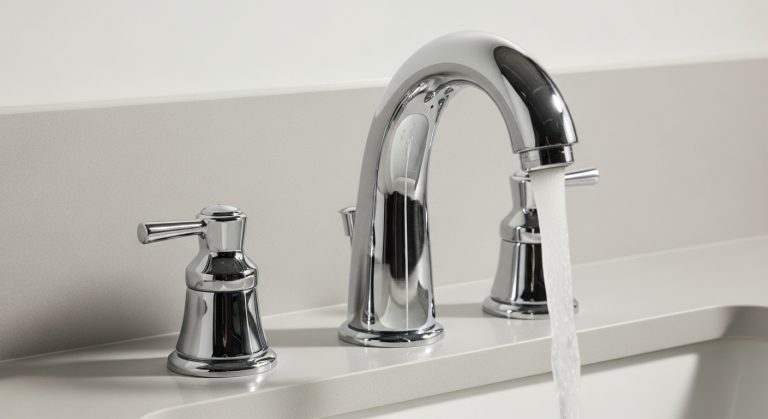
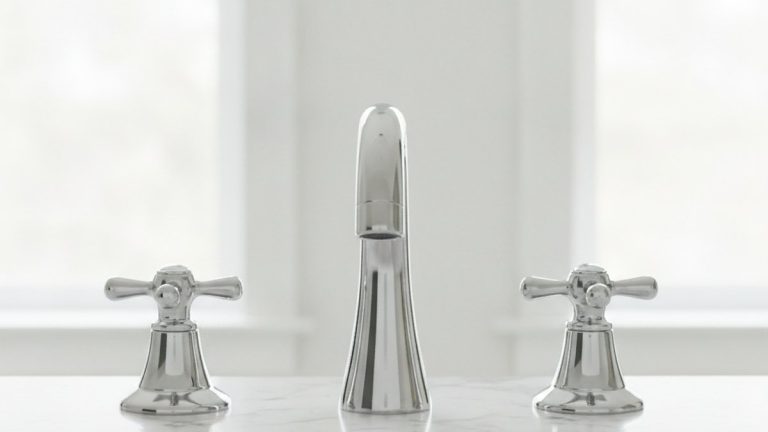
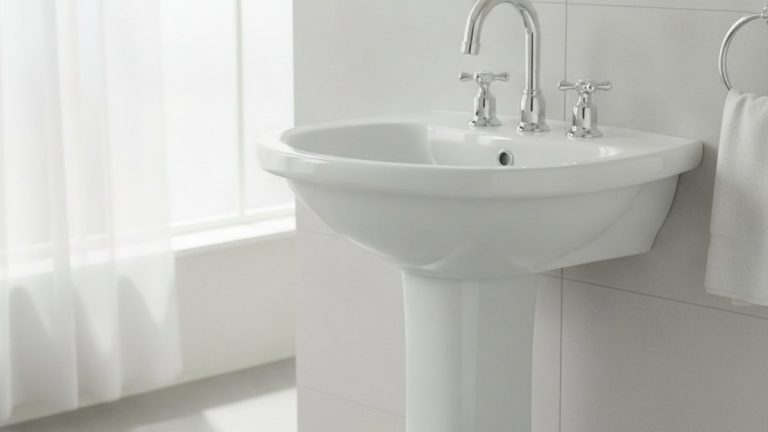
- Widespread (8 inch): 3 holes, handles and spout are separate pieces, typically 6–16 inches apart.
If you have three holes and a wider spread, you’re in widespread territory, and spacing is where most people order the wrong part. It’s worth reading exactly what the right widespread faucet spacing is for your bathroom sink so you match the 8-inch (or 6–16 inch) range correctly. If you already know you want that style and just need to buy one that fits an 8-inch sink, here’s a straight-to-the-point resource on finding a widespread faucet for sale that actually fits your 8-inch sink.
What if I only have one hole but want a widespread look?
Use a single-hole faucet, or add a deck plate (escutcheon) to cover extra holes — you can’t spread a single-hole deck into three. Many stainless single-hole kitchen faucets ship with an optional base plate exactly for this, so a 3-hole sink can accept a 1-hole faucet. Going the other way (1 hole into a 3-hole spread) isn’t possible without drilling, which you don’t want to do on a porcelain or granite deck.
Is a stainless steel faucet better than chrome or brushed nickel for hard water?
Yes — for hard water and heavy daily use, solid stainless steel and brushed/satin stainless finishes are the most forgiving because they hide water spots and mineral film far better than polished chrome. Chrome looks stunning when clean but shows every fingerprint and lime speck. Here’s the practical breakdown by finish:
| Finish | Hides water spots? | Fingerprints | Cleaning effort |
|---|---|---|---|
| Brushed / satin stainless | Very well | Barely shows | Low — wipe with damp cloth |
| Polished chrome | Poorly | Shows everything | High — needs frequent polishing |
| Brushed nickel | Well (slightly warmer tone) | Low | Low |
| Matte black | Hides spots, shows dried minerals white | Low | Medium |
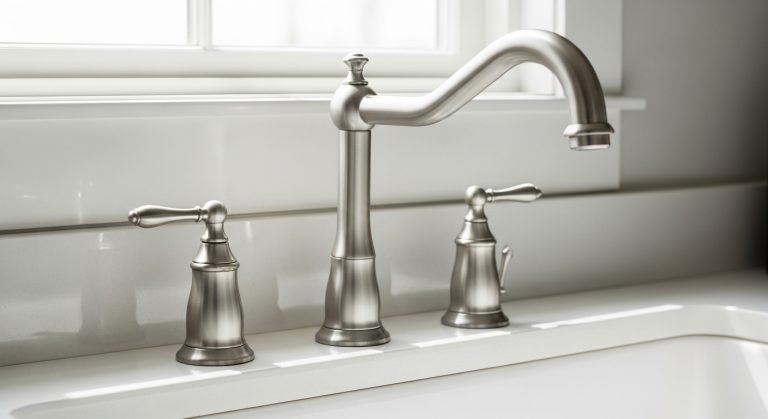
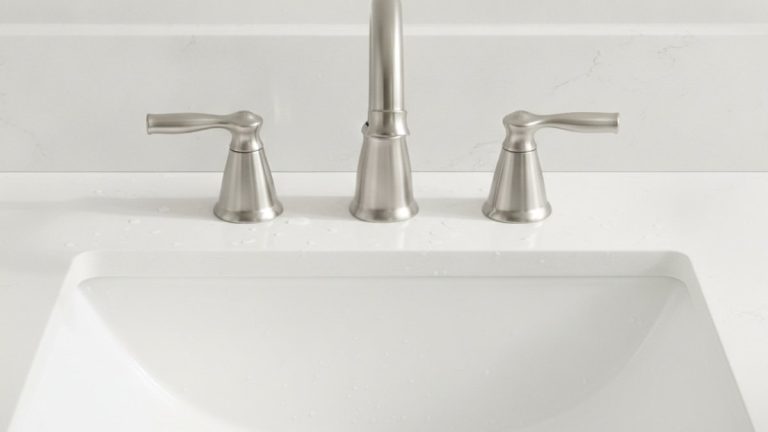
Brushed nickel is the closest cousin to stainless and often confused with it — if you like the warmer, slightly softer tone, it’s worth understanding the difference. For a multi-hole sink specifically, our take on whether a widespread kitchen faucet in brushed nickel is the right choice lays out when nickel beats stainless and vice versa. For most hard-water kitchens, though, brushed stainless is the lowest-maintenance pick you can make.
Does stainless steel really not rust?
Solid 304 stainless resists rust, but “stainless” doesn’t mean “rust-proof” in every situation. Stainless resists corrosion because of a thin chromium-oxide layer that self-heals when scratched. It can still develop surface “tea staining” or spotting in salty, coastal, or chlorine-heavy air — that’s usually surface deposits, not the steel itself rusting, and it wipes off. A stainless finish over zinc, on the other hand, can rust at any chip or scratch because the base metal underneath isn’t stainless. This is the core reason solid 304 is worth paying a little more for.
How do I install a stainless steel faucet myself?
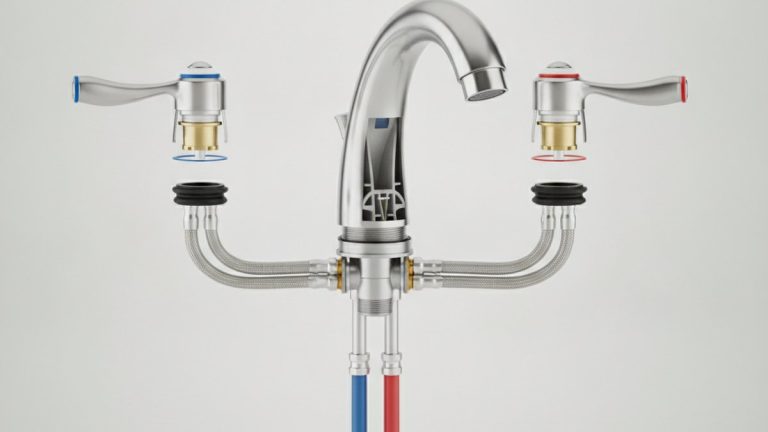
Most stainless kitchen and bathroom faucets install in 30–60 minutes with a basin wrench, an adjustable wrench, and plumber’s tape — no soldering. The core steps are the same across brands: shut off water, disconnect the old faucet, drop the new one through the deck, secure the mounting nut, connect the supply lines, and test.
- Turn off both angle-stop shutoff valves under the sink and open the faucet to release pressure.
- Disconnect the supply lines and loosen the old mounting nut with a basin wrench.
- Clean the deck, then seat the new faucet (with its gasket or a bead of plumber’s putty if specified).
- Hand-tighten the mounting nut from below, then snug it with the wrench — don’t overtighten.
- Wrap supply-line threads with plumber’s tape, connect, then turn water on slowly and check for drips.
If you’d rather follow along visually, we’ve got a walkthrough on how to install a kitchen mixer tap yourself, step by step that translates directly to most single-handle stainless faucets. The most common rookie mistake is skipping the leak test at full pressure — always run both hot and cold for a full minute and feel every connection with a dry paper towel, which shows even a slow weep.
How much should a good stainless steel faucet cost in 2026?
Expect $60–$120 for a solid entry-level stainless faucet, $120–$250 for a mid-range pull-down kitchen model with a genuine 304 body and ceramic-disc cartridge, and $250+ for premium designs. Below roughly $50, you’re almost certainly getting zinc alloy with a stainless-look coating — fine for a rental or low-use guest bath, not for a primary kitchen you’ll use ten times a day.
What actually drives the price (and the lifespan) isn’t the shiny exterior — it’s the cartridge inside. A quality ceramic-disc cartridge is what keeps the faucet drip-free for years, and it’s the part that matters far more than an extra few dollars of steel. When you compare two stainless faucets at the same price, pick the one that names its cartridge type and offers replaceable parts. Cheaper faucets glue everything in, so a worn seal means replacing the whole unit.
What features are worth paying extra for?
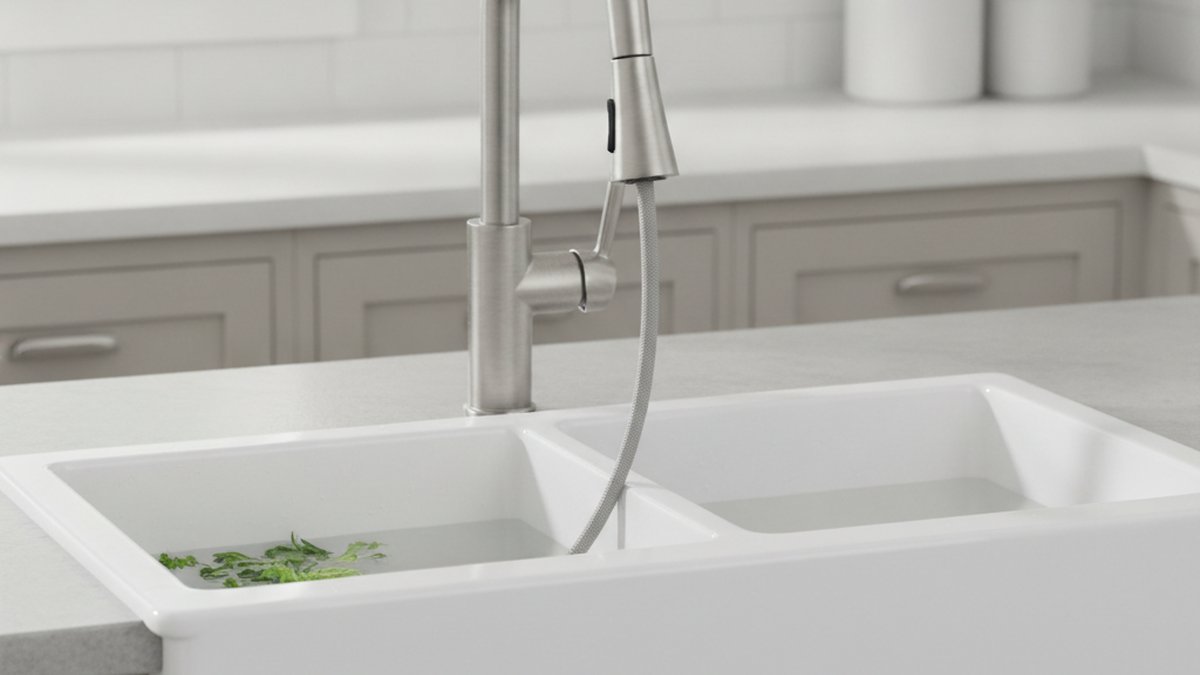
A pull-down spray head, a ceramic-disc cartridge, and a good aerator are the three upgrades that earn their keep. A magnetic dock (so the spray head snaps back cleanly), a two-function spray/stream toggle, and a lifetime finish warranty are the next tier. Touchless activation is nice but adds a sensor and battery that can fail — skip it unless you cook messy often.
- Ceramic-disc cartridge: the #1 durability feature — prevents drips.
- Pull-down spray with magnetic dock: everyday convenience, no sagging hose.
- Replaceable aerator: lets you clean out mineral buildup and restore flow (a 5-minute job).
- Lifetime finish + drip warranty: a real signal the maker trusts their build.
FAQ
Is solid stainless steel worth more than a stainless finish?
For a primary kitchen, well water, or a humid/coastal home — yes. Solid 304 stainless is lead-free and won’t rust where it gets scratched, whereas a stainless finish over zinc can corrode at any chip. For a low-use guest bathroom, a quality PVD stainless finish over brass is perfectly adequate and often cheaper.
Can I buy a stainless steel faucet locally the same day?
Usually yes at a big-box home center or plumbing supply, but most walk-in stock is stainless finish, not solid stainless. If genuine 304 stainless matters to you, ordering from a specialist like Aniflux Home and waiting a few days gets you the correct grade and hole configuration in writing — which prevents costly returns.
How do I stop my stainless faucet from spotting?
Wipe it dry after heavy use and clean it weekly with a soft cloth and mild dish soap — never steel wool, abrasive pads, or bleach-based cleaners, which can damage the chromium-oxide layer. For stubborn hard-water film, a 50/50 white vinegar and water solution left on for a minute, then rinsed and dried, removes mineral deposits safely.
What size faucet do I need for a standard bathroom sink?
Count your holes and measure center-to-center: one hole means a single-hole faucet, three holes at 4 inches means a centerset, and three holes at 8 inches (or 6–16 inches) means a widespread. Match that exactly — the number of holes and spacing, not the brand, determines fit.
Why is my new stainless faucet dripping already?
Nine times out of ten it’s an unseated cartridge, an over- or under-tightened mounting nut, or supply-line threads that weren’t taped — not a defect. Turn off the water, re-check each connection, and confirm the cartridge is fully seated. If it still drips at the spout, the cartridge may be faulty and should be swapped under warranty.
Does a stainless steel faucet work with a garbage disposal and dishwasher?
Yes — the faucet itself doesn’t connect to either; it only handles hot and cold supply. Your disposal and dishwasher tie into the sink drain and a separate dishwasher supply line, so any standard stainless kitchen faucet is fully compatible regardless of those appliances.
A quick note on who’s telling you this
This guide was written by the Aniflux Home fixtures team, who spec, pressure-test, and install faucets across kitchen and bathroom applications every week. Aniflux Home (anifluxhome.com) specializes in faucets and bathroom fixtures — not general hardware — so our recommendations come from handling these products daily, not reselling a catalog. Every solid stainless steel faucet we carry is 304-grade, lead-free per NSF/ANSI 61 and NSF/ANSI 372 low-lead standards, uses a ceramic-disc cartridge rated for hundreds of thousands of cycles, and is backed by a manufacturer warranty on both the finish and the drip-free function. When we say “test before you trust it,” we mean it: run both hot and cold at full pressure for a full minute after any install.