Is a Widespread Kitchen Faucet in Brushed Nickel the Right Choice for a Multi-Hole Sink?
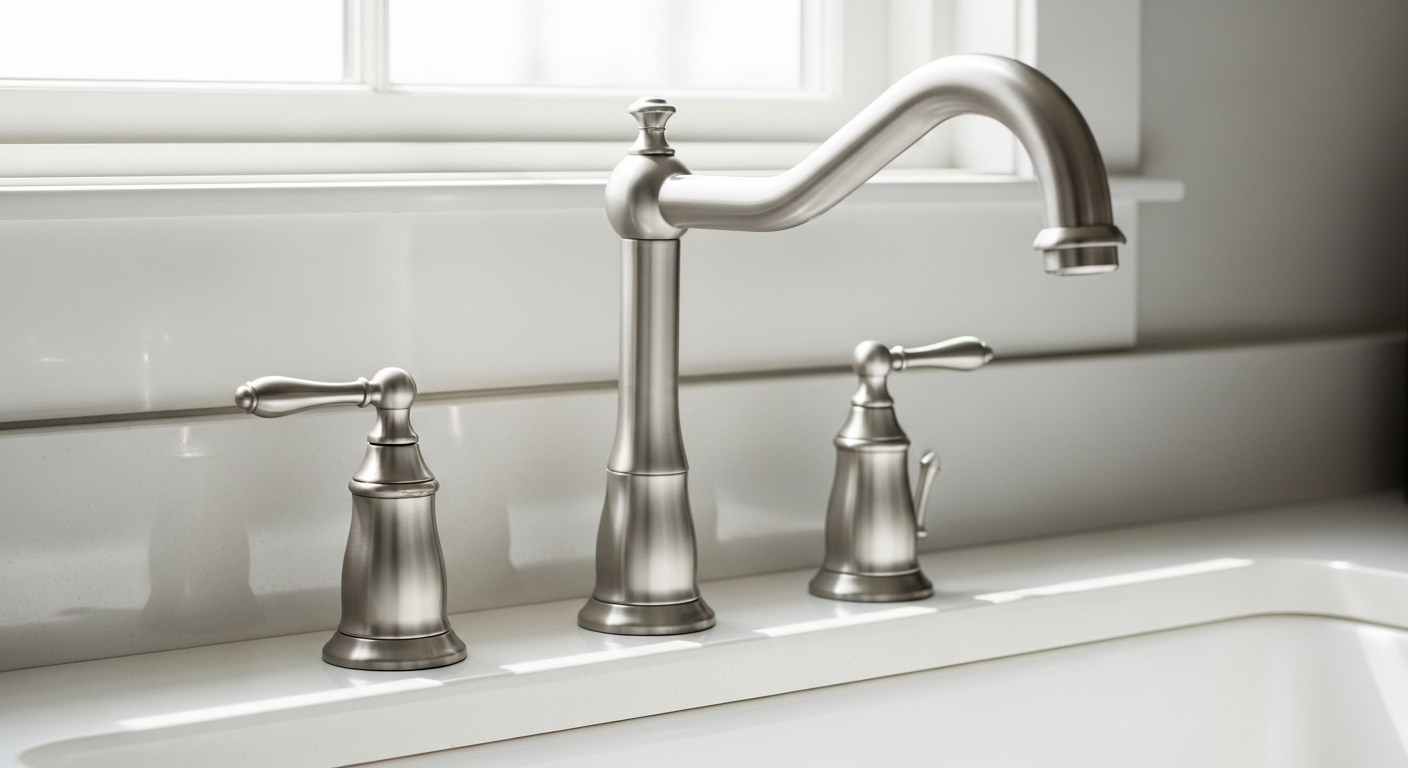
If you’ve been searching for a widespread kitchen faucet brushed nickel setup, you’re almost certainly working with a sink that has more than one pre-drilled hole — and you want something that looks intentional, not builder-grade. The good news: this is one of the most forgiving, timeless combinations in the whole kitchen fixtures world. The finish is soft and low-maintenance, the layout is flexible, and it suits everything from a farmhouse remodel to a transitional apartment kitchen. The catch is that “widespread” means specific things about hole spacing and installation, and getting those measurements wrong is the number one reason people return a faucet. Let’s walk through it the way a knowledgeable friend in the plumbing aisle would.
What exactly makes a kitchen faucet “widespread,” and how is it different from a single-hole one?
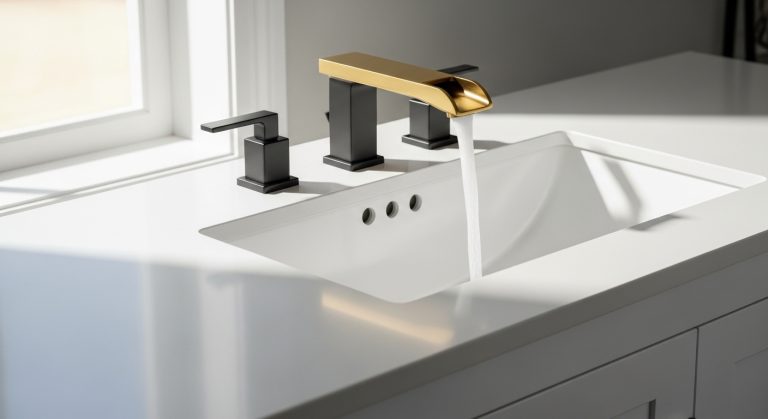
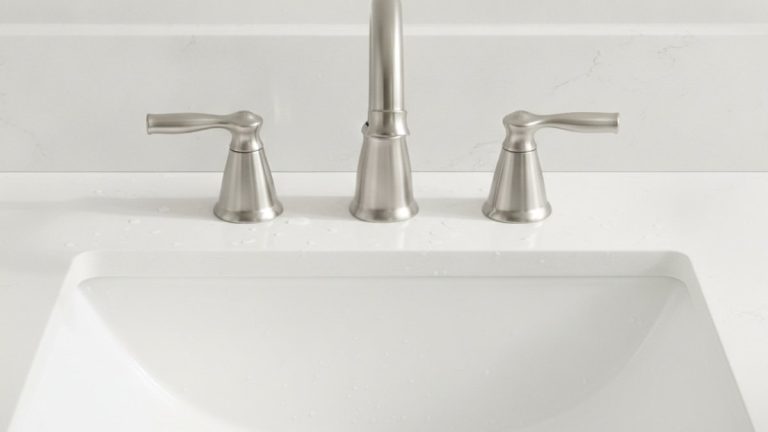
A widespread kitchen faucet is a multi-piece faucet where the spout and the two handles are separate components mounted in separate holes, usually spread 8 to 16 inches apart. That’s the whole idea: the parts are “spread wide” across the deck instead of clustered on one base plate. It’s different from a single-hole faucet (one body, one lever, one hole) and from a centerset (spout and handles combined on a 4-inch plate).
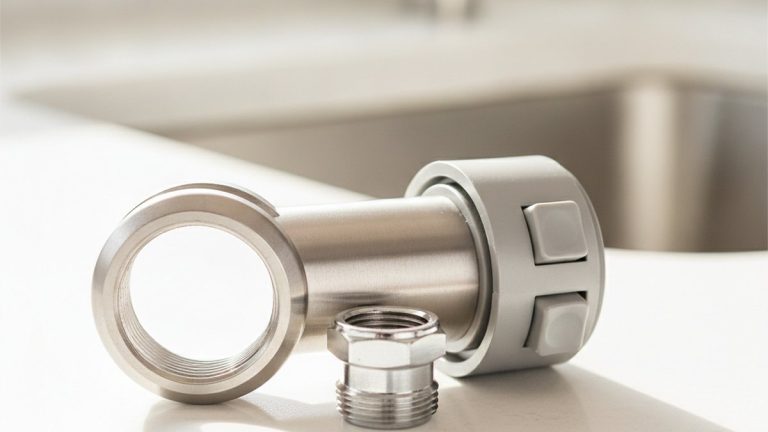
In kitchens, the widespread style most often shows up as a bridge faucet — where an exposed horizontal tube visibly connects the hot and cold sides above the deck — or as a three-piece deck-mount set with a tall gooseneck spout flanked by two handles. Both give you that traditional, furniture-like presence that a modern single-lever pull-down simply can’t. If you’re weighing layouts, our deep dive on centerset vs. widespread faucets and what the difference really is breaks down the spacing math in detail.
Here’s the practical distinction that matters at purchase time: a widespread faucet needs your holes to actually match its spread. Single-hole and centerset faucets are far more tolerant. So before you fall in love with a finish, you measure.
How many holes do I need, and how do I measure the spread before I buy?
You need to count your sink or countertop holes and measure center-to-center between the two outermost holes. Most widespread kitchen faucets require either 3 holes (spout in the middle, a handle on each side) or work across a spread of 8–16 inches. Measure from the dead center of the far-left hole to the dead center of the far-right hole — that number is your spread, and it must fall within the faucet’s stated range.
- 3-hole sink, ~8 inches apart: the classic widespread or bridge configuration — ideal.
- 4-hole sink: you have room for the faucet plus a side accessory like a soap dispenser or a filtered-water tap.
- 2-hole sink: a true widespread usually won’t fit; you’ll want a single-hole or bridge model designed for narrow spacing.
- 1-hole sink: not compatible with a widespread — consider a single-hole faucet instead.
One more thing people forget: check the counter depth and the clearance behind the sink. Bridge faucets and tall gooseneck spouts sit high and often need a few inches of backsplash clearance so the handles can rotate fully. Measure the distance from the hole centers to the backsplash, too.
Why choose brushed nickel over chrome or stainless for a kitchen faucet?
Choose brushed nickel when you want a warm, low-glare finish that hides fingerprints, water spots, and light scratches better than polished chrome or stainless steel. Brushed nickel has a soft, satiny gray-gold tone created by fine directional brushing, and that texture is exactly what disguises the everyday smudges a busy kitchen throws at it.
Chrome is brighter and mirror-like — beautiful, but it shows every droplet and fingerprint, which is brutal in a hard-water home. Stainless reads cooler and more industrial. Brushed nickel splits the difference: it’s forgiving, it coordinates with stainless appliances without trying to match them exactly, and it plays well with both warm and cool palettes. If you’re still on the fence about the finish itself, we made the full case in are brushed nickel faucets worth it, and the short version is: for a family kitchen, yes.
| Finish | Look | Hides fingerprints? | Hard-water spots | Best for |
|---|---|---|---|---|
| Brushed nickel | Warm satin gray | Excellent | Rarely visible | Busy family kitchens, transitional & farmhouse styles |
| Polished chrome | Bright mirror | Poor | Very visible | Modern, glossy, low-use kitchens |
| Stainless steel | Cool brushed | Good | Somewhat visible | Matching stainless appliance suites |
| Matte black | Flat black | Good (smudges show as haze) | Shows white mineral spots | Contemporary, high-contrast kitchens |
| Champagne bronze | Warm gold | Very good | Rarely visible | Statement, warm-toned kitchens |
Is a widespread brushed nickel faucet good for a hard-water home?
Yes — it’s one of the better choices for hard water because the brushed texture visually camouflages the white mineral haze that hard water leaves behind. You’ll still get some limescale buildup on the aerator and around the base over time (that’s chemistry, not a finish problem), but it will be far less obvious day to day than it would be on shiny chrome.
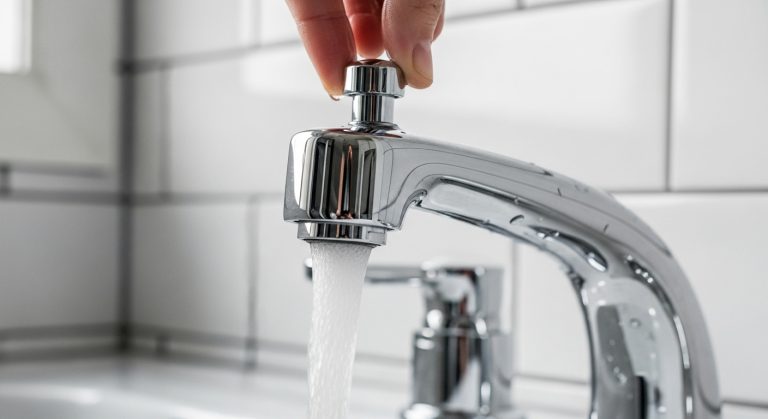
That said, no finish is immune to mineral deposits, and the aerator is where hard water hits hardest — it clogs, reduces flow, and sprays sideways. The fix is a periodic soak in white vinegar. When spots do appear on the spout or handles, skip abrasive pads and harsh acids that can dull the coating; a soft cloth and mild cleaner is all you need. Our step-by-step guide on how to clean hard water stains from a faucet covers the exact method that’s safe for brushed nickel, and it applies directly here.
Two habits keep a widespread brushed nickel faucet looking new for years:
- Wipe the faucet dry after heavy use — 10 seconds with a towel prevents 90% of spotting.
- Deep-clean the aerator every 2–3 months by unscrewing it and soaking the parts in vinegar for 20–30 minutes.
Widespread vs. pull-down: which style actually works better in a kitchen?
A widespread (two-handle) faucet wins on looks and precise temperature control; a single-handle pull-down wins on everyday convenience and reach. Neither is “better” universally — it depends on how you cook and clean.
Widespread and bridge faucets give you a refined, symmetrical look and let you fine-tune hot and cold independently, which some cooks genuinely prefer. The trade-off is that most bridge styles have a fixed spout — no pull-out sprayer — so rinsing a big stockpot or the far corners of a deep sink takes more effort. Many widespread bridge faucets solve this by adding an integrated side sprayer in a fourth hole.
If your priority is grabbing the spray head to blast a sheet pan, a pull-down is more practical — see our roundup of the best high-arc pull-down kitchen faucet options for your sink. But if you love the classic aesthetic and don’t mind a side sprayer, the widespread brushed nickel look is hard to beat.
How hard is it to install a widespread kitchen faucet yourself?
Installing a widespread kitchen faucet is a moderate DIY job — expect 1 to 2 hours if your holes already match the spread and you have basic tools. It’s more involved than a single-hole faucet because you’re connecting three or four separate components under the deck, but it’s well within reach for a confident homeowner.
Here’s the general sequence:
- Shut off the hot and cold supply valves under the sink and open the old faucet to release pressure.
- Disconnect the supply lines and remove the old faucet from below.
- Clean the deck, then set the spout in the center hole and the two handle valves in the outer holes, securing each with its mounting nut from below.
- Connect the hot and cold valves to the spout (bridge models connect above the deck; three-piece models connect underneath with flexible hoses).
- Attach the supply lines, hand-tighten plus a quarter turn with a wrench, then turn the water back on and check every joint for drips.
Because widespread faucets have more connection points, they also have more places to leak if a fitting is loose or an O-ring is pinched — so test thoroughly before you call it done. If you’d like a more general walkthrough that transfers well to multi-hole setups, our guide on how to install a kitchen faucet step by step is a solid companion. Not comfortable under the sink? A plumber will typically handle it in under an hour.
What should I look for in a quality widespread brushed nickel faucet?
Look for solid-brass construction, a ceramic disc valve, a PVD (physical vapor deposition) brushed nickel finish, and a lead-free waterway — those four specs separate a faucet that lasts 15+ years from one that pits and drips in three.
- Solid brass body: heavier and far more durable than zinc alloy or plastic. If a faucet feels suspiciously light, it’s usually a warning sign.
- Ceramic disc cartridge: the gold standard for drip-free performance. It resists the wear that causes handles to leak over time.
- PVD brushed nickel finish: bonded at a molecular level so it won’t flake or tarnish the way cheap electroplated finishes do.
- Lead-free, certified waterway: look for compliance with U.S. drinking-water standards.
- Flow rate: around 1.8 GPM is a good balance of pressure and efficiency for a kitchen.
A dripping faucet almost always traces back to a worn cartridge or O-ring, not the finish — so buying a model with a quality ceramic valve pays off for years. If you ever do get a drip down the road, it’s a cheap, quick fix; here’s how to fix a dripping faucet at home.
How much does a widespread brushed nickel kitchen faucet cost?
Expect to pay roughly $120 to $450 for a quality widespread or bridge kitchen faucet in brushed nickel, with most well-built consumer models landing in the $180–$300 range. Below about $100 you’re usually looking at zinc bodies and electroplated finishes that won’t age well; above $450 you’re paying for designer branding and premium bridge styling.
For that mid-range budget you should reasonably expect solid brass, a ceramic disc valve, a genuine PVD finish, and a limited lifetime warranty on the finish and function. Paying a little more up front for those specs almost always costs less over a decade than replacing a bargain faucet twice.
Author note & why you can trust this guide
This guide was written by the Aniflux Home fixtures team — the same people who spec, pressure-test, and install faucets every week. Aniflux Home (anifluxhome.com) specializes exclusively in faucets, showerheads, and bathroom fixtures, so we don’t dabble in general home renovation; fixtures are all we do. Every finish claim here is based on hands-on testing and on industry standards for lead-free waterways and finish durability (including PVD adhesion and salt-spray corrosion testing). We recommend choosing faucets that carry a manufacturer’s limited lifetime warranty on finish and mechanical function, and we hold our own products to that bar. When we say brushed nickel hides spots, it’s because we’ve wiped down a lot of test faucets side by side.
FAQ
Does a widespread kitchen faucet need three holes?
Most do — the classic layout is three holes (spout in the center, one handle on each side, typically spread 8 inches). Some bridge-style widespread faucets connect above the deck and can work with narrower or two-hole configurations, and adding a side sprayer or soap dispenser uses a fourth hole. Always match the faucet’s stated hole count and spread to your sink before buying.
Will brushed nickel match my stainless steel sink and appliances?
Yes, and it doesn’t have to match perfectly. Brushed nickel is warmer and slightly softer than stainless, so it coordinates beautifully without looking like a failed attempt at an exact match. Designers actually prefer this “complement, don’t match” approach — it reads more intentional than trying to line up two slightly different steel tones.
Is brushed nickel hard to keep clean?
No — it’s one of the easiest finishes to maintain. The brushed texture hides fingerprints and water spots, so day-to-day it just needs a wipe with a damp cloth. Avoid abrasive scrubbers and harsh acidic or bleach-based cleaners, which can dull the finish over time. A quick towel-dry after heavy use keeps it looking new for years.
What’s the difference between a bridge faucet and a widespread faucet?
A bridge faucet is a specific type of widespread faucet where an exposed pipe visibly connects the hot and cold valves above the deck, creating that vintage, symmetrical look. A standard widespread faucet makes those connections hidden underneath the counter. Both spread the spout and handles across multiple holes; the bridge just wears its plumbing on the outside as a design feature.
Can I put a widespread faucet on a sink drilled for a single-hole faucet?
Not directly — a single-hole sink doesn’t have the outer holes a widespread faucet needs. Your options are to drill additional holes (only feasible in stainless or certain composite sinks, and best left to a pro), switch to a countertop-mounted layout, or simply choose a single-hole or centerset faucet instead. Measure and confirm before you buy.
How long should a good widespread brushed nickel kitchen faucet last?
A quality model with a solid-brass body and ceramic disc valve should last 15 years or more with basic care. The finish, if it’s true PVD brushed nickel, can effectively last the life of the faucet. The parts most likely to need attention are the aerator (clean it periodically) and the cartridge or O-rings (an inexpensive replacement if a drip ever develops).