
Where Can You Find a Widespread Faucet for Sale That Actually Fits Your 8-Inch Sink?
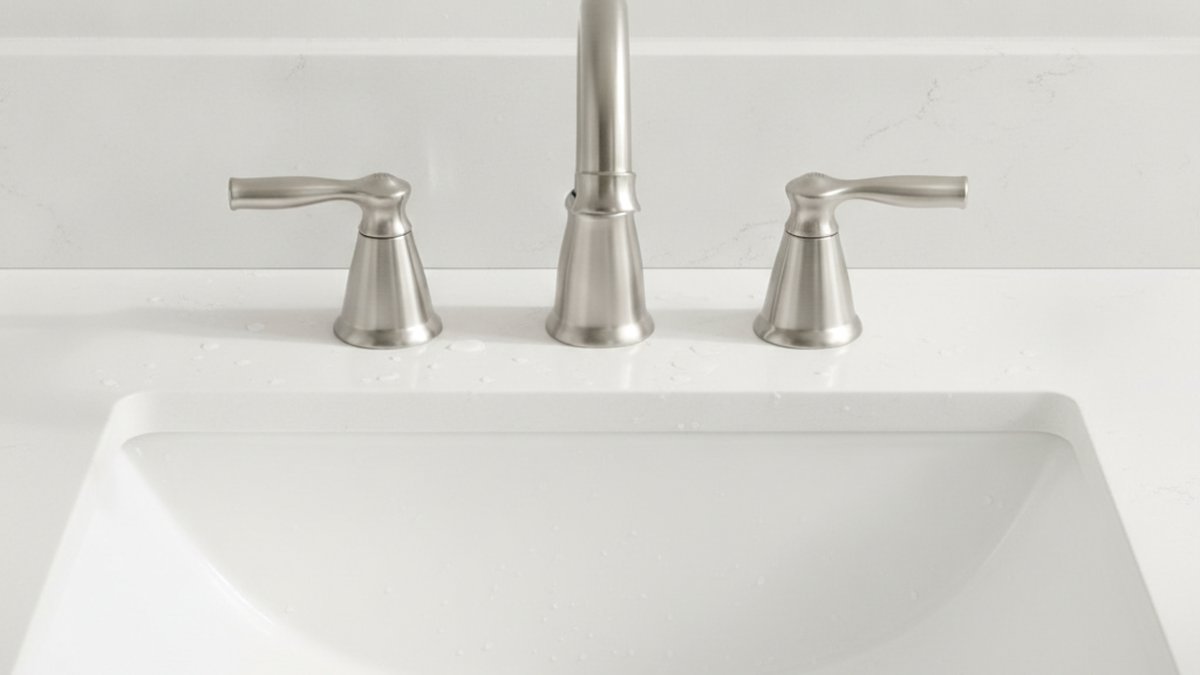
If you’ve been searching for a widespread faucet for sale, the single most important thing to nail down before you add anything to a cart is your sink’s hole spacing — because a “widespread” faucet is defined by the fact that its handles and spout are three physically separate pieces. Get the spacing wrong and even a beautiful, well-made faucet simply won’t mount. Get it right, and you unlock the widest range of finishes, spout heights, and handle styles of any bathroom faucet type on the market.
At Aniflux Home we sell and install these faucets every week, and the questions buyers ask are remarkably consistent: How do I know it’ll fit? What should I actually pay? Is solid brass worth the premium? This guide answers all of that in plain language, so you can buy once and buy right.
What exactly is a widespread faucet, and how is it different from a centerset?
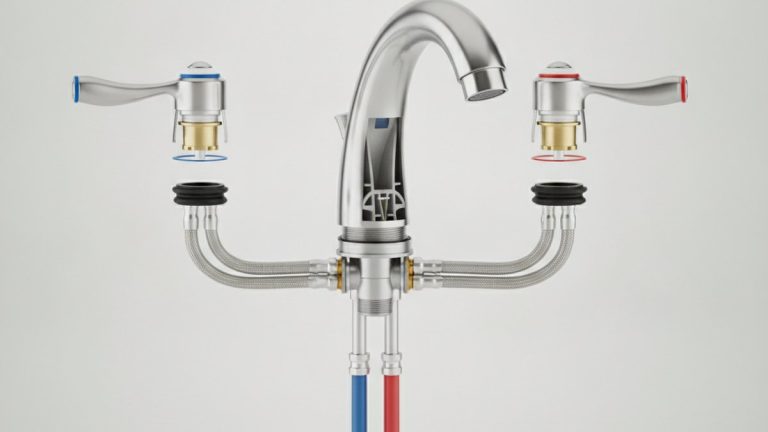
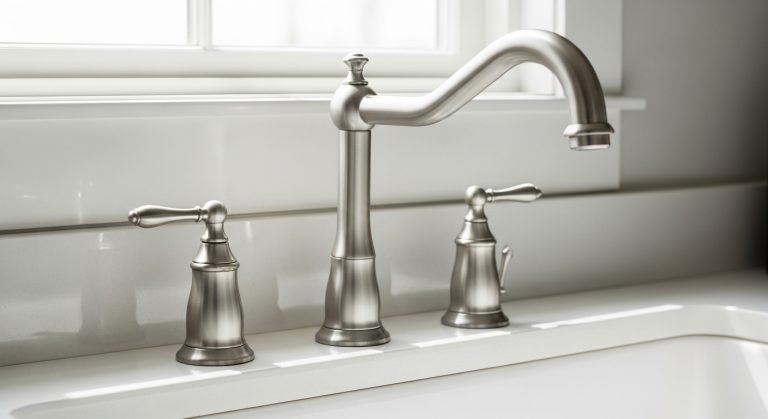
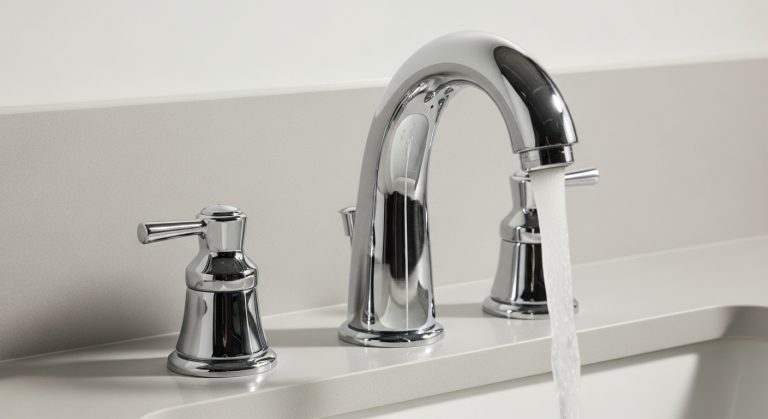
A widespread faucet is a three-hole faucet where the spout and the two handles are completely independent components, connected only by flexible supply lines underneath the counter. A centerset, by contrast, mounts all three functions on a single base plate spanning 4 inches. That structural difference is the whole story.
Because the pieces are separate, a widespread faucet can span anywhere from 8 to 16 inches, which gives you a more custom, higher-end look and makes cleaning around the base far easier. Centersets are compact, cheaper, and quicker to install, but they lock you into a fixed 4-inch layout. If you want the full breakdown of the trade-offs, our guide on centerset vs. widespread faucets walks through it side by side.
| Feature | Widespread Faucet | Centerset Faucet |
|---|---|---|
| Hole spacing | 8″–16″ (three separate holes) | 4″ (three holes on one plate) |
| Typical price | $80–$250+ | $40–$120 |
| Installation time | 45–90 min | 30–45 min |
| Look | Custom, high-end, spacious | Compact, traditional |
| Best for | Larger vanities, remodels, master baths | Small bathrooms, powder rooms, budget builds |
How do I know if a widespread faucet will fit my bathroom sink?
Measure the distance from the center of the left hole to the center of the right hole — if it lands between 8 and 16 inches, a widespread faucet fits. If your holes are exactly 4 inches apart center to center, you have a centerset (or “mini-widespread”) layout, and a true widespread won’t mount without a new sink or countertop.
Here’s the quick check to run before you buy anything:
- Count your holes. You need three: one for the spout in the middle, one for each handle.
- Measure center-to-center on the two outer holes. 8″–16″ = widespread. Around 4″ = centerset.
- Check the hole diameter. Most faucets need holes around 1¼” to 1⅜”; standard sinks are drilled to fit.
- Look at the deck clearance behind the sink. A tall gooseneck spout needs room so the handles don’t crowd the backsplash.
If you’re mid-remodel and haven’t drilled yet, this is where you set your spacing intentionally. We cover the exact numbers and common mistakes in our widespread faucet spacing guide — it’s the single reference that prevents the most expensive faucet-shopping error there is.
What should I pay for a widespread faucet, and what am I actually getting at each price?
For a widespread faucet that will last 10+ years, budget $80–$250. Below $80 you’re usually buying zinc-alloy or plastic internals that corrode and drip within a couple of years; above $250 you’re paying for designer finishes, premium ceramic-disc cartridges, and heavier solid-brass bodies.
Here’s how the tiers really break down from where we sit:
| Price range | What you get | Body material | Expected lifespan |
|---|---|---|---|
| Under $80 | Basic finish, plastic or zinc internals | Zinc alloy / plastic | 2–4 years |
| $80–$150 | Solid brass body, ceramic-disc valves, WaterSense aerator | Solid brass | 8–15 years |
| $150–$250 | Premium finishes (matte black, champagne bronze), smoother handles | Solid brass | 15–20+ years |
| $250+ | Designer/imported, lifetime finish warranties | Heavy solid brass | 20+ years |
The sweet spot for most homeowners is the $80–$150 band, where you get a solid-brass body and ceramic-disc cartridges without paying a designer premium. If you’re shopping the value end specifically, our roundup of the best widespread bathroom faucet under $100 shows which corners are safe to cut and which aren’t.
What features actually matter when a widespread faucet is on sale?
The three features that separate a faucet that lasts from one that leaks are the valve type, the body material, and the aerator rating — everything else is styling. Focus on those three and you’ll never regret a purchase, even at a discount.
Ceramic-disc cartridges vs. rubber-washer valves
Buy ceramic-disc every time. Ceramic-disc cartridges seal with two polished ceramic plates instead of a rubber washer, so they don’t wear out, don’t drip, and handle hard water far better. If a “sale” faucet uses old-style compression washers, that discount is why — those are the faucets that end up needing an O-ring replacement within a year or two.
Solid brass vs. zinc alloy body
Solid brass resists corrosion and holds a finish; zinc alloy pits and fails, especially in hard-water regions. A quick tell: pick the faucet up. Solid brass has real heft. If it feels suspiciously light for its size, it’s likely zinc.
Flow rate and finish
Look for a WaterSense label and a 1.2 GPM aerator — it cuts water use roughly 30% versus the old 2.2 GPM standard without you noticing a weaker stream. For finish, brushed nickel hides water spots and fingerprints best, which is why it’s our most-returned-to recommendation; if you’re weighing it, we made the full case in are brushed nickel faucets worth it.
How do I match the finish to the rest of my bathroom?
The safest rule: match your faucet finish to the finish that’s hardest to change later — usually your shower trim, towel bars, and cabinet hardware. Faucets are easy to swap; a shower valve trim kit is not, so let the fixed elements lead.
A few field-tested pairings:
- Brushed nickel / satin nickel — the most forgiving, hides spots, works with almost any palette.
- Matte black — dramatic on white sinks, but shows dust and hard-water film; wipe it down more often.
- Chrome — bright, budget-friendly, timeless, but shows every fingerprint.
- Champagne bronze / brushed gold — warm and on-trend, pairs beautifully with white and navy vanities.
You don’t have to match every metal in the room perfectly — a little intentional mixing looks designed — but keep your faucet and drain/pop-up assembly the same finish, since they sit inches apart. For a broader decision framework beyond finish, our guide on how to choose the right bathroom faucet covers spout height, handle ergonomics, and sink pairing.
Is a widespread faucet hard to install myself?
No — a widespread faucet is a confident DIY job that takes most people 45 to 90 minutes with a basin wrench, plumber’s tape, and an adjustable wrench. Because the three pieces mount separately, you actually get more working room under the deck than with a one-piece faucet, not less.
The general sequence looks like this:
- Shut off both supply valves and open the old faucet to relieve pressure.
- Disconnect the supply lines and remove the old faucet from below.
- Drop the new spout into the center hole and the two valve bodies into the outer holes; secure the mounting nuts from beneath.
- Connect the T-fitting or supply lines between the handles and the spout (this is the one step unique to widespread models).
- Attach the supply lines to the shutoff valves, wrapping threads with plumber’s tape.
- Turn the water back on slowly and check every connection for drips before you walk away.
The only step that trips people up is the under-deck connection between the separate handles and spout — go slow there and hand-tighten before you wrench. If you’d rather learn from a distinct-but-adjacent project first, the fundamentals in our step-by-step faucet installation guide translate directly, since the supply-line and shutoff work is identical.
Where’s the smart place to buy a widespread faucet — online or in-store?
Buy online for selection and price, in-store only when you need to physically feel the weight and finish before committing. The catch with online is you must already know your hole spacing and preferred finish; the catch in-store is limited stock and markup. Since spacing and finish are things you can confirm at home with a tape measure and a photo, most buyers get the best outcome ordering online from a specialist.
What to verify on any listing before you buy:
- Stated spacing range (should say 8″–16″ or “widespread”).
- Body material — the words “solid brass” should appear, not just “brass finish.”
- Valve type — look for “ceramic disc.”
- Flow rate and WaterSense certification.
- Warranty length on both the finish and the function.
- Whether a drain assembly is included (many are sold separately).
If you want something beyond the standard rectangular-handle look, it’s worth browsing distinctive designs — our piece on the unique widespread faucet options shows how far the category has come, and our overview of the complete widespread faucet set explains what a matched set (faucet plus coordinating drain and accessories) should include.
Common mistakes buyers make (and how to avoid them)
The number-one mistake is buying before measuring — assuming any three-hole faucet fits any three-hole sink. It doesn’t. The second is chasing a rock-bottom price and landing on a zinc body with rubber washers that drips within a season. The third is forgetting the drain assembly and discovering at install time that it wasn’t included.
Avoid all three by measuring your spacing, insisting on solid brass with ceramic-disc valves, and reading the “what’s in the box” line before checkout. Do that, and even a deeply discounted faucet becomes a genuinely good buy rather than a future headache.
The bottom line: is a widespread faucet for sale worth buying?
Yes — if your sink is drilled for 8″–16″ spacing and you buy a solid-brass, ceramic-disc model in the $80–$250 range, a widespread faucet for sale is one of the best-value upgrades in a bathroom. It looks custom, cleans easily, and lasts well over a decade. The only wrong move is buying without measuring first.
Confirm your spacing, pick a finish that plays well with your fixed fixtures, and check for that WaterSense label. Do those three things and you’ll be happy with the faucet long after you’ve forgotten what you paid for it.
FAQ
What is standard widespread faucet spacing?
Standard widespread spacing is 8 inches center-to-center between the two outer (handle) holes, though true widespread faucets adjust to fit anywhere from 8 to 16 inches. Anything around 4 inches is a centerset layout, not widespread.
Can I replace a centerset faucet with a widespread one?
Only if your sink or countertop has three holes spaced 8 inches or more apart. A standard centerset sink has holes just 4 inches apart, so you’d need to either replace the sink or use a specific “mini-widespread” faucet designed for 4-inch spacing. Measure before you buy.
Are expensive widespread faucets actually worth it?
Up to about $150, yes — that’s where you get solid brass and ceramic-disc valves that prevent leaks and last 10–15 years. Beyond $150 you’re mostly paying for premium finishes and designer styling, which is worth it for looks but not for function.
What finish is easiest to keep clean on a widespread faucet?
Brushed nickel is the easiest — its satin texture hides water spots and fingerprints better than chrome or matte black. Chrome shows every smudge, and matte black shows dust and hard-water film, so both need more frequent wiping.
Does a widespread faucet come with a drain?
Not always. Many widespread faucets are sold as the faucet only, with the pop-up drain assembly available separately or bundled in a “faucet set.” Always check the product listing’s included-items line before you buy so you’re not caught short at installation.
Author note: This guide was written by the Aniflux Home fixtures team, drawing on hands-on experience selling and installing widespread bathroom faucets across thousands of orders. Aniflux Home specializes exclusively in faucets and bathroom fixtures, and every faucet we recommend is evaluated against industry standards — solid-brass construction, ceramic-disc valve testing, WaterSense flow certification, and manufacturer warranty coverage — so the advice here reflects what actually holds up in real bathrooms, not marketing claims.
One Comment